








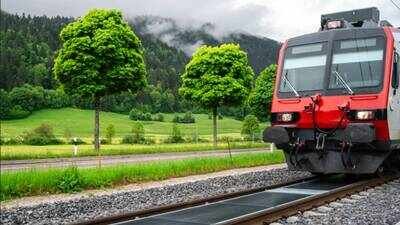
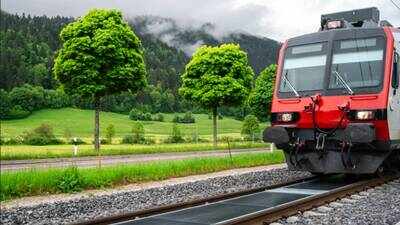
A Swiss startup has spent more than a year testing an unusual way to generate renewable energy: placing removable solar panels directly between the rails of an active railway line.At a pilot project in Buttes, Switzerland, more than 11,000 trains have already travelled over the installation, while the system has generated more than 16,000 kilowatt-hours of electricity since May 2025.According to SWI Swissinfo, the installation has remained stable and has not interfered with train operations or railway maintenance during the pilot.The project is being developed by Swiss startup Sun-Ways, which installed 48 photovoltaic panels along a 100-metre section of railway in April 2025. Sun-Ways describes the project as the world’s first removable solar power plant installed on an active railway line.
Solar panels fit into the space between railway tracks
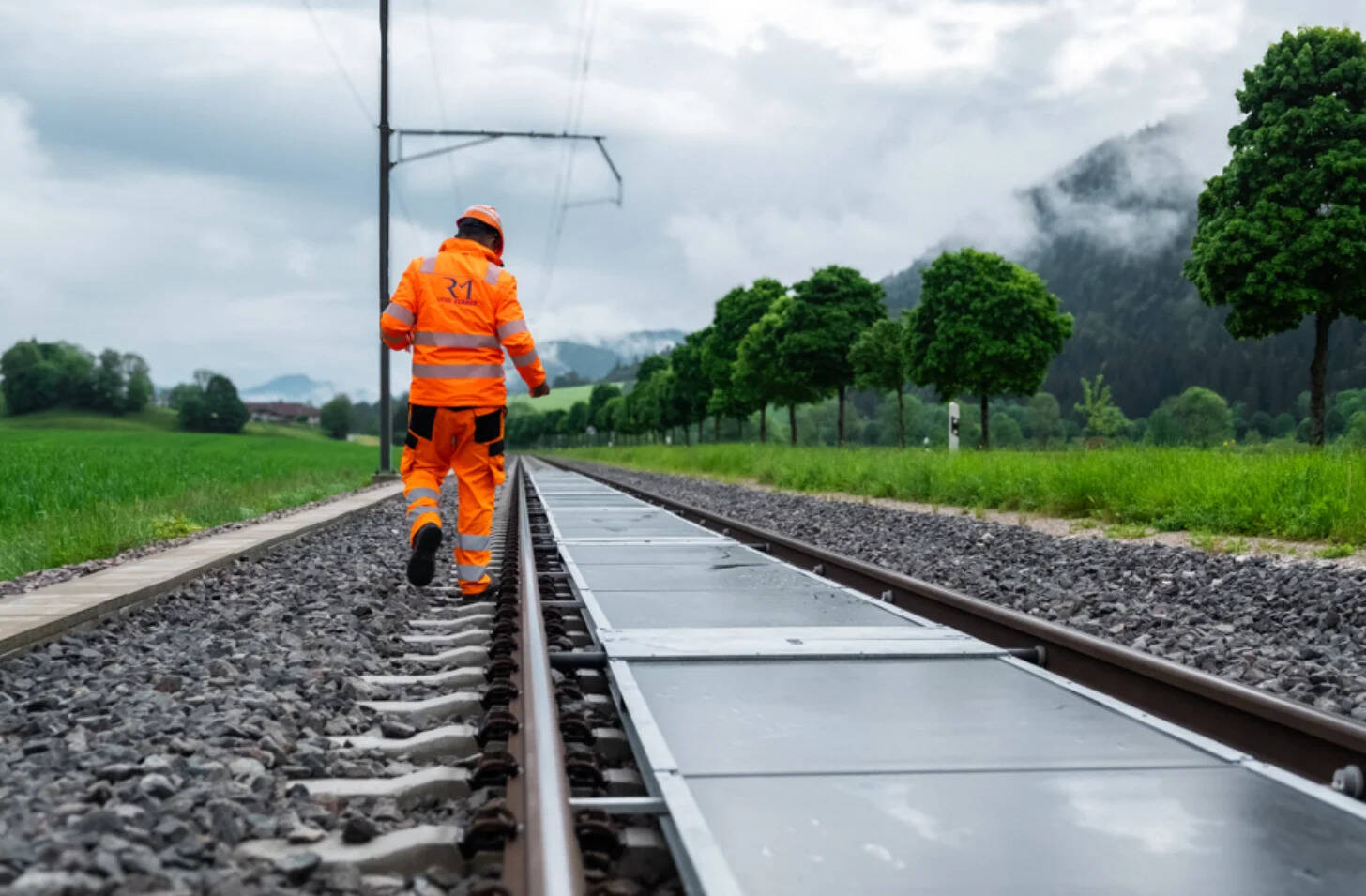
More than 11,000 trains have passed over the 100-metre Swiss railway solar installation. (Photo: Sun-Ways)
The concept is strikingly simple: instead of buying land for a conventional solar farm, Sun-Ways uses the narrow strip of space that already exists between two railway rails.The 48 panels installed at Buttes have a combined capacity of around 18 kilowatts. According to pv magazine, the system was designed specifically for railway infrastructure and can be removed when maintenance work needs to be carried out.The panels are installed between the rails rather than alongside the railway. Trains therefore pass directly over them.That makes the project different from conventional railway solar installations, which typically place panels on railway buildings, embankments or nearby land.Sun-Ways’ patented system is designed to be removable, allowing railway workers to access the track when necessary.
More than 11,000 trains have passed over the solar panels
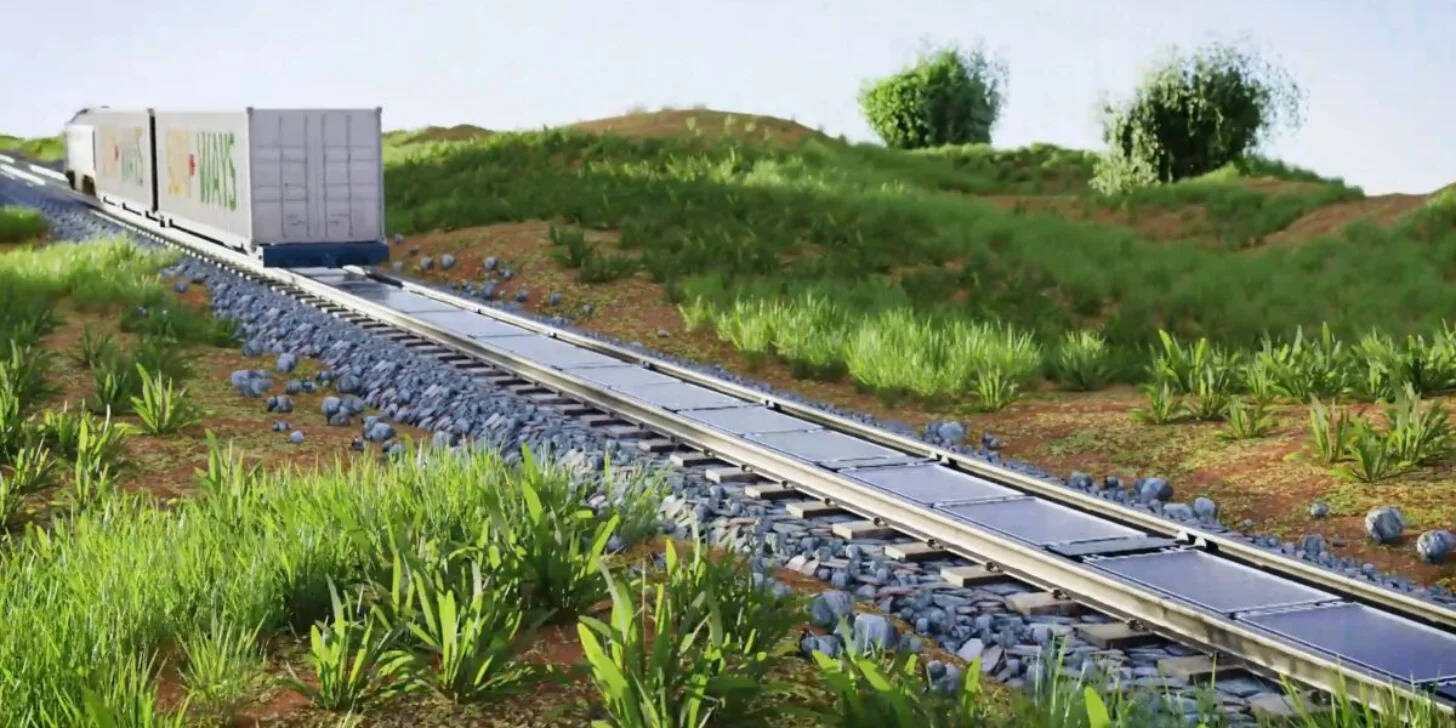
The railway solar pilot has generated more than 16,000 kWh of electricity since May 2025. (Photo: Sun-Ways)
The first results from the Buttes pilot suggest the concept can withstand regular railway traffic.SWI Swissinfo reported that more than 11,000 trains have travelled over the installation since it was commissioned. Trains travelling along the section can reach speeds of around 90 kilometres per hour, or about 56 mph.Despite the repeated traffic, the solar installation has remained stable.“We have achieved our objectives, both in terms of railway safety and electricity production,” Sun-Ways founder Joseph Scuderi told Swissinfo.The project has also generated more than 16,000 kWh of electricity since May 2025.Swissinfo reported that the output is equivalent to the average annual electricity consumption of roughly three to four Swiss households.The installation was temporarily stopped for about a month because of snow and planned technical work, but the project continued to demonstrate that photovoltaic panels could operate in the challenging environment of an active railway.
The panels can be removed for maintenance
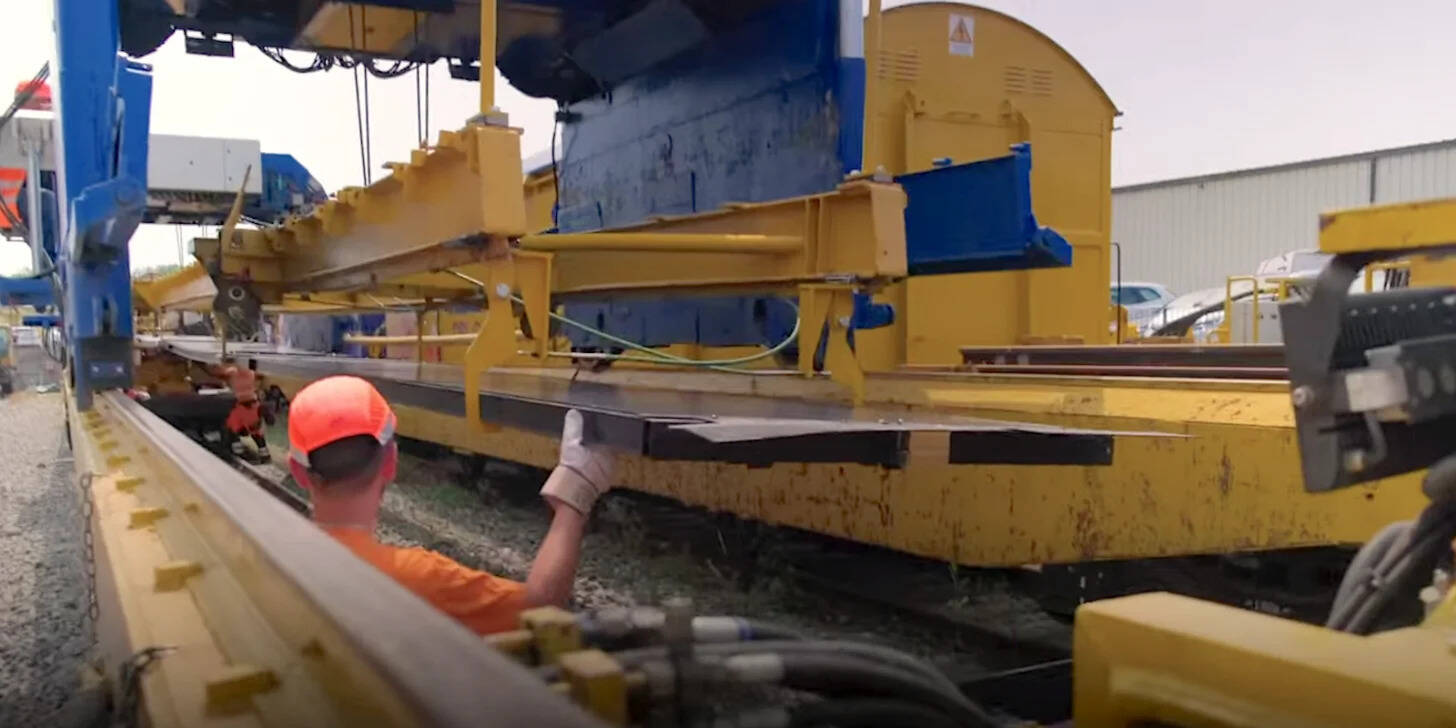
Sun-Ways is testing whether unused space between railway tracks can become a source of clean energy. (Photo: Sun-Ways)
One of the biggest questions surrounding solar panels on railway tracks is whether they could obstruct routine maintenance.Railway operators regularly need access to tracks for inspections, repairs, sleeper replacement and other infrastructure work.Sun-Ways designed its system around that problem.According to SWI Swissinfo, the panels can be disconnected and removed using specialised equipment when railway work is required. A module containing three panels and covering about six metres can reportedly be removed in roughly 10 minutes.That means the solar installation does not have to remain permanently fixed to the track.The removable design is also one of the key features Sun-Ways hopes will make the technology suitable for railway networks in other countries.
Trains may help keep the panels clean
Dust and dirt are another challenge for any solar installation.Solar panels become less efficient when their surfaces become heavily covered with dust, potentially requiring regular cleaning.Sun-Ways initially considered developing a mechanical cleaning system using a brush attached to trains.But according to Scuderi’s comments reported by Swissinfo, the company found that trains themselves can create airflow capable of helping remove dust from the panels.The Buttes project is being used to study several other issues, including soiling, glare, railway maintenance and the interaction between the photovoltaic installation and railway infrastructure.The absence of reported problems with train operations is significant because railway authorities would need to be satisfied that the technology does not create additional safety risks before approving large-scale installations.
Switzerland’s railway network could generate significant electricity
The 100-metre Buttes installation represents only a tiny fraction of Switzerland’s railway network.Sun-Ways estimates that suitable sections of Switzerland’s approximately 5,320-kilometre railway network could potentially be equipped with its technology.According to SWI Swissinfo, the company estimates that such installations could generate as much as 1 billion kWh of electricity annually.Sun-Ways says that amount could be enough to supply around 300,000 Swiss households and represent roughly 2% of Switzerland’s electricity consumption.Those figures are company estimates, however, rather than a confirmed national-generation forecast.Not every section of railway would necessarily be suitable. Tunnels, shaded areas, curves, maintenance requirements, railway design and other technical restrictions could limit where solar panels can be installed.Still, the potential is significant because railway lines already occupy long stretches of land.Instead of acquiring new land for solar farms, railway operators could potentially generate electricity using infrastructure corridors that already exist.
Railway solar attracts international interest
The Buttes pilot has attracted attention well beyond Switzerland.Scuderi previously told pv magazine that railway representatives from countries including Indonesia, Japan and South Korea had shown interest in the technology.In July 2025, Scuderi told pv magazine that a company from Indonesia’s railway sector had visited the Swiss installation to verify that the technology was real and operating as claimed.He also said there had been interest from Japan and South Korea, where railway speeds can be considerably higher than those at the Swiss pilot site.That creates another technical challenge.Sun-Ways has said its prototype technology has been validated for trains travelling at speeds of up to 150 km/h, while the Buttes railway operates at significantly lower speeds.Any expansion to high-speed railways would therefore require additional testing and regulatory approval.
France’s SNCF is now working with Sun-Ways
Interest in the technology has also progressed from observation to formal cooperation.In February 2026, France’s national railway operator SNCF signed an agreement with Sun-Ways to study the technology and assess whether it could eventually be used on parts of the French railway network.According to SWI Swissinfo, the collaboration gives SNCF access to data and technical information from the Swiss pilot.pv magazine similarly reported that the French railway group was studying the performance and practical implications of installing photovoltaic panels directly between tracks.The partnership is particularly important because France has one of Europe’s largest railway networks, meaning even a limited deployment could create substantial additional solar capacity if the technology passes technical and regulatory tests.
The pilot is scheduled to continue through 2028
The Buttes installation is not yet a full commercial rollout.The pilot is scheduled to continue through April 2028, giving Sun-Ways and railway partners additional time to assess the technology under different weather and operating conditions.Scuderi has indicated that the company wants the strong early results to help accelerate regulatory approval.“We have demonstrated that the solar plant between the rails is safe,” he said, according to the company’s reporting of the project. “The sooner we obtain final approval, the sooner our partners abroad will also be able to move forwards.”The remaining pilot period will therefore be important in determining whether the technology can move from a small demonstration project to commercial railway infrastructure.
Could railway tracks become solar power plants?
The significance of the Sun-Ways project goes beyond its 48 panels.Railways are among the most extensive pieces of infrastructure in many countries. Their tracks stretch through cities, suburbs and rural areas, often creating long corridors where conventional development is difficult.The space between two rails, meanwhile, is normally unused for energy generation.Sun-Ways is attempting to turn that narrow strip into a source of renewable electricity without purchasing additional land or clearing large areas for solar farms.If the technology proves reliable at larger scale, similar systems could potentially be deployed on suitable railway lines around the world.But the Swiss pilot has not yet demonstrated that every railway can accommodate solar panels. Different rail networks have different track designs, speeds, maintenance procedures, safety regulations and climate conditions.