






The Arizona project began with a problem that was easy to see but difficult to solve. American bullfrogs had established themselves in the Cienega Creek watershed, where they could prey on Chiricahua leopard frogs and carry the fungal disease chytridiomycosis. The response involved more than removing the invasive frogs. Managers also had to keep them from returning, improve water sources and give the threatened leopard frogs places where they could breed and move between populations. According to The Nature Conservancy blog, by 2019, the area used for Chiricahua leopard frog reintroduction had expanded from seven sites covering 42 square kilometres in 2013 to 19 sites across 84 square kilometres.
How Cienega Creek conservationists tackled invasive bullfrogs and frog decline
Cienega Creek runs through southeastern Arizona, where mountain drainage meets semidesert grassland and riparian habitat. Much of the watershed is protected within the Las Cienegas National Conservation Area and the Cienega Creek Natural Preserve, but protection alone did not remove the pressures facing its amphibians.The creek supports several species of conservation concern, including the lowland leopard frog, the threatened Chiricahua leopard frog and the endangered Gila chub and Gila topminnow. Its relatively small and isolated aquatic system also gave conservation managers an advantage. Unlike larger, connected waterways where invasive species can be difficult to contain, Cienega Creek offered a more manageable setting for attempting bullfrog eradication.American bullfrogs had arrived in the watershed during the mid-1980s. Their presence created a particular problem for Chiricahua leopard frogs. Bullfrogs are associated with the disappearance of the native species in other areas, both through predation and through their ability to carry and spread chytrid fungus, a pathogen linked to amphibian declines around the world.
Removing the bullfrogs was only the first step
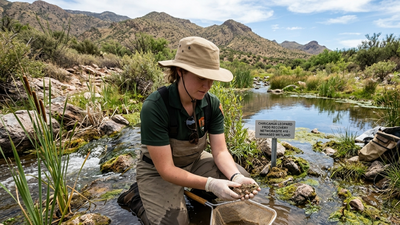
The FROG Conservation Project had worked in the watershed from 2010 to 2013, with the wider partnership continuing under the same name from 2014 through 2019. Its work combined invasive species control with habitat restoration, monitoring and the establishment of additional leopard frog populations.Bullfrogs were successfully eradicated from the Cienega Creek complex in 2013. That did not mean the threat had disappeared. A separate population could move in from surrounding areas, so conservationists created a buffer zone extending through Sonoita towards the Mustang Mountains. Starting in 2013, University of Arizona scientists checked stock tanks in this area each year and removed bullfrogs when they were found. Arizona Game and Fish Department biologists joined the monitoring effort in 2015, with help from the US Forest Service and the Appleton-Whittell Research Ranch.The removal work itself varied with the habitat and life stage of the frogs. US Fish and Wildlife Service reported, teams used draining, dip and seine nets and, for adult bullfrogs in complicated pools, shooting with .22-calibre rifles. Fine-mesh hoop traps were useful for catching tadpoles. The timing mattered too, with early-season removal of adults and juveniles intended to prevent breeding and dispersal later in the summer.
Arizona restored ponds to create stronger habitat for leopard frogs
Removing a predator would have meant little if suitable habitat was unavailable. Some livestock water infrastructure was enhanced or converted so that it could provide permanent, drought-resistant water for native wildlife as well as working ranches.The project found that larger ponds tended to hold more frogs, giving their populations greater resilience when conditions changed. Permanent water was important in an arid landscape, while vegetation such as pondweed could provide cover and feeding areas for young leopard frogs. Maintained ponds supplied by pumps and wells could also continue providing habitat during dry periods.The project eventually set out practical recommendations for new leopard frog habitat. Ponds were advised to be larger than 0.1 acres, retain permanent water and contain plants such as pondweed and spikerush. A deeper central section could provide a refuge when seasonal drying occurred or when pond infrastructure failed. Regular checks were also recommended so managers could keep track of water conditions and frog populations.
The reintroduction network expanded
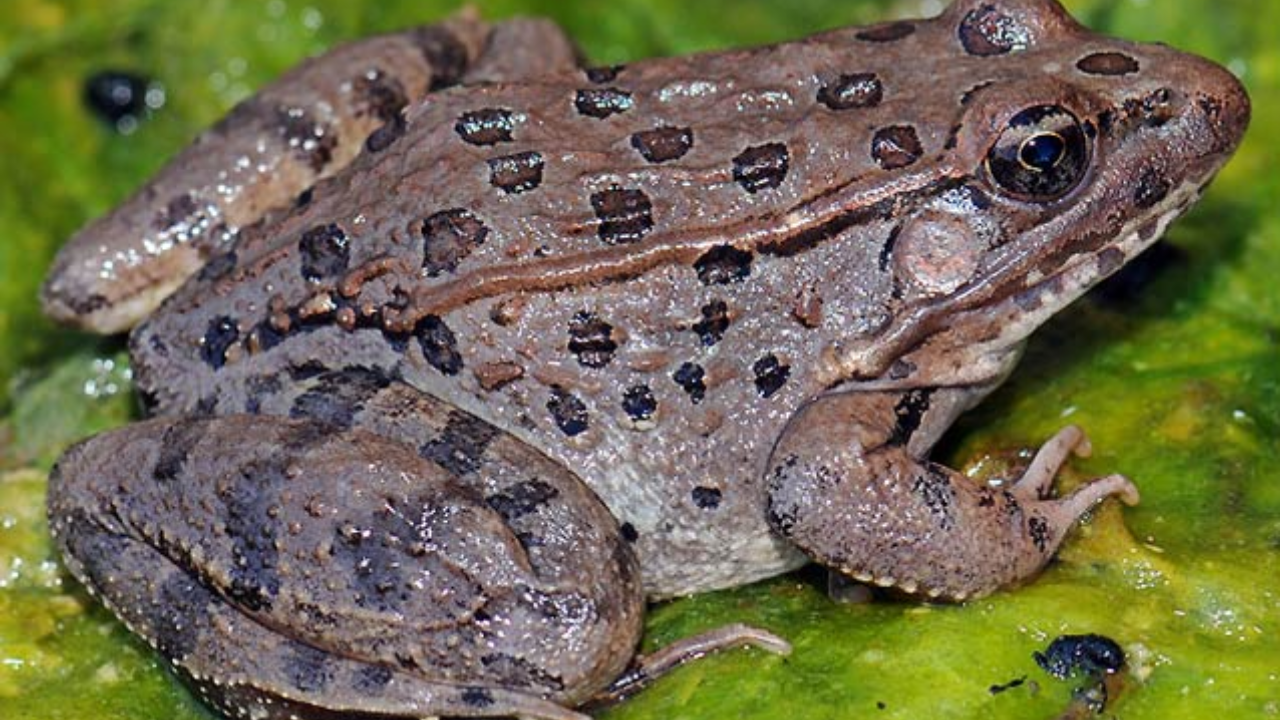
The changes became visible in the distribution of Chiricahua leopard frogs. As reported by US Fish and Wildlife Service, partners raised and released 4,769 frogs at 10 new sites. In 2013, the reintroduction area contained seven breeding sites covering about 42 square kilometres. By 2019, it had expanded to 19 sites covering 84 square kilometres.The case study does not say that 19 sites were all actively breeding by 2019. It reports that Chiricahua leopard frogs were present at 24 sites across the wider management area at that point, including six that were active breeding sites. The 19-site figure refers to the expanded reintroduction area and is therefore better understood as a measure of the network’s reach rather than a count of breeding populations alone.Frogs were also moving between sites. The project recorded an average straight-line movement of 7.43 kilometres, while one Chiricahua leopard frog travelled 15.13 kilometres, described in the case study as the longest documented movement for the species. Such movements helped form what conservationists call a metapopulation, with separate breeding groups linked by occasional dispersal.
Disease added another obstacle for threatened leopard frogs
Bullfrogs were not the only obstacle. Chytrid fungus was detected in the project area in autumn 2013, when a substantial die-off of Chiricahua leopard frogs was observed at wildlife ponds. Monitoring suggested that disease effects varied according to habitat, temperature and season. Natural spring-fed sites appeared to offer better adult survival through winter than some constructed ponds when chytrid was causing problems.