





Headlines

24-million-year-old Kevda fossil leaves discovered in Assam reveal ancient tropical forests of India |

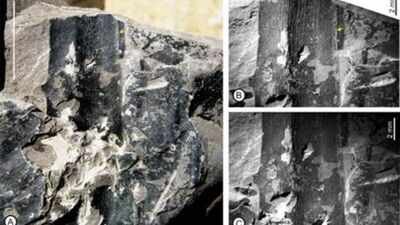
pc: Study: Fossil leaves of Pandanaceae from India suggest Paleogene persistence of the family in South Asia For most people, Kevda is recognised by its unmistakable fragrance. Its flowers are distilled into the aromatic essence used in sweets, perfumes, religious offerings and traditional remedies across India. Yet the plant has quietly carried a far older…
Read More

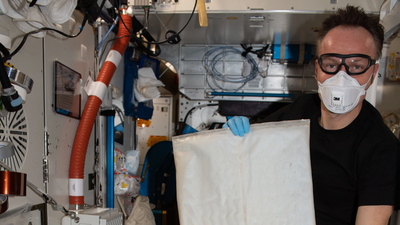
International Space Station’s $23 million toilet does far more than collect waste. It helps recycle about 98% of the station’s water into drinking water |

Life aboard the International Space Station (ISS) depends on making the most of every available resource, especially water. Transporting supplies from Earth is enormously expensive, so astronauts cannot simply rely on regular deliveries for drinking water. Instead, the ISS uses one of the most sophisticated recycling systems ever built. At the heart of that system…

Read More

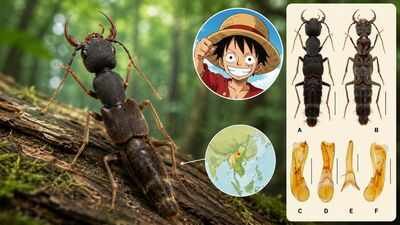
Scientists discover a new beetle genus named after One Piece’s Luffy, and its unusually long body parts explain why |

A scientific paper describing a previously unknown group of rove beetles has produced an unusual meeting point between taxonomy and popular culture. Researchers have introduced a new beetle genus named Luffy, borrowing the name of Monkey D. Luffy, the central character from the long-running manga and anime series One Piece. While the choice may appear…

Read More

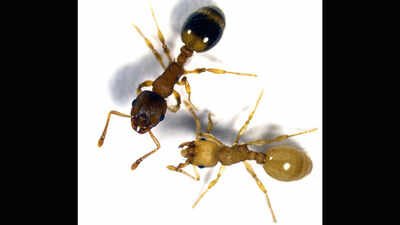
A tapeworm infects worker ants and makes them live several times longer by turning their bodies more like those of queens

A worker ant of the species Temnothorax nylanderi infected with the tapeworm Anomotaenia brevis, recognizable by its yellowish coloration, alongside an uninfected worker (Credit: Susanne Foitzik) Deep inside the damp leaf litter of the Lenneberg Forest near Mainz, Germany, tiny worker ants of the species Temnothorax nylanderi are living surprisingly long lives. While a normal…

Read More

Quote of the day by Marie Curie: “I was taught that the way of progress was…” – why real progress is never as fast as we expect |

Two people can start the same ambitious project and expect completely different timelines for it to pay off. One assumes real progress should be visible within weeks, gets discouraged when it isn’t, and quietly abandons the work. The other accepts from the outset that meaningful results might take years, and keeps going long after the…

Read More

Nasa discovered a deep blue planet 63 light-years away, but its blue colour comes from glass, not water |

From a great distance, the planet could easily give the wrong first impression. Seen in visible light, it appears as a rich blue world, bringing to mind the familiar colour of Earth as viewed from orbit. Yet the resemblance ends almost immediately. Instead of oceans reflecting sunlight, this distant planet is wrapped in an atmosphere…

Read More

Invasive plants may be boosting mosquito numbers in lower-income areas, showing how neighbourhood vegetation can quietly shape public-health risks

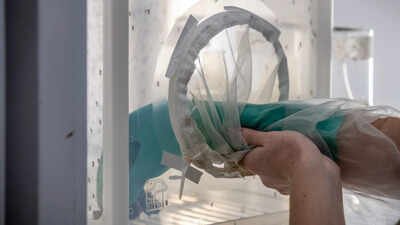
Hand reaching into a mosquito enclosure. Credit: Credit: Edwin Remsberg / University of Maryland Low-income urban neighbourhoods in Baltimore and Washington, DC, have higher mosquito numbers partly because of the types of trees growing on their streets and in empty lots, according to new research published in the Journal of Medical Entomology.The study, co-authored by…

Read More