







Before humans learned to make fire, they may have carried it: Study reveals 1.7 million-year-old evidence |

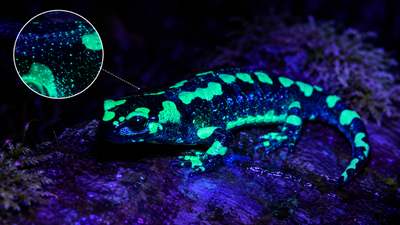
Inside the limestone chambers of South Africa’s Wonderwerk Cave, small fragments of bone have been telling a story that is only now becoming legible. The material itself is unremarkable at first glance, scattered, fragile, long stripped of any obvious context. Yet when placed under particular wavelengths of light, some of it behaves differently, as though…

Read More

San Andreas Fault stress reaches highest level in 1,000 years: What scientists discovered beneath California |

The San Andreas Fault, long embedded in California’s public imagination, has once again drawn scientific attention after new analysis suggested it may be holding more accumulated stress than at any point in the past thousand years. The finding does not come with any reliable sense of timing, but it has reopened questions among researchers who…

Read More

German startup unveils solar panel that produces hydrogen without electricity; here’s how it works |

Producing green hydrogen has always required two separate machines: solar panels to generate electricity and an electrolyser to split water using that electricity, both of which add cost, maintenance, and often a grid connection. A four-person spin-off from Germany’s Karlsruhe Institute of Technology says it has found a way to skip the middle step entirely….

Read More

Ancient ocean ice reveals radioactive stardust falling on Earth; should we be worried |

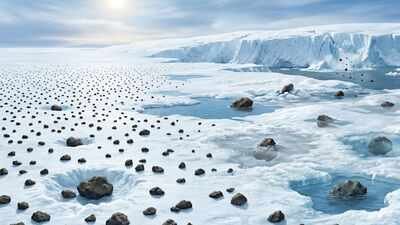
Radioactive specks buried deep inside ancient ocean crust are forcing scientists to rethink what Earth has been quietly passing through in space. These traces are not ordinary geological leftovers. Instead, they appear to be fragments of radioactive stardust material forged in violent cosmic events and scattered across the galaxy. What makes the discovery even more…

Read More

Quote of the day by English physician Edward Jenner: “The joy I felt at the prospect before me of being the instrument destined to take away from the world one of its greatest calamities was so excessive that…” |

Edward Jenner (Image: Wikipedia) Imagine being so happy about your work that you lose yourself in a daydream while walking through a field. That is exactly what happened to an English country doctor more than 200 years ago. His name was Edward Jenner, and the work that filled him with such joy went on to…

Read More

Quote of the day by American psychiatrist Frank Pittman: “Marriage, like a submarine, is only safe if you…” |

Frank Pittman (Image: psychotherapy.net) Frank Pittman could have said that marriage requires commitment. Plenty of people have said that. Relationship experts, religious leaders, grandparents, novelists. The thought itself is hardly new.Instead, he brought a submarine into the discussion.That is probably why the quote has survived.“Marriage, like a submarine, is only safe if you get all…

Read More

Could aliens already be in our Solar System? Scientists say we can’t rule it out |

Humanity has already sent five spacecraft on trajectories that will eventually carry them beyond the Solar System, demonstrating that technologically advanced civilisations can launch interstellar probes. That raises an intriguing possibility. Could another civilisation have done the same and sent robotic explorers to our cosmic neighbourhood? According to a new study by astronomer T. Joseph…

Read More

Cotton-candy planets and metal rain: NASA finds some of the strangest worlds in space |

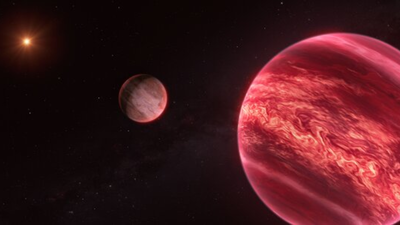
Astronomers have catalogued more than five thousand planets orbiting distant stars, and a handful of them defy almost everything scientists thought they knew about how planets should look or behave. Using telescopes like Hubble, James Webb, and ground-based observatories such as Gemini South, researchers have found worlds so strange that they initially seemed implausible: a…

Read More

Scientists turn dairy and tofu waste into beads that capture carbon dioxide from the air |

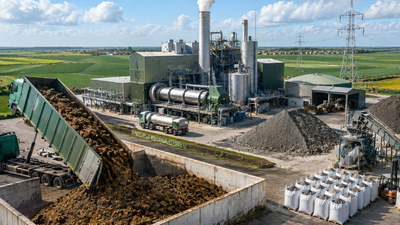
Every year, the dairy and tofu industries generate enormous quantities of protein-rich liquid waste that mostly gets thrown away. Scientists at ETH Zurich have now found a use for it that has nothing to do with food. Researchers led by materials scientist Raffaele Mezzenga extracted proteins from this waste stream, assembled them into tiny porous…

Read More