









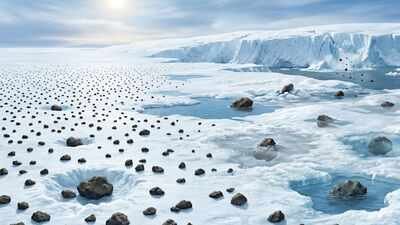
More than 60% of all meteorites ever found on Earth have been recovered from Antarctica, where dark rocks can remain exposed on bright blue-ice fields for thousands of years. Now, climate warming is putting some of these extraterrestrial samples at risk before scientists can collect them. A journal published in Nature Climate Change, titled ‘Antarctic meteorites threatened by climate warming’, suggests that climate warming can cause meteorites to sink into the ice and become inaccessible. The researchers estimate that about 5,000 meteorites are currently becoming inaccessible each year, while only around 1,000 are collected annually. Their modelling suggests that about 24% of Antarctic meteorites could be lost by 2050, regardless of the emissions scenario. By 2100, the projected loss could reach about 76% under a high-emissions scenario. The findings matter because each meteorite can provide evidence about the history of our Solar System and the materials that reached Earth long ago, before they can be found and studied.
Why Antarctic meteorites are disappearing from the ice
Antarctica is the world’s richest source of recovered meteorites, with more than 60% of all known finds collected from the ice sheet. Many appear in blue-ice areas, where snow and ice movement exposes rocks that were once trapped below the surface. Some zones concentrate meteorites over tens to hundreds of thousands of years. Yet warming threatens this process. Meteorites are often dark and absorb solar energy even when air temperatures remain below freezing. The warm rock can melt a small area of ice underneath it. As that area deepens, the meteorite sinks and may become buried by ice. Once it disappears from the surface, researchers can no longer collect it easily. Even modest warming can therefore affect meteorite recovery sites.
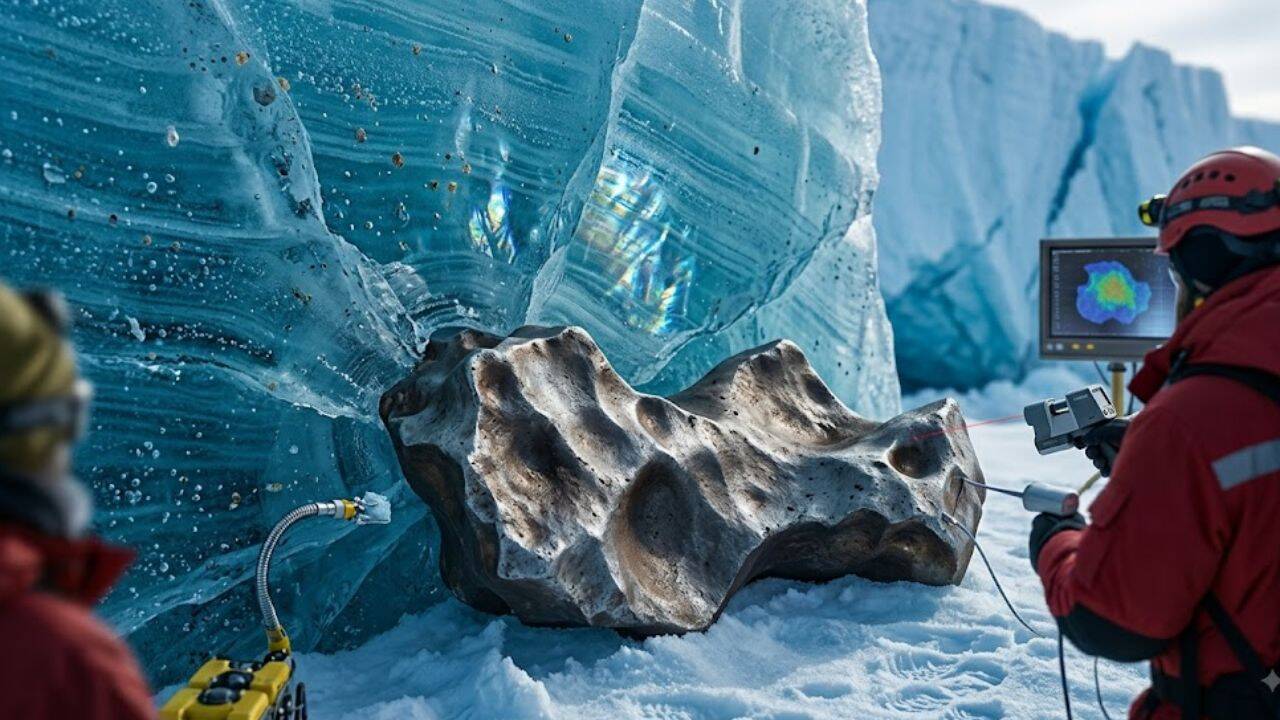
Why Antarctic meteorites are disappearing from the ice (PC: AI Generated)
How many Antarctic meteorites could be lost by 2050
The researchers used a machine-learning model together with climate simulations to estimate how warming could change meteorite-rich areas across Antarctica. They found that about 5,000 meteorites become inaccessible each year under present warming conditions. That is roughly five times the rate at which scientists currently recover meteorites. Their projections suggest that about 24% of meteorites could be lost from the surface by 2050, regardless of the emissions pathway considered. The losses are not expected to be evenly spread across the continent. Some well-known collection areas are particularly vulnerable. In certain sites, researchers project that up to half of the meteorites could disappear before 2050. The results show that scientists have less time to recover many meteorites exposed on the Antarctic ice before they become buried.
Why saving Antarctic meteorites matters
Meteorites are more than unusual rocks. They are samples from extraterrestrial bodies and can provide evidence about the origin and evolution of the Solar System. Antarctic collections are valuable because the cold, dry environment preserves exposed meteorites for long periods and makes their dark surfaces easy to spot against blue ice. The researchers say preserving remaining samples will require faster and more coordinated searches, particularly in vulnerable regions. They suggest revisiting known sites and exploring poorly studied areas over the next 10-15 years. Robotics, aerial surveys and improved modelling could also make searches more efficient. However, the study concludes that the only way to preserve all remaining unrecovered Antarctic meteorites is to rapidly reduce greenhouse gas emissions and limit future warming.
Why some parts of Antarctica are more vulnerable
The risk is not the same across Antarctica. Meteorites are concentrated in specific areas where ice movement and surface conditions bring them together and keep them exposed. The study found that meteorite-rich regions at lower elevations are generally more vulnerable to warming than those at higher elevations. This means future losses could be concentrated in some of the most productive collecting areas. As these sites become less favourable for surface recovery, researchers may need to shift attention to regions that remain colder and more stable. The uneven nature of the projected losses also means that protecting Antarctic meteorites is not simply a matter of searching more widely. Scientists need to identify which areas are likely to remain accessible and prioritise them for future expeditions.