








Headlines

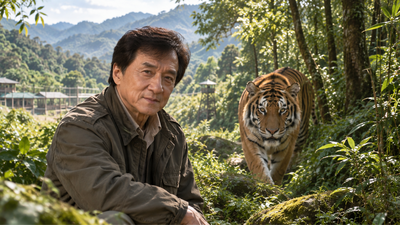
Jackie Chan backed a project trying to bring the South China tiger back from the brink; the species hasn’t been confirmed in the wild for decades |

Jackie Chan supported Save China’s Tigers, a conservation project attempting to restore the South China tiger after the subspecies disappeared from confirmed wild sightings decades ago. Once widespread across southern and central China, the tiger (Panthera tigris amoyensis) suffered a dramatic decline because of hunting, habitat loss and falling prey numbers. Founded by conservationist Li…
Read More

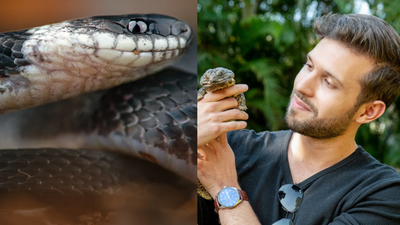
Meet Alejandro Arteaga: The Ecuadorian biologist who went into cloud forests looking for reptiles for a book and ended up finding a snake new to science |

Image: Left/Ninia guytudori/By:Alejandro Arteaga/Right/Alejandro Arteaga/By:Kate Berry / Australia Zoo Alejandro Arteaga went into the cloud forests of Ecuador with a very specific mission, he was searching for reptiles to document for a book on the country’s extraordinary herpetological diversity. Instead, one of his field trips produced something far more significant, a snake that science had…

Read More

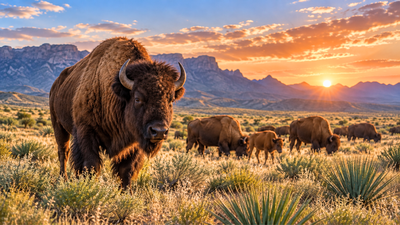
Mexico brought bison back to the Chihuahuan Desert after they were hunted to extinction 160 years ago; within months, they began restoring soil and the ecosystem |

Mexico has brought American bison back to parts of the Chihuahuan Desert after the animals disappeared from much of their historical range in northern Mexico during the 19th century. In 2009, 23 bison from Wind Cave National Park in South Dakota were moved to Rancho El Uno in Chihuahua as part of a binational conservation…

Read More

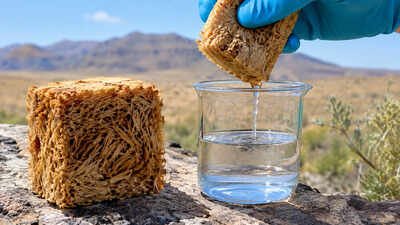
Scientists built a wood-based sponge that pulls water from air as dry as 15% humidity; it produced up to 1.72 litres per kg per day

Image: AI-generated representation of a wood-based sponge that pulls water from air as dry as 15% humidity Water vapour is present almost everywhere, even in places where rivers, lakes and groundwater are scarce. The challenge has always been turning that invisible moisture into usable freshwater efficiently enough to make atmospheric water harvesting practical. Now, researchers…

Read More

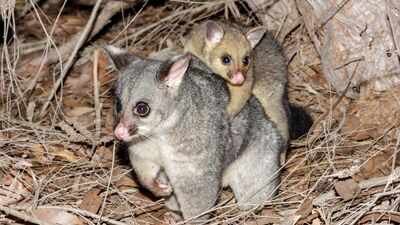
In 1837, New Zealand imported possums for a fur trade; 189 years later, aerial photos show they have damaged about half the vulnerable trees in one rare South Island forest

PossumsRepresentative image In 1837, New Zealand introduced Australian brushtail possums in the hope of building a profitable fur industry. The animals were expected to provide valuable pelts and help create a new rural economy, but the experiment had consequences that stretched far beyond anyone’s expectations. Nearly two centuries later, possums have become one of the…

Read More

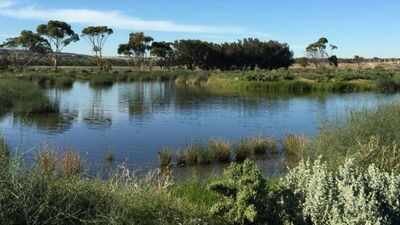
Australia planted vast commercial forests across the Green Triangle; decades later, wetlands are running dangerously low |

Wetland in South Australia. Image Credit: Department for Environment and Water (South Australian Government) Australia’s Green Triangle became a major plantation forestry region after large areas of land were converted to commercial forests. Decades later, the Lower South East of South Australia is facing growing pressure on its groundwater system. Assessments show that plantations can…

Read More

In 2016, NSW began fencing feral cats and foxes out of three reserves; 10 years later, 13 locally extinct species had returned, some after 100+ years, and were breeding again

Thirteen native animal species that had become locally extinct in New South Wales have returned and started breeding again across three major conservation reserves. The recovery comes a decade after state authorities built large predator-proof fences to keep out feral cats and foxes. The results come from a 10-year conservation partnership involving the NSW National…

Read More

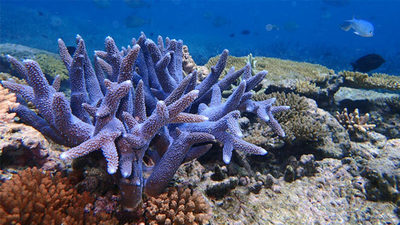
In 2015, Hawaii rescued fragments of a coral found only in Kaneohe Bay; after its wild colonies disappeared, scientists grew it in a nursery and returned it to the reef

Acropora muricata, Heron Island, Australia. (Photo Credit: Claire Lager, Smithsonian) A rare coral species found nowhere else on Earth except Kaneohe Bay in Hawaii has been successfully returned to its natural habitat after completely disappearing from the wild. The recovery project was led by the Hawaii Coral Restoration Nursery, a facility run by the state…

Read More

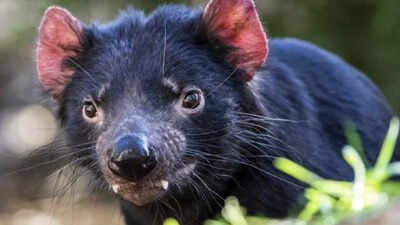
In 2012, Tasmania moved 15 devils to Maria Island to protect the species from facial-tumour disease; after 28 were released by 2013, a 3,000-pair penguin colony disappeared

The facial tumour had severely affected devil populations in many parts of Tasmania In 2012, 28 Tasmanian devils were brought to Maria Island off Tasmania’s east coast as an “insurance population” when facial tumour disease was severely affecting the species. The devils have since thrived, with their numbers reaching up to 90. But their success…

Read More

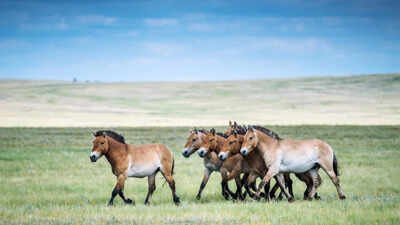
World’s only truly wild horse was once extinct in the wild; 40 years ago China began making efforts to bring it back, and now their population tops 900 and are independently reproducing

​2025 monitoring data showed the horses were reproducing without constant human intervention. The Przewalski’s horse, considered the world’s last truly wild horse, has returned to China’s grasslands after once disappearing from the wild in the country. Forty years after China began its Wild Horse Return Program, the population of the species has grown to about…

Read More