








Turning waste into wealth: New study finds that human urine can turn into low-energy fertiliser |

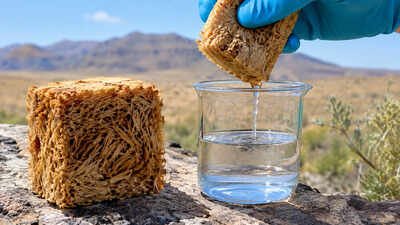
Modern sanitation systems have long treated human urine as waste, flushing away valuable nitrogen and phosphorus that are essential for plant growth. However, a recent study published in the Journal of Environmental Chemical Engineering proposes a paradigm shift: converting this overlooked byproduct into a sustainable, low-energy fertiliser. By utilising forward osmosis, researchers have successfully concentrated…

Read More

Chinese researchers turn desert sand into fertile soil in just 10 months using cyanobacteria |

The researchers at the Shapotou Desert Experimental Research Station in China have developed a revolutionary approach for reversing desertification and converting barren, shifting sand into productive land within only 10 months. Using cyanobacteria, which are specialised, photosynthetic microorganisms, the researchers have created biological soil crusts that form a living layer on the surface of the…

Read More

Donald Trump’s ‘cooling planet’ claim clashes with scientific data showing sustained global warming |

In a recent public event, US President Donald Trump reiterated claims suggesting that the Earth is experiencing a cooling trend, reigniting public and political interest in the president’s claims. Historically, these assertions have been sporadically made during many moments of his presidency and have produced renewed public and political responses. In the present moment, these…

Read More

‘Only one chance in this lifetime’: Artemis II astronaut shares rare ‘Earthset’ footage from space — watch

Artemis II commander Reid Wiseman captured a rare “Earthset” during the mission’s lunar flyby, showing our planet disappearing behind the Moon. The footage, taken from deep space, highlights the Moon’s surface as Earth shrinks to a crescent and vanishes. This once-in-a-lifetime view, last seen during the Apollo missions, occurred as the crew passed over the…

Read More

50,000-year-old Neanderthal baby found with completely unexpected growth pattern: New fossil rewrites early human biology |

The latest research on a Neanderthal infant from Amud Cave in Israel is giving a clearer picture of how different early development may have been in our extinct relatives. The remains, dated to around 51,000 to 56,000 years ago, suggest something unusual, as reported by Current Biology. The baby was not small in the way…

Read More