









New study suggests many dinosaurs may have died within hours, not months, after the asteroid struck Earth |

For decades, the extinction of the dinosaurs has usually been pictured as a slow collapse. An asteroid struck Earth, sunlight faded behind dust, temperatures changed, and ecosystems gradually unravelled. That broad sequence still stands, yet a new study argues that the first chapter of the catastrophe may have unfolded far more quickly than many imagined….

Read More

Humans may not be the only primates with geometric intuition as monkeys recognise shapes in remarkably similar ways, study finds |

For decades, one idea has shaped discussions about human intelligence: our ability to recognise geometric patterns was thought to set us apart from other primates. People naturally notice features such as symmetry, parallel sides and right angles, and many researchers have argued that this reflects a uniquely human way of thinking.A new study was published…

Read More

For centuries, scientists couldn’t explain why flamingos aren’t born pink until a breakthrough in the 1960s revealed the answer |

For centuries, flamingos were recognised by their vivid pink feathers, yet the reason behind that striking colour remained uncertain. Early naturalists could describe what they saw, but they could not explain why young flamingos emerged from the nest in muted shades before gradually becoming brighter as they matured. The answer only began to take shape…

Read More

Quote of the day by Jane Goodall: Why “Even that great scientist Albert Einstein sustained a mystical outlook on life” reminds us that wonder and humility go hand in hand |

Science has answered questions that once seemed impossible from explaining how galaxies evolve to revealing the structure of DNA. Yet with every discovery comes the realisation that there is still so much we do not know. Many of history’s greatest scientists believed that knowledge does not take away the mystery of the universe; instead, it…

Read More

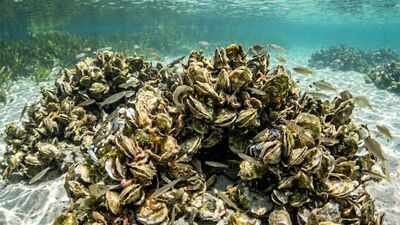
New Zealand is investing $202 million in a mega-operation aimed at restoring three islands destroyed by invasive species, with the help of Maori natives

New Zealand has launched one of the largest ecological restoration projects in its history along with the Maori natives of the country. It is attempting to eliminate invasive mammals from three islands in order to revive the native birds, marine animals and land.The project will be taking place in Maukahuka/Auckland Island, Rakiura/Stewart Island and the…

Read More

Arika: Minnesota student Arika Kundu, 13, designed a method that turns peanut-shell waste into a material for removing pesticide residues from fresh produce; she is now competing for a $25,000 science prize

Arika Kundu, 13, uses peanut shells to help remove pesticide residues from produce. A 13-year-old Indian-American student from Minnesota has invented a method to reduce pesticide residues on fresh fruits and vegetables by using peanut shells, something that is usually thrown away.Arika Kundu, a seventh-grade student at Minnetonka Middle School East in Shorewood, Minnesota, developed…

Read More

In 1898, a mysterious boat moved without a captain and left New York crowds speechless until Nikola Tesla revealed his secret |

In the autumn of 1898, visitors at Madison Square Garden witnessed something that looked impossible. A small metal boat moved across a pool without a visible person guiding it. It changed direction, responded to commands, and appeared to act with a mind of its own. The demonstration came from Nikola Tesla, an inventor already known…

Read More

Why the dinosaurs disappeared: The asteroid that ended their reign struck Earth with a force of around 100 million megatons |

For more than 160 million years, dinosaurs dominated life on Earth. They survived shifting continents, volcanic eruptions, changing climates and countless evolutionary challenges, becoming the planet’s undisputed apex animals. Then, around 66 million years ago, their reign ended with astonishing speed in geological terms. Today, scientists overwhelmingly agree that the extinction was triggered by a…

Read More

Washington teenager Lakshmi Agrawal made a jute-waste sponge for salmon-killing tyre pollution; after it removed up to 80% in lab tests, she won $75,000

Lakshmi Agrawal (Image Credit: Society for Science) An 18-year-old student from Bellevue, Washington, has turned an agricultural waste product into a promising solution for one of the Pacific Northwest’s most pressing environmental challenges. According to the Society for Science, Lakshmi Agrawal won the $75,000 Regeneron Young Scientist Award at the 2026 Regeneron International Science and…

Read More

Africa’s Lake Chad has shrunk by 90% since 1960, now the government is paying $50 billion to redirect water from the Congo River Basin into the lake

In 1823, British explorers Hugh Clapperton, Dixon Denham and Walter Oudney were some of the first Europeans to document the lake and the surrounding kingdoms. He was struck at the sight of one of Africa’s largest inland lakes. But two centuries later, about 905 of the lake’s surface area has shrunk, leaving only a sliver…

Read More