






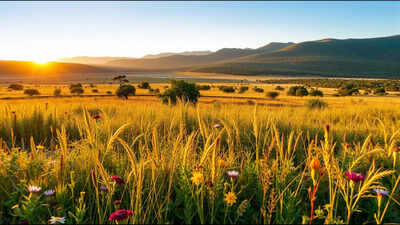
South Africa has launched ReLISA, or Restoring Landscapes in South Africa, a 5-year, €15-million programme aimed at restoring degraded grassland, savanna and thicket ecosystems while expanding protected areas and strengthening climate and water resilience. The initiative is funded by Germany’s Federal Ministry for the Environment through its International Climate Initiative and was jointly launched on October 16, 2025, on the sidelines of the G20 Environment and Climate Sustainability Working Group Ministerial Meeting in Cape Town. The launch brought together South Africa’s Minister of Forestry, Fisheries and the Environment, Dion George; Germany’s Federal Minister for the Environment, Climate Action, Nature Conservation and Nuclear Safety, Carsten Schneider; UNEP Deputy Executive Director Elizabeth Maruma Mrema; and UN Resident Coordinator in South Africa Nelson Muffuh. The programme is designed to connect ecological restoration with protected-area expansion, community partnerships and new approaches to financing conservation at landscape scale.
Decades of land-use pressure have degraded key ecosystems
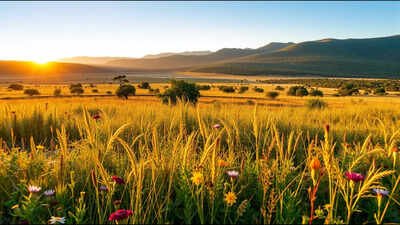
ReLISA focuses on South Africa’s Grassland, Savanna and Thicket Biomes, which EWT says have experienced decades of pressure from intensive land use. The organisation identifies overgrazing, mining, invasive alien plants, drought and fire among the factors contributing to degradation across these landscapes. Climate pressures are adding to those challenges through prolonged drought, high temperatures, wildfires and changing rainfall patterns.A particular focus is placed on Strategic Water Source Areas, or SWSAs. These landscapes are important for South Africa’s water supply while also supporting agriculture, communities and biodiversity. EWT says degradation in these areas can affect water retention and erosion, while restoration can contribute to improved ecosystem resilience. The programme therefore links habitat restoration with broader goals around water security, climate adaptation and the livelihoods that depend on healthy landscapes.
The programme brings together conservation, science and development organisations
ReLISA is being implemented by a consortium that includes the United Nations Environment Programme, Endangered Wildlife Trust, United Nations Development Programme, United Nations Educational, Scientific and Cultural Organisation, Council for Scientific and Industrial Research, C4 EcoSolutions and Unique Landuse. The programme’s approach combines ecological restoration with economic valuation, financial innovation and collaboration with communities and land users.Within the programme, EWT is working in 3 target landscapes: the Northern Drakensberg, Soutpansberg and Amatholes. Field officers in these areas work with land users on rangeland management, ecological restoration and invasive alien plant clearing. The organisation says the work is intended not simply to increase the amount of protected land, but to strengthen connections between important wildlife corridors, intact habitat and properties containing threatened species.
ReLISA aims to have 100,000 hectares under restoration by 2030
One of the programme’s central targets is to have 100,000 hectares across its key landscapes under restoration by 2030. The target covers landscapes considered important for biodiversity, water supply and climate resilience.The programme also includes plans to expand protected areas through biodiversity stewardship mechanisms. In the Northern Drakensberg, EWT says it is in the very early stages of establishing a proposed biosphere reserve focused on grassland habitat and existing protected-area networks along the northeastern escarpment between Royal Natal National Park and Memel in the eastern Free State. The proposal is part of a broader effort to connect conservation areas rather than treating individual protected sites as isolated units. The restoration target should not be interpreted as 100,000 hectares already restored. It is a target for the amount of land the programme aims to bring under restoration by 2030.
New financing models are central to the restoration strategy
ReLISA is also intended to address one of the persistent challenges facing large-scale restoration: securing long-term financing. EWT says the programme is developing bankable business models designed to attract impact investors, agribusinesses and other private-sector participants to nature-based solutions. Potential mechanisms include payments for ecosystem services, carbon-focused finance through carbon credits and water-fund arrangements. The objective is to connect the ecological value of restoration with financial models that can support conservation work beyond individual grants or short-term projects.This approach builds on the idea that restoration can provide benefits beyond biodiversity. EWT identifies potential gains including improved water security, soil stabilisation, restored carbon stocks and stronger ecosystem resilience, while also linking healthier landscapes to agriculture, tourism and local livelihoods. These are intended outcomes of the programme rather than results that have already been demonstrated by ReLISA.
The programme is intended to inform wider restoration efforts
ReLISA also has a policy and knowledge-sharing component. EWT says the programme will work with government partners on policy development and share lessons from its restoration work nationally and internationally. The stated aim is to help develop a longer-term restoration economy in South Africa by combining ecological work with community involvement and sustainable financing.The programme was officially launched during South Africa’s 2025 G20 Environment and Climate Sustainability Working Group Ministerial Meeting in Cape Town. South Africa’s Department of Forestry, Fisheries and the Environment recorded the launch as part of the ministerial meeting’s October 16 activities and described ReLISA as a partnership with Germany and UNEP focused on rehabilitating degraded land, creating jobs and building climate resilience. Its 2030 target now provides a measurable framework for the programme: bringing 100,000 hectares under restoration while testing ways to connect ecological recovery, protected-area expansion, water security and private investment across some of South Africa’s degraded landscapes.