






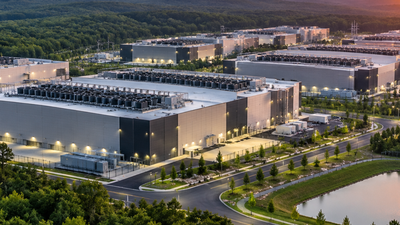
A Pennsylvania developer is offering an unusually large financial incentive to win support for a proposed artificial intelligence data centre campus, but many residents say the money is not worth the potential cost to their community. NorthPoint Development has proposed Project Hazelnut, a data centre campus covering roughly 1,300 acres in Hazle Township, in the Pocono foothills. As part of a broader community-benefits package, the company says about 4,500 eligible households would each receive $10,000 if the project is approved and reaches the required stage. That would put the direct household fund at about $45 million. Despite the offer, residents have raised concerns about noise, light pollution, property values, energy demand, water use and the long-term impact of the development.
NorthPoint’s $10,000 offer to residents
NorthPoint announced its direct resident grant programme as part of a wider package linked to Project Hazelnut. The company says it has set aside $45 million to provide $10,000 to every eligible Hazle Township household. Residents would be free to use the money as they choose, although NorthPoint says it could help with home maintenance, improvements, landscaping or solar projects. Importantly, the payment is conditional on the project moving forward. According to NorthPoint’s project FAQ, the $10,000 would be paid when the certificate of occupancy is issued for the first data centre building, which the company currently anticipates could happen in late 2027.
The proposed campus could have 15 buildings
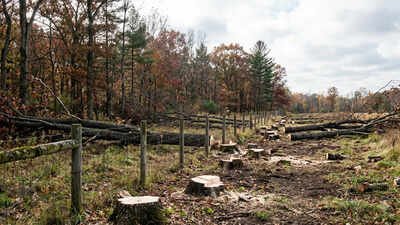
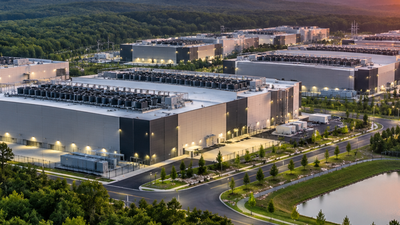
Project Hazelnut is planned as a large-scale data centre campus near Humboldt Industrial Park. NorthPoint’s proposal covers approximately 1,280 to 1,300 acres and could eventually include as many as 15 data centre buildings. The developer says the project would bring construction and permanent employment, new tax revenue and infrastructure investment to the area. NorthPoint has also promoted environmental measures, including preserving large portions of the property as forest and open space and designing the facility to avoid using local drinking water for cooling. These claims come from the developer and should be distinguished from independently established impacts because the project has not yet been approved or built.
The offer is part of a much larger package
The $45 million household fund is only one part of NorthPoint’s proposed community benefits. The company’s current plan describes a total commitment of $165 million. That includes $15 million for community programmes such as workforce development, education, arts, recreation and youth initiatives, plus another $105 million over 15 years. NorthPoint says the latter would provide Hazle Township with up to $7 million a year that could be used for local services, including establishing a police department and reducing residents’ trash fees. The developer previously announced a $30 million community development fund aimed partly at offsetting potential short-term local utility-rate increases, but its later proposal expanded the overall community-benefit commitment.
Why residents remain opposed
For many opponents, the central issue is not simply whether $10,000 is a significant amount of money. Residents interviewed about the proposal have questioned whether a one-time payment can compensate for potential long-term changes to the area. Concerns include construction and operational noise, light pollution, possible effects on property values, increased energy demand and the broader environmental footprint of a major data centre campus. Some residents have described the payments as resembling a bribe, while others have argued that the potential effect on nearby homes could outweigh the financial benefit. At the same time, the offer has not been universally rejected, and some residents acknowledge that $10,000 would be substantial for local households.
The project still faces major legal hurdles
The proposed campus is far from construction. Hazle Township supervisors rejected NorthPoint’s land-development application in November 2025. The proposal was for a 15-building data centre complex on roughly 1,280 acres. In June 2026, a Luzerne County judge denied an appeal by NP Hazleton Logistics, a NorthPoint affiliate, and said the developer could pursue approval through the township’s zoning hearing board because the existing zoning ordinance did not specifically address data centres. The township subsequently declared parts of its zoning ordinance invalid for failing to address data centres and imposed a limited 180-day moratorium while officials worked on new regulations. NorthPoint’s legal challenge and the zoning process therefore remain important obstacles to the project.
Pennsylvania is tightening data centre rules
The dispute comes as Pennsylvania itself is imposing tougher requirements on large data centre projects. On August 18, 2026, Governor Josh Shapiro signed Executive Order 2026-05, establishing the state’s Responsible Infrastructure Development, or GRID, requirements. Under the order, the Pennsylvania Department of Environmental Protection will review qualifying data centre permit applications only after developers make legally binding commitments to meet the requirements and obtain necessary local approvals. The rules address energy affordability, environmental protection, water use, transparency, local hiring and community benefits. The administration also removed data centres from the state’s Fast Track permitting programme and prohibited the use of nondisclosure agreements for data centre projects.
The wider fight over AI infrastructure
Hazle Township’s dispute reflects a broader US debate over where the rapidly expanding AI infrastructure should be built and who should pay for it. Data centres can bring construction work, permanent jobs and tax revenue, but communities have increasingly questioned their demands for electricity, water and land. The state’s policy also calls for greater public participation and strict water-conservation measures.