








The Golden Era of TV was littered with peak moments when one suddenly just knew that the series one was watching would remain embedded in posterity forever: when Walter “Heisenberg” White says: “Say my name”, or when Don Draper, while holding forth on nostalgia, tells a bunch of Kodak executives that their slide projector is a time machine. And for those who love dragons and incest, that peak moment came when The Rains of Castamere – the Lannister song – suddenly started playing at the Twins, signalling what posterity will remember as the Red Wedding.That dinner party was actually inspired by real history, specifically the Black Dinner of 1440 and the Massacre of Glencoe in 1692. Another gory chapter of British history was the Wars of the Roses, an internecine struggle for the English throne. In the aforementioned wars, thornier than rosier, the white rose represented Yorkshire while the red one represented Lancashire. Those colour loyalties live on to this day, with Yorkshire’s colours represented by Leeds United and, across the Pennines, Lancashire’s colours represented by Manchester United, who met recently in a Premier League encounter that could have used a few thorns.These days, the Premier League’s Game of Thrones matters about as much to Manchester United as the Iron Throne did to House Frey after Arya Stark came calling, as evidenced by Michael Carrick’s men ended up extending their winless streak to six matches against Leeds United, which really suggests that the Manchester United board should have taken one’s suggestion and stuck to simply swapping interim managers instead of appointing a full-time one. The same team that took more league points than any other club during Carrick’s interim spell last season has now had its worst start to a league season since 1986.So, with reality disappointing time and again, this week’s Offside will take a leaf from Don Draper’s playbook and peddle nostalgia, which in this case is a walk down memory lane with Sir Alex Ferguson, or rather his new book: Games of My Life.Sir Alex, like The Beatles, is one of the most written-about entities in the world, so one would wonder what new insight one can gain from a man who has been in the public eye for decades and whose every word and deed has been scrutinised in excruciating detail.He has written numerous books, but the format is a little different this time, with Sir Alex picking 21 different games over a span of 70 years, and it’s a list so storied that the magical night in Barcelona doesn’t make the cut.There’s the first time he lifted a cup as a 13-year-old for Govan High School, falling in love with the Beautiful Game after watching Real Madrid beat Eintracht Frankfurt 7-3 at Hampden Park in Glasgow, and the hat-trick for St Johnstone that stopped him from taking a leaf from a popular Bollywood actor and emigrating to Canada to become a toolmaker.Some choices are obvious, like the afternoon his Aberdeen thrashed Hibernian 5-0 to break the Old Firm duopoly of Scottish football and win the Scottish league title.
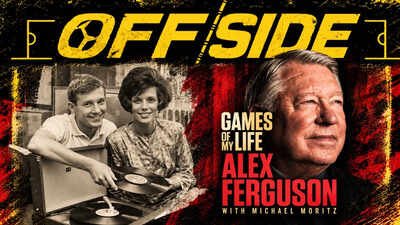
Source: Games of My Life
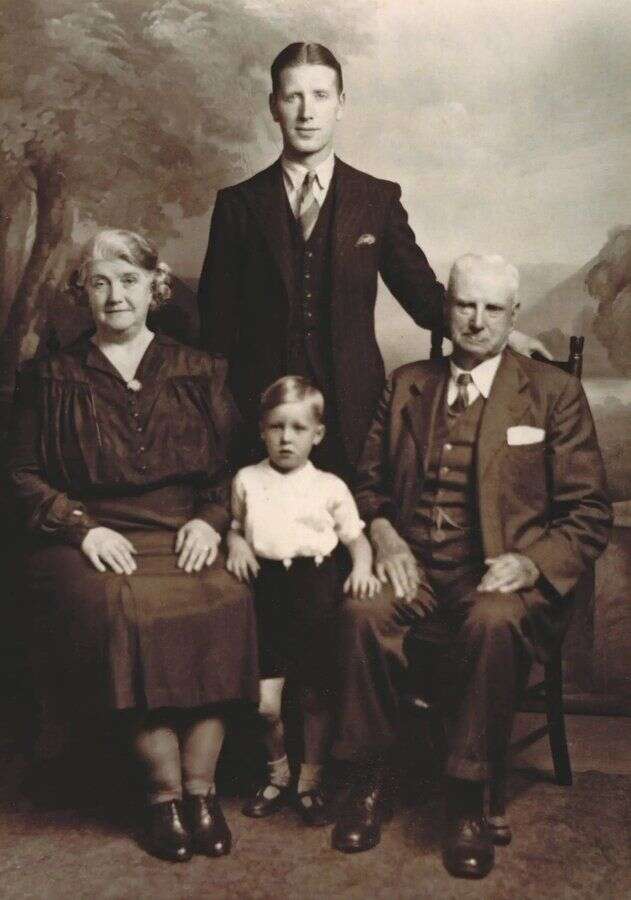
There’s Manchester United’s 1992 defeat to Liverpool that ensured Leeds would become league champions, and the 1-0 defeat of Crystal Palace, during which Dion Dublin broke his leg, leaving Sir Alex in need of a striker. He looked across the Pennines to sign a mercurial Frenchman who would change the destiny of Manchester United and the Premier League.There are two matches against Bolton that stand out for different reasons.The first is in 1995, when Sir Alex sold off many of his top stars and replaced them with youngsters named Beckham, Scholes and Giggs, vindicating his faith in youth. Then there’s a 2007 match against Bolton again, this time signalling the coming of age of Wayne Rooney and Cristiano Ronaldo.Others are more emotional, like his first match back at Old Trafford after suffering a brain haemorrhage that nearly killed him, left him temporarily unable to speak and made him fear for his future, or the 2024 FA Cup final against Man City when Kobbie Mainoo scored the winner, which remains Manchester United’s last trophy.Many of the matches lead into very deep tangents. After all, everyone knows Beckham, Giggs, Scholes, the Nevilles and Butt, but few have heard how the troika of coaches shaped them: Eric Harrison, the youth team coach, Nobby Stiles and Bryan Kidd, who helped mould those youngsters.Sir Alex himself was shaped by a similar upbringing in Govan, the working-class district of Glasgow where his father worked in the shipyards along the River Clyde. He credits his mother Elizabeth with giving him confidence and his father Alexander with instilling his relentless drive to succeed. The latter was a hard taskmaster who would find fault even when his son scored a hat-trick. There were other influences, including Johnny Borland of the Boys’ Brigade and Mr Symington, his school coach, who demanded punctuality and discipline. Long before the famous hairdryer treatment became part of footballing folklore, a young Alex was learning that talent without discipline would only get you so far.Perhaps the most interesting choice is the 1999 Champions League semi-final against Juventus, where Roy Keane produced what Sir Alex considers his greatest performance in a Manchester United shirt. Keane and Sir Alex are no longer on talking terms after the former went full Roy Keane during an MUTV broadcast, but the remarkable tribute, considering how acrimoniously things ended between the two men, is a reminder that even the most bitter personal disagreements cannot completely erase the memory of a footballing genius.Then there’s the final game of his managerial career, a ridiculous 5-5 draw against West Bromwich Albion. For a man who spent nearly three decades demanding discipline, organisation and control, it was a hilariously chaotic way to sign off. Sir Alex had managed 1,500 games for Manchester United, won 13 Premier League titles and conquered Europe twice, and somehow his final act was to watch a team he had built concede five goals to West Brom.
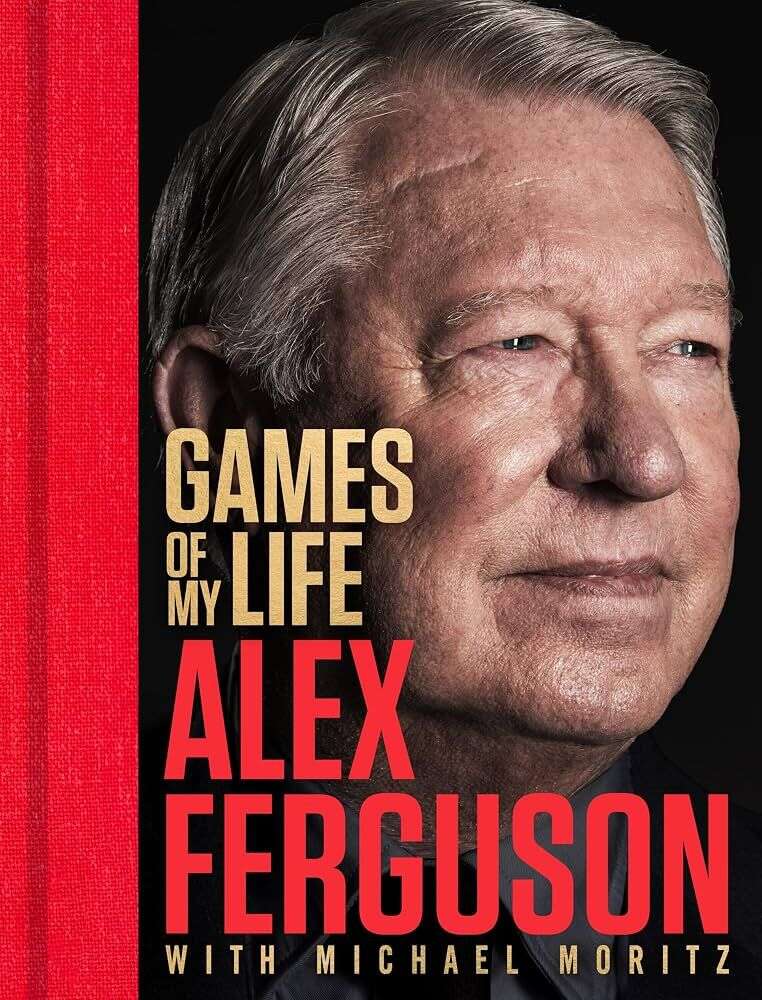
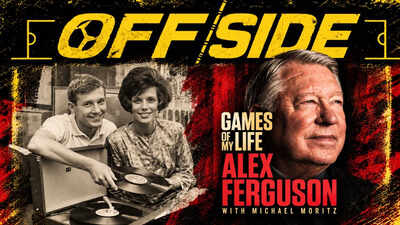
Games of My Life by Alex Ferguson with Miichael Moritz
There are gentler memories too. In 2014, Sir Alex watched his son Darren lead Peterborough United to victory over Chesterfield in the Johnstone’s Paint Trophy final at Wembley. A man who had won practically every major honour available to an English club was now watching his son win a competition that barely registers in the wider footballing consciousness. Yet there it was, among the 21 most important matches of his life. Perhaps there are some victories that mean considerably more when you’re watching from the stands.And then there’s Scotland’s 2021 victory over Israel, which finally resolved one of Sir Alex’s lingering regrets. Despite having conquered English football, won European trophies and received a knighthood, he had never been officially awarded a Scotland cap. He had actually represented his country on a tour in 1967, but those appearances had not been recognised as full internationals. It took 54 years for the Scottish FA to correct the anomaly, and Sir Alex finally received his cap at Hampden Park in October 2021, aged 79.For a man who had won almost everything football had to offer, that small blue-and-gold cap remained a matter of immense Scottish pride. The winning goal that evening, appropriately enough, came from Scott McTominay, another young footballer who had emerged from the Manchester United academy.One realises while reading the book that the most memorable moments of a life rarely follow the hierarchy imposed by history books. The footballing world will forever remember the Treble, the great rivalries and the astonishing collection of silverware, but Sir Alex remembers a schoolboy cup final, his son winning at Wembley and a Scotland cap that arrived more than half a century late. At times, it’s obvious that the man who shaped modern football discourse felt greatly for the fan who had no say in his team’s fortunes, something Sir Alex has also had to contend with in his latter days.And perhaps that’s why the book is such a delightful read for Manchester United fans of a certain vintage, particularly those of us who grew up believing that winning the Premier League was almost a constitutional right. One watched the club lift trophies with the casual entitlement of a hereditary monarch, blissfully unaware that the dynasty would someday end and the heirs would spend the next decade fighting over the furniture.
Source: Games of My Life
Sadly, life is not a Don Draper client pitch and there’s no return to the Golden Era.There’s no time machine. There’s no going back to, say, a pre-COVID world where generative AI didn’t ruin anything. Nostalgia is wonderful, but it comes with a sell-by date. Watching highlights of the glorious European nights and the Fergie-time winners, or remembering what it felt like to watch a group of youngsters dominate the Premier League, won’t change the present. United fans of my vintage joke that our adult lives comprise paying for the joys of the magical United nights of our childhood. Perhaps the mediocrity of adulthood is the price we are paying for the joys of our childhood.The great French philosopher who played a little football once said: “When seagulls follow the trawler, it’s because they think sardines will be thrown into the sea.” Today, we are the seagulls following the trawler, sifting through the sardines of nostalgia because the truth is that Sir Alex is now 84, most of his fledglings are annoying voices on podcasts, the Theatre of Dreams is now the Theatre of Predictable Disappointments and Manchester United can’t even string together enough wins to let a content creator get a haircut.