







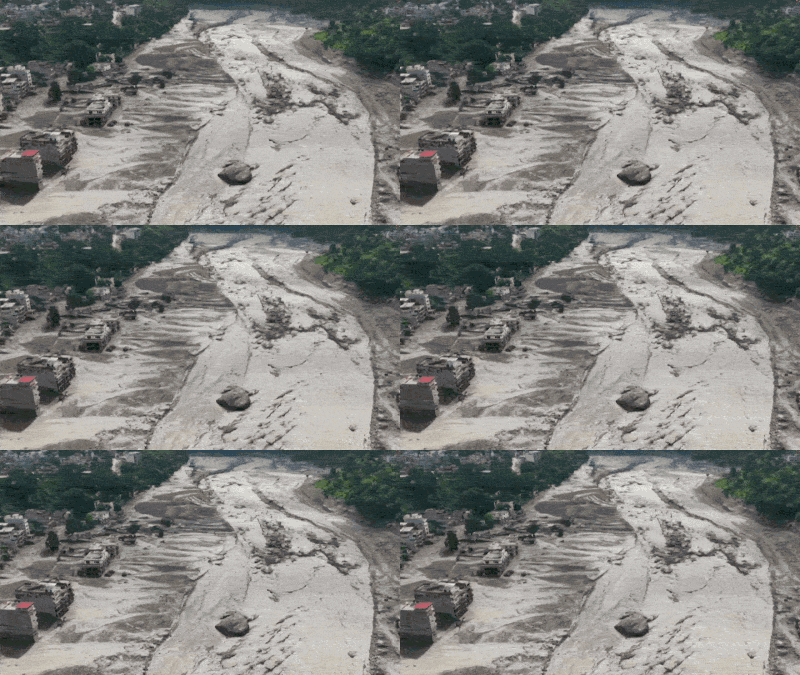
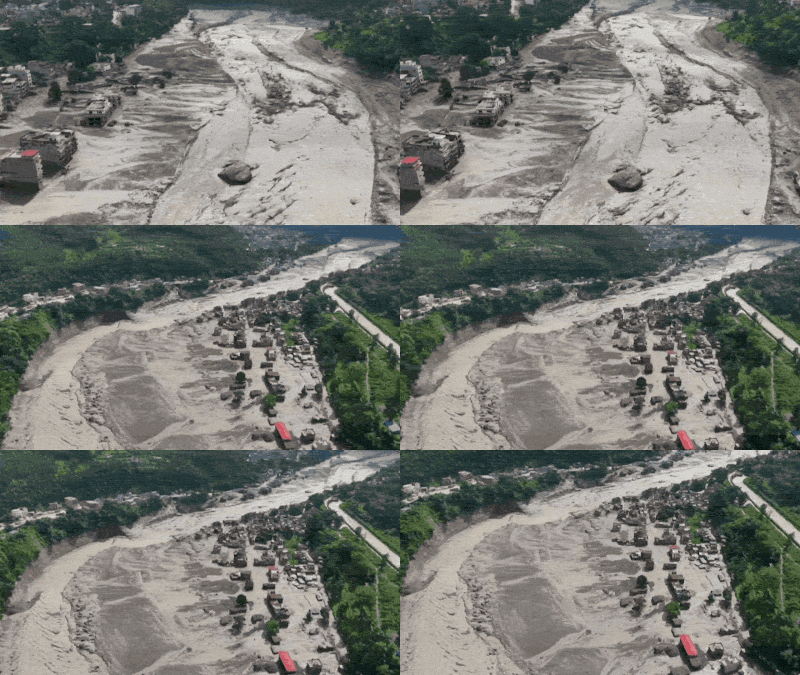
Nepal came under the sudden force of a massive flood on Wednesday, leaving a trail of devastation as the Himalayan fury claimed at least 165 lives and left more than 800 people missing.The Himalayan nation’s northern region bore the brunt of the disaster, with Rasuwa district on China-Nepal border among the worst-hit areas.The fury was carried by the Bhote Koshi River, which originates in Tibet and came rushing down with enormous force, carrying with it ice, rocks, mud and debris.The aftermath offers a stark picture of the destruction left behind. Villages appear wiped out, roads have vanished and entire stretches of civilisation seem to have been swept away by nature’s fury.Nuwakot, barely 50 kilometres and around a two-hour drive from Rasuwa, bears the deadly imprint of the floods. The river appears to have changed course, pushing aside the settlements that once stood along its path and spreading a vast stretch of muddy debris across the landscape.The flood tore through the Sino-Nepalese border region, destroying almost everything in its way, sweeping away vehicles, ripping apart roads and engulfing entire villages in the northern Himalayan region.The debris that ravaged Rasuwa and surrounding areas was a deadly mix of ice, rock and mud that rushed into the Bhote Koshi River, turning it into a torrent of destruction.The scale of the disaster also highlights a wider and growing threat facing the Hindu Kush Himalayas. Floods, landslides, avalanches and droughts are becoming more frequent and severe across the region, while rapid changes to water, land and air are posing a major threat to millions of people, according to the International Centre for Integrated Mountain Development (ICIMOD).The organisation said on Wednesday that the flash flood sent a powerful surge of water, sediment and boulders through the Bhote Koshi and Trishuli river systems.In the downstream Galchhi area, water levels in the river reportedly rose by as much as nine metres, nearly 30 feet, in just 30 minutes.