









It all started with a photo of college sports fans at the University of Texas at Austin, but after it was mislabeled as the UT graduation photo by Bo French, a Republican, all hell broke loose as people did not like the presence of South Asians. It was later debunked that the photo was not from the UT graduation event, but then social media users were not ready to accept the presence of South Asians at any event of a Texas university.“I heard UT graduation this year looked like this,” Bo French wrote. “I didn’t believe it. The problem is now obviously far worse than anyone imagined.”French faced backlash from his own party for the open racism but the fallout of the entire episode was bigger.
‘This is what Texas looks like’
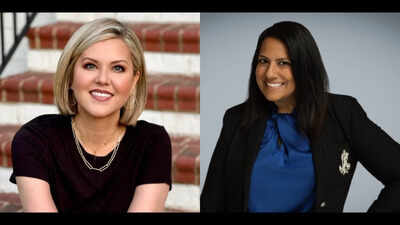
Democratic nominee for Texas House District 47 in the 2026 election Pooja Sethi resisted French’s racism and said Texas looks diverse. “If you look at a crowd of diverse Texas students celebrating together and see a “problem,” the problem isn’t the students. This is what Texas looks like. And if you don’t like it, you can leave,” Sethi wrote and was asked to leave the US by America First activists.Author Megan Basham chose to confront Sethi and said that the students’ ethnicity was not the problem. “The problem isn’t the ethnicity of the students. The problem is WHY the demographics of Texas universities have changed so drastically in the last 15 years. And the answer is largely because of the massive expansion of H1B visas. That is why people are angry. Because this was not organic,” Basham said.
Who is Bo French?
Bo French is running for the state Railroad Commission and has a history of making anti-Muslim, antisemitic and anti-immigrant comments. He faced criticism last year after sharing a poll on social media asking who was the “bigger threat” to America, Muslims or Jews.
Why Texas is often at the centre of America’s immigration and culture wars
Texas has become one of the most prominent battlegrounds in America’s increasingly heated debates over immigration, demographic change and national identity. The state has one of the country’s largest immigrant populations and is home to major immigrant communities from Mexico, India, Vietnam, China and other parts of the world. At the same time, Texas has remained firmly Republican at the state level, creating a political environment where immigration and demographic change are frequently debated through a conservative lens.Texas is also a major centre of the US technology and energy industries. Cities such as Austin, Dallas, Houston and San Antonio have attracted highly skilled workers from across the world. Indian professionals, in particular, have become increasingly visible in Texas’s technology, healthcare and business sectors, while Indian students and families have established large communities around major cities and universities.That visibility has sometimes made the Indian-American community a target in broader arguments about immigration and the H-1B visa programme. Critics of the programme argue that companies rely too heavily on foreign workers, while supporters say skilled immigrants have become an important part of the US technology economy.