







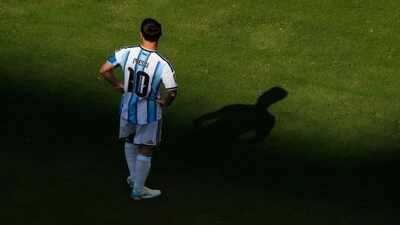
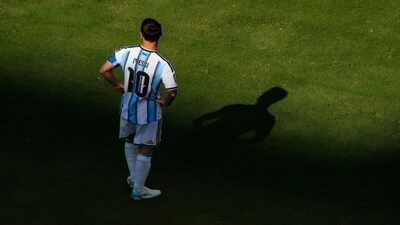
Tears rolled down Lionel Messi‘s face as he walked away with a silver medal around his neck. Spain had beaten Argentina 1-0 after extra time in the FIFA World Cup final, ending the defending champions’ title defence and what could well be the last World Cup appearance of the greatest footballer the game has seen.Twenty years after making his World Cup debut, the 39-year-old could not produce one more miracle. Argentina, chasing back-to-back World Cup titles, were outplayed by Spain for long periods at MetLife Stadium, where 80,663 spectators had largely turned up hoping to watch their Messi-ah lift the trophy once again.Instead, it was Spain celebrating their second World Cup title.Ferran Torres scored just 37 seconds into the second half of extra time to settle the final after Spain had dominated the contest from the opening whistle. As Spanish players celebrated, Messi stood with his teammates, struggling to hold back tears while Argentina’s supporters applauded them from the stands.Messi, head bowed, hands on his hips, watched 19-year-old Lamine Yamal embrace Torres after the winning goal. Moments later, with tears running down his cheeks, he collected his runners-up medal while Spain celebrated amid confetti and fireworks.“I hope that everyone feels proud of him, of what he’s achieved because he’s the best football player ever stepping foot on a pitch,” Argentina coach Lionel Scaloni said after the match.The statistics reflected Spain’s dominance in the final. Luis de la Fuente’s side outshot Argentina 20-2 and completed 845 passes to Argentina’s 433. According to Opta, the 18-shot difference was the second biggest in a World Cup final since records began in 1966, behind only West Germany’s 23-1 shot advantage over Argentina in the 1990 final.Spain also succeeded where few teams have ever managed to — they kept Messi quiet.“The first idea was to keep Messi at bay,” Spain coach Luis de la Fuente said.Messi managed only 15 touches in the first half and finished with 54 touches in the match. He never found the space to create the moments that had carried Argentina through the tournament. His passes into dangerous areas failed to connect and he rarely received the ball in positions from where he could threaten Spain’s defence.
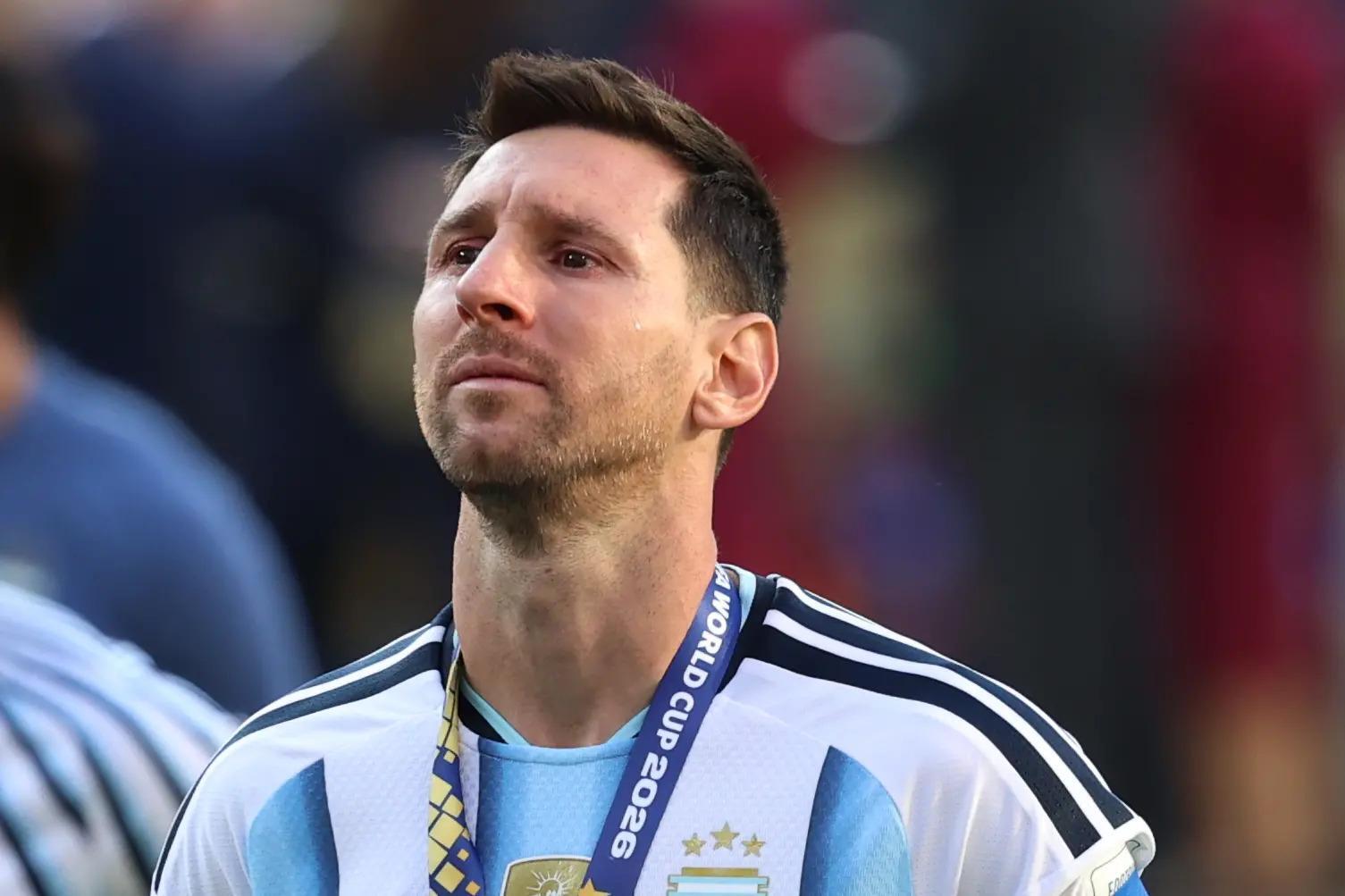
That had not been the story of Argentina’s campaign until the final.After leaving European football for Major League Soccer three years ago, some questioned whether Messi’s best days were behind him. Instead, he led Argentina back to another World Cup final with eight goals and four assists.His eight goals helped Argentina through the group stage and knockout rounds. Against England in the semifinal, he set up both goals in a stoppage-time victory. Against Egypt, with Argentina trailing 2-0 and facing elimination, he provided the cross for the first goal before scoring the equaliser himself.Throughout the tournament, Messi once again showed his ability to influence matches despite covering less ground than his teammates. He walked for nearly half the time he spent on the pitch, averaging around five kilometres per game, conserving energy before producing bursts of quality whenever Argentina needed him.Against Spain, though, that moment never arrived.If this was his last, then Messi ends his World Cup career with 21 goals, a record that stood until France’s Kylian Mbappe scored twice in the third-place playoff to move to 22. He also became the first player to start three World Cup finals and has 125 international goals, second only to Cristiano Ronaldo’s 146.His achievements extend far beyond statistics.World Cup winner in 2022. Consecutive Copa América titles. Four UEFA Champions League trophies. Twelve league titles across spells with Barcelona and Paris Saint-Germain, only player in football history to win 8 Ballon d’Or awards. A career that placed him alongside Diego Maradona and Pelé in football’s greatest-ever debates.As the final whistle blew, Spanish players queued up to console him. Several hugged him before Argentina collected their silver medals. When Spain formed a guard of honour for the runners-up, Messi tried to smile but could not. His expression barely changed as opponents patted him on the back while he walked to the podium.If this was indeed his final appearance on football’s biggest stage, it ended without the fairytale finish many had hoped for.It was not because Messi failed to try. Spain simply gave him no room to operate. Their Rodri-led midfield controlled possession, limited Argentina’s attacks and prevented Messi from dictating the game the way he had done throughout the tournament.The final may not have delivered the ending he wanted, but it does little to change how his career will be remembered.It may not have been the ending Messi imagined. It may not even be the end. Whether this proves to be Messi’s final World Cup appearance or not will become clear only when he decides. But if this was the last image of him on football’s biggest stage, it was one of tears, not triumph.However, the defeat in New Jersey cannot undo a career that has already secured its place among the greatest the sport has known. If this is to be his tearful sign off, fans will still look back at having been blessed by one of football’s greatest of all time.