







For many women, buying pads or tampons is an ordinary part of the monthly shop. For someone already struggling to pay for food, rent or other essentials, the same purchase can become a difficult calculation. Across Western North Carolina, that gap has left some women and girls without reliable access to menstrual products. The consequences can reach into school, work and everyday routines. According to Deerfield Charitable Foundation, in Hendersonville, Barbara Morgan began responding to that problem in 2017 by collecting menstrual supplies for people who could not afford them. What started as a small local effort has since developed into Project Dignity, a nonprofit whose volunteers now help nearly 1,900 women and girls each month.
How Morgan’s menstrual support effort expanded over eight years
Project Dignity began in 2017, when Morgan started gathering menstrual products for women who needed them. At the time, the work was a grassroots effort rather than a large distribution operation, with volunteers and donation boxes helping collect supplies.The need was tied to a basic household expense that can be difficult to absorb when money is already tight. Food assistance does not cover menstrual products, leaving some women to decide how to stretch limited resources from one part of the month to the next.Morgan’s project focused on filling that particular gap. Pads and tampons were collected and then made available to women and girls who otherwise might go without them. Eight years later, the scale of the work looks very different.
Project Dignity now reaches nearly 1,900 women and girls each month
Project Dignity has expanded from its original community effort into a nonprofit serving people across ten counties in Western North Carolina. Nearly 1,900 women and girls receive monthly menstrual supplies through the organisation.As reported by the foundation, its distribution network includes more than 148 schools and 59 social service agencies. That means the products are reaching people through places already connected to students, families and individuals seeking other forms of support.The expansion also shows how the project has moved beyond simply collecting donations. Volunteers now take part in a continuing supply and distribution operation, helping prepare menstrual products for people who need them month after month.For those relying on the service, the practical value is straightforward. The products are available without having to be bought from an already limited household budget.
Schools became an important part of the distribution network
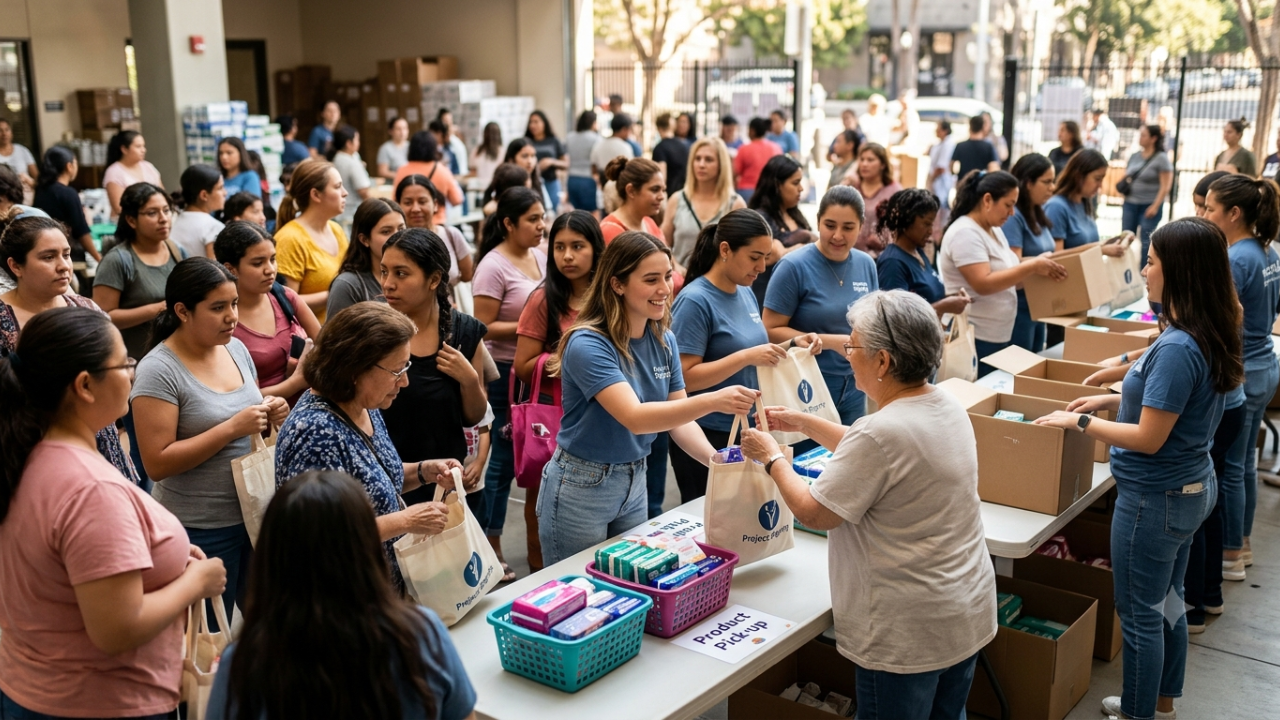
Students are among the people supported through Project Dignity’s work. Menstrual products can be a small part of a school’s supplies, but not having them when they are needed can interfere with a student’s ability to remain in class.Project Dignity distributes supplies through more than 148 schools, extending its reach into communities where young people may otherwise have limited access to free menstrual products.The organisation also works with social service agencies. There are 59 such agencies within its distribution network, connecting the project with people facing different circumstances, including women living in low-income housing and victims of domestic violence.
The project also works beyond schools
Project Dignity’s reach includes women who may not have any connection to a school-based programme. Social service agencies provide another route for distributing the monthly supplies, allowing the organisation to reach adults as well as younger people. The project identifies period poverty as affecting people who cannot consistently afford menstrual products. In households where money is being divided between food and other necessities, pads and tampons can become an expense that is pushed aside.That can have practical effects. Without adequate supplies, some women and girls may miss school or work, while others may experience discomfort or health concerns. The problem is not limited to the cost of one packet of products. It recurs every month.
Volunteers turned collection boxes into a continuing operation
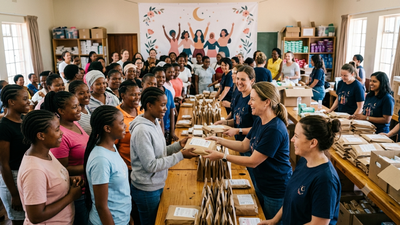
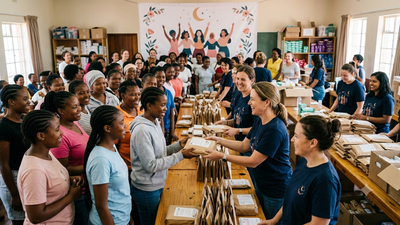
Volunteer involvement has remained part of the project since its early days. What began with a small number of people collecting donations has developed into regular packing and distribution work. That work includes preparing menstrual products for delivery to schools and social service agencies. Donation drives provide the materials, while volunteers help turn those donations into individual supplies that can be distributed to people who need them.The process can look ordinary from the outside: boxes of products being collected, sorted and packed. Yet the organisation’s monthly figures depend on that routine being repeated. Nearly 1,900 women and girls now receive support each month, making the volunteer effort an ongoing part of Project Dignity’s operation rather than a one-off community campaign.
How local volunteers help prepare menstrual hygiene kits for students
The organisation’s work has also been supported through local volunteer events. One such event was planned at Deerfield, where residents were invited to take part in a Project Dignity packing party.The session was scheduled for August 8 2025, at 10am in the Blue Ridge Room. Volunteers were asked to assemble feminine hygiene kits intended to help students begin the school year with the supplies they needed. The products are gathered, turned into kits and prepared for distribution through Project Dignity’s existing network. For an organisation serving thousands of people over the course of a year, those individual volunteer sessions become part of a much larger chain of work.
Eight years changed the scale of Morgan’s original idea
The distance between Morgan’s first collection effort in 2017 and Project Dignity’s current reach is measured not only in the number of people served, but also in the infrastructure built around the project. The organisation now operates across ten counties, works through more than 148 schools and 59 social service agencies, and provides monthly supplies to nearly 1,900 women and girls.The underlying task, though, remains familiar. Menstrual products have to be collected, packed and delivered to people who cannot reliably afford them. What began with one woman collecting supplies in Hendersonville has grown into a recurring community service, supported by donations and volunteers and focused on an expense that many households have to meet every month.