






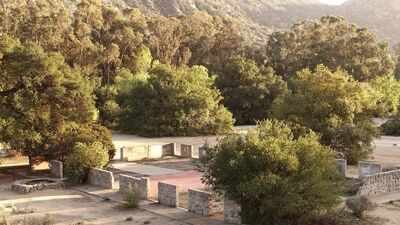
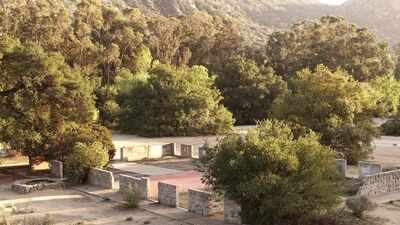
In 1965, comedian and actor Bob Hope bought Corriganville, a 212-acre former Hollywood movie ranch in Simi Valley, California. The property had spent decades serving the film industry, providing locations for thousands of films, television programmes and commercials. It also operated as a tourist attraction, where visitors could explore Western-style sets and watch stunt performances. Hope renamed the property Hopetown, and plans later emerged to develop much of the land. However, the former movie ranch took a different path. Fires destroyed many of its remaining structures during the 1970s, but much of the property remained undeveloped. In 1988, the City of Simi Valley purchased 190 acres and converted the land into Corriganville Park, preserving part of a site that had played a major role in Hollywood’s Western filmmaking history.
Why did Bob Hope buy the 212-acre Hollywood movie ranch
Bob Hope purchased Corriganville in 1965 and renamed it ‘Hopetown.’ The sale marked the end of the site’s period as a public movie ranch and tourist attraction. The property’s future soon shifted towards development. Atlas Obscura reports that the sale was connected to plans for housing on the 212-acre site. Those plans reflected a broader change in the property’s role. Rather than continuing as a dedicated film and entertainment venue, the land was increasingly viewed as an area with development potential. However, much of the site was not immediately transformed. This would later become significant when efforts were made to preserve a large section of the former ranch.
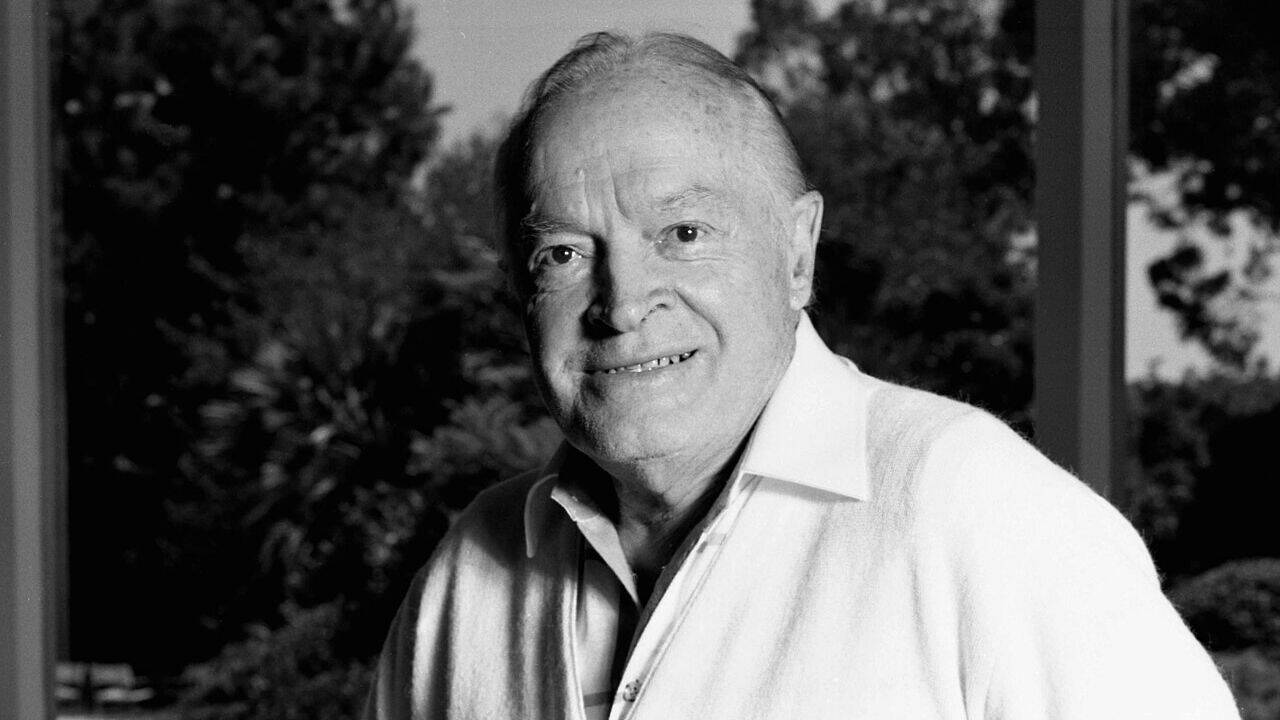
Bob Hope (1986). Image Credit: Von Allan warren/Wikipedia
Corriganville journey of becoming a Hollywood movie ranch
Actor and stuntman Ray ‘Crash’ Corrigan bought the land in 1937. According to Classic Movie Hub, Corrigan was already established in Western films and had appeared in the ‘Three Mesquiteers’ series. The site began operating as a movie ranch in 1938. Its open landscape and rock formations made it suitable for productions requiring outdoor locations. According to Flying Dawn Marie, Corriganville was used for an estimated 3,000 to 3,500 films, television programmes and commercials. Several leading Western stars worked there, including John Wayne, Gene Autry and Roy Rogers. However, the ranch was not restricted to Western productions. Films associated with the site included ‘The Creature from the Black Lagoon,’ ‘The African Queen’ and ‘The Three Musketeers.’ Television productions such as ‘The Lone Ranger,’ ‘The Adventures of Rin Tin Tin’ and ‘Star Trek’ also used the location.
Corriganville turning into a tourists attraction
Corriganville eventually expanded beyond its role as a filming location. According to Classic Movie Hub, it operated as a Western-themed tourist attraction between 1949 and 1965. Visitors could explore the sets and watch stunt performances. They could also see the fort constructed for John Ford’s 1948 film ‘Fort Apache.’ Flying Dawn Marie reports that the attraction included stagecoach rides and staged shoot-outs. The site featured a Western street called Silvertown, with buildings designed to resemble a typical frontier settlement. These included shops, stables, a church and a schoolhouse. Corriganville also had facilities designed specifically for filmmaking. A man-made lake was used for water scenes, while a specially constructed room with thick windows enabled underwater filming. Classic Movie Hub reports that the lake was used for productions including the ‘Jungle Jim’ series.
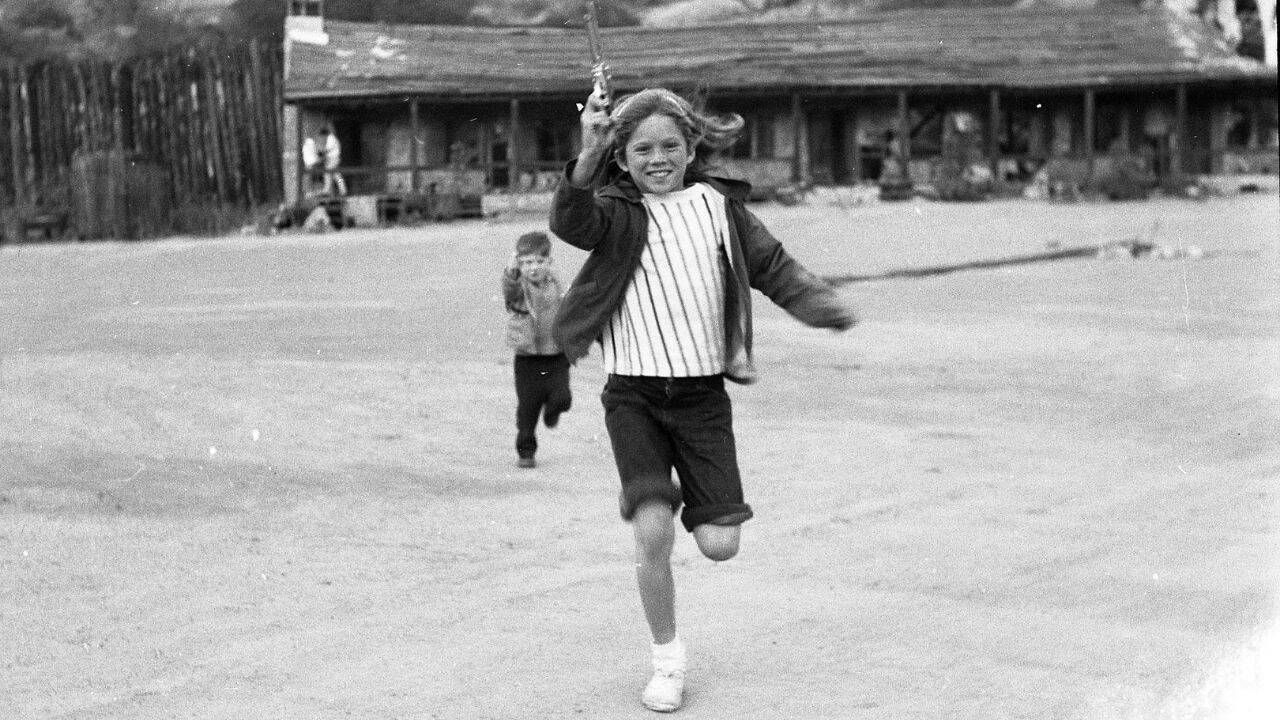
Children playing at Corriganville, 1963. Image Credit: George Louis/Wikipedia
Destruction caused by fire at the ranch
Much of what remained at the former ranch was destroyed by brush fires during the 1970s. Classic Movie Hub reports that several structures were lost due to major fires in 1971 and 1979. The destruction removed many of the buildings that had once formed Corriganville’s elaborate film and tourist sets. However, some physical remains survived. Concrete foundations, stonework and other structures were left behind. The man-made lake and the site’s underwater filming facility also remained. These remnants would later become part of the landscape preserved within the park. Although most of the original sets disappeared, evidence of the site’s earlier use was not completely lost.
How did the former movie ranch become a public park
In 1988, the City of Simi Valley purchased 190 acres of the former ranch. According to Flying Dawn Marie, the land was subsequently converted into Corriganville Park. The purchase protected a substantial portion of the old property from further development and opened it to the public. Classic Movie Hub notes that the park now includes hiking trails and picnic areas. The surviving foundations and other remnants provide a link to the property’s previous role in the film industry.The park is now primarily an outdoor recreation area, but its history remains visible in parts of the landscape. Corriganville’s history changed direction several times over five decades. It began as a working movie ranch, developed into a tourist attraction and later faced plans for housing development. Fires then destroyed much of what remained of its famous sets. The 1988 purchase by the City of Simi Valley gave most of the surviving land a new future. Today, Corriganville Park serves as a public space while retaining traces of the movie ranch that once hosted thousands of productions and some of Hollywood’s best-known performers.