







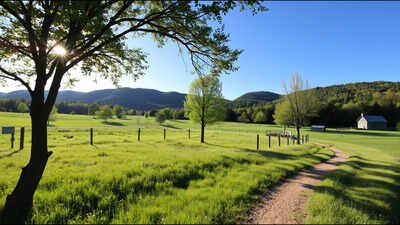
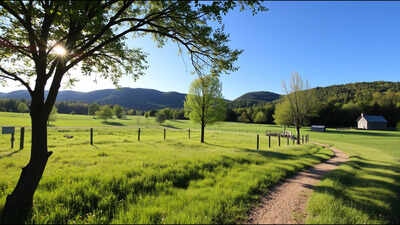
In 1944, Christine Hires, a member of the family behind Hires Root Beer, was vacationing in Vermont when she fell in love with the landscape and decided to buy a 150-acre dairy farm in what is now Huntington. Hires had originally intended to spend her money on a fur coat, but instead put it toward the property and kept the farm as a vacation home. According to the Green Mountain Audubon Center’s official history, when her husband later inquired about the coat, Hires reportedly replied, “Oh, golly.” She would keep the Vermont property for nearly two decades before deciding that it should be preserved rather than developed. In 1964, she transferred the farm to the Green Mountain Audubon Society, turning a personal vacation retreat into the foundation of what Audubon describes as Vermont’s oldest operating nature center. More than 60 years later, the property remains protected as a place for conservation, education and public access.
Why Christine Hires chose a farm over a fur coat
Hires’ decision became the unlikely starting point for a much larger conservation story. Audubon’s history of the property confirms that she purchased the 150-acre farm in 1944 using money that had been intended for a fur coat. The property, which Hires used as a vacation home, remained in her hands for about two decades before she decided to find a way to preserve it. Rather than treating the farm simply as a private retreat or selling it for development, she sought an organisation that could protect the land and use it for conservation. That eventually led to the Green Mountain Audubon Society, which acquired the property in 1964. The organisation established the site as a place where people could learn about wildlife and natural-resource conservation, setting the direction for what would eventually become the Green Mountain Audubon Centre. The transformation was significant: land that Hires had originally purchased for her own enjoyment became a publicly accessible conservation property whose purpose extended far beyond the original farm.
How the farm became a permanent Audubon nature centre
The Green Mountain Audubon Society continued developing the property as a centre for conservation and environmental education after acquiring it. The site has remained in operation since 1964, and Audubon now describes it as Vermont’s oldest operating nature centre. A major change came in 2000, when the National Audubon Society partnered with the Green Mountain Audubon Society to establish Audubon Vermont. Under that arrangement, Audubon Vermont assumed management of the centre’s land and facilities, while the Green Mountain Audubon Society continued operating as a volunteer chapter. The property gradually expanded beyond the original 150 acres and developed facilities that allowed it to serve both visitors and the wider community. What began as a single farm therefore became a long-term conservation and education hub, maintaining the connection between the landscape that first attracted Hires to Vermont and the environmental work that now takes place there.
What the Green Mountain Audubon Centre looks like today
Today, the Green Mountain Audubon Centre encompasses 255 acres and includes roughly 5 miles of public hiking trails, giving visitors the opportunity to explore protected habitat while learning about the wildlife and ecosystems of the region. The property also includes a Bird-Friendly Sugarbush, where maple production is carried out alongside conservation goals. The original farmhouse that Hires used as her vacation home now serves as the centre’s visitor centre, while the former dairy barn has been renovated for summer camps, educational programs and community groups. More than 80 years after Hires chose a farm instead of a fur coat, the property has become a lasting part of Vermont’s conservation landscape. Her original purchase was personal and spontaneous, but her eventual decision to place the land in the hands of a conservation organisation gave it a very different future: instead of being developed or divided, the farm became a place where generations of visitors could walk its trails, learn about wildlife and experience the Vermont landscape that first convinced Hires to buy it.