









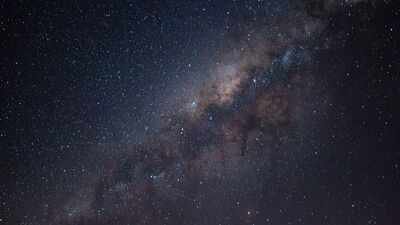
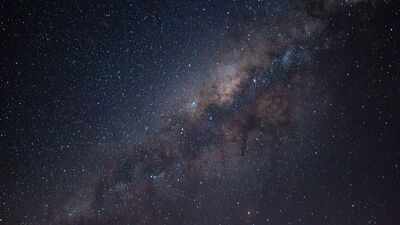
For many people, the Milky Way is something they have seen only in photographs. Under most urban skies, the galaxy’s faint glow is washed out by artificial light, leaving only the brightest stars visible overhead. Yet there are a few nights each month when conditions become much more favourable, and July offers one of those opportunities.This week coincides with the period around the July new moon, when moonlight no longer competes with the darkness needed to reveal fainter celestial features. According to Nasa’s July 2026 skywatching guide, the days surrounding the new moon on 14 July provide one of the best viewing windows of the month for observing the Milky Way. Combined with clear weather and a suitably dark location, it can be an ideal time to look beyond individual stars and see part of our galaxy stretching across the night sky.
Why the July 2026 new Moon is the best time to see the Milky Way
The Moon is often the biggest obstacle to seeing the Milky Way. Even when it appears only partially illuminated, its light can brighten the sky enough to hide the galaxy’s dimmer structure.Nasa notes that the period around the new moon on 14 July creates the darkest skies of the month. Without strong moonlight, the Milky Way becomes easier to distinguish as a pale band crossing the heavens. The effect is most noticeable far from cities, where artificial lighting does not overwhelm the night sky.The difference can be striking. In suburban areas, observers may notice only a faint haze. Under genuinely dark conditions, however, the Milky Way appears as a broad, irregular river of light with brighter and darker patches running through it. This bright section is in the direction of the galaxy’s centre, where vast numbers of stars lie packed together behind clouds of cosmic dust.
Best constellations for finding the Milky Way
Finding the Milky Way is often simpler than many beginners expect. Rather than searching randomly across the sky, it helps to identify a few familiar star patterns first.Look toward the southern part of the sky later in the evening. One useful guide is the constellation Scorpius, recognised by its curved shape that resembles a scorpion’s tail or a large hook. Nearby lies Sagittarius, another prominent summer constellation.The brightest portion of the Milky Way sits in this region. Once your eyes adapt to the darkness, the galaxy should begin to emerge as a cloudy, uneven streak extending through the surrounding stars.Patience matters. A glance immediately after arriving at a dark site rarely reveals much. Human eyes typically need twenty to thirty minutes to adjust fully, and even brief exposure to a phone screen can reduce night vision.
Best stargazing locations for Milky Way watching
Unlike planets or distant galaxies, the Milky Way does not require a telescope. In fact, telescopes often show only tiny sections of it at a time.The real challenge is finding a location with sufficiently dark skies. Rural areas, nature reserves and countryside viewpoints generally offer far better conditions than towns and cities. Hillsides and open fields can also help by providing an unobstructed view of the horizon.Head somewhere away from city lights and allow your eyes time to adapt naturally. The less surrounding illumination there is, the more structure becomes visible within the Milky Way itself. Dark lanes created by interstellar dust can often be seen cutting through brighter star clouds, creating the mottled appearance familiar from astronomical photographs.Binoculars are optional but can enhance the experience. Sweeping slowly along the Milky Way often reveals clusters and dense star fields that remain invisible to the naked eye.
July 11–12, 2026: Moon, Mars and Saturn shine together before sunrise
The Milky Way is not the only attraction in July’s sky. According to Nasa, the mornings of 11 and 12 July, when the waning crescent Moon appears alongside Mars and Saturn before sunrise. Uranus occupies the same general area of sky, although its relative faintness means binoculars or a telescope are usually needed to pick it out.Another object drawing attention this month is Comet 10P/Tempel 2. Around the new moon period, observers using binoculars or small telescopes may be able to locate the comet near the constellation Capricornus as a faint fuzzy patch of light.There is also an interesting planetary event taking place in the evening sky. The long-recognised eight-year cycle of Venus brings it back close to Regulus, the brightest star in the constellation Leo. As per EarthSky, Venus would return to nearly the same position relative to Regulus on 9 July 2026 as it occupied eight years earlier, creating another attractive pairing for skywatchers to seek out after sunset.For those hoping to catch the Milky Way, though, the darkest nights surrounding the July new moon remain the main opportunity. Clear skies, a dark location and a little patience may be all that is needed to see our home galaxy arching across the summer sky.