






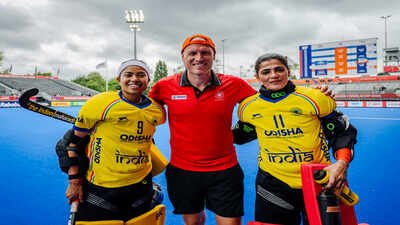
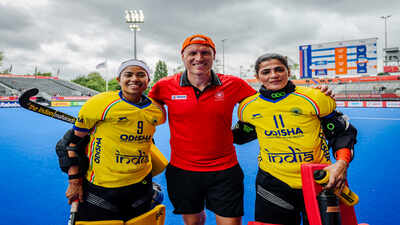
Bichu Devi Kharibam never planned to play hockey. Goalkeeping was even further from her thoughts. She had gone to SAI Imphal with one ambition — to make it as a footballer. But arriving two days late for the trials meant the selections were complete and there were no places left.Then came a suggestion that would change the course of her sporting career. The director, who knew Bichu’s family, suggested she try hockey.“I didn’t want to play hockey at all. I cried and told my father that I wanted to continue with football,” she recalled in an interview with TOI.Her father, however, persuaded her to give hockey two months and then decide. She gradually began to enjoy the sport, particularly after she started scoring goals as a striker.Goalkeeping was still nowhere on her radar until an Olympian coach noticed her height and physical attributes and suggested that she could make a good goalkeeper.“I didn’t understand much at that time. Playing for India wasn’t even in my thoughts,” said the player from Manipur.Yet, almost against her wishes, Bichu found herself in goal, making her debut as a goalkeeper at the sub-junior nationals in Ranchi in 2015. She played well and that performance set her on a path that would eventually take her to one of the biggest nights of her career more than a decade later at Wagener Stadium in Amstelveen.With the World Cup second round at stake, England pushed hard in the closing stages, but the Indian goalkeeper stood firm. And when the decisive moment arrived, Bichu produced a last-gasp save that preserved India’s draw and sent them into the second round.For someone who had once cried because she didn’t want to play hockey, it was a moment to cherish. But perhaps the signs that Bichu could become a special goalkeeper had been there from the beginning.Vandana, a coach at the Madhya Pradesh Hockey Academy, first saw Bichu at the 2015 Ranchi nationals. “She was good, energetic and a beginner at that time,” Vandana recalled.It was there that the then Manipur coach approached Vandana and asked if Bichu could join MP Academy. There was no looking back after that. A week later, Bichu travelled with Vandana to Gwalior for the academy trials and was selected.What stood out was her athleticism.“As a goalkeeper, you are already wearing a lot of equipment, so you have the weight of your body as well as the goalkeeper’s kit. You have to fall down and get back up quickly. You have to be very fast and agile, and she was really good at that,” Vandana said.Her fitness was another advantage. “Her lean muscle mass also helped her, as did her height,” Vandana said.The sport she had originally wanted to play also played a big role in her development.“Playing football helped me a lot with kicking, diving, getting back on my feet quickly and directing the ball into safe areas. Because of my football background, I already understood many of those movements, so I didn’t have to spend extra time learning them after becoming a goalkeeper,” Bichu said. “I could focus on learning goalkeeping-specific things like positioning and body shape.”Her development was also helped by someone who knew exactly what it took to be India’s No. 1.Savita Punia had first seen Bichu when she was still playing for the junior team and immediately felt she had the qualities of a good goalkeeper. Years later, as Bichu grew into the senior side, that belief only strengthened.For Savita, one of Bichu’s biggest strengths is not simply her athletic ability but her attitude towards learning. “She is very sincere about learning and improving. There are very few players who approach their work with that level of sincerity. Bichu is one of them. She works with a lot of dedication,” she said.This mentor-student relationship between the two goalkeepers has only grown stronger over the years. And when Bichu made that last-minute save on Thursday night, Savita, watching from the sidelines, was among the first to celebrate, jumping with joy as India secured their place in the second round.While it’s impossible to predict what lies ahead for India in this World Cup, one thing is becoming increasingly clear — the goalkeeper who never planned to play hockey could be India’s No. 1 for years to come.