







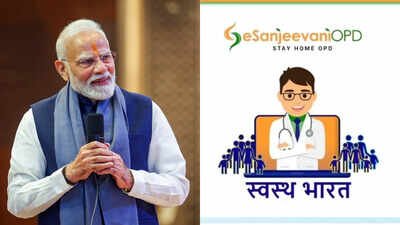
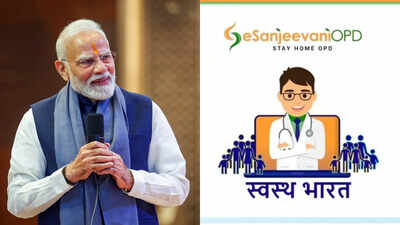
NEW DELHI: High fever and laboured breathing threatened the life of Oho-Tahane, a child from Jarawa tribe of Andaman and Nicobar Islands. With specialist care out of reach, health workers turned to e-Sanjeevani for remote consultation. The doctor diagnosed pneumonia, and timely expert intervention helped the child’s condition improve rapidly.Oho-Tahane, a member of one of India’s most vulnerable tribal groups, is among over 50 crore cases, many in far flung areas, facilitated by the national telemedicine service since its launch in Nov 2019.The service’s achievement was highlighted by PM Narendra Modi in his ‘Mann Ki Baat’ address Sunday, as he also cited how e-Sanjeevani enabled a doctor to guide a medical team in treating Kunhi Koya (60) in Kalpeni, Lakshadweep, and helped ensure medical assistance for pregnant Kunjang Dolma in Himalayan region of Zanskar.Developed by C-DAC Mohali under the health ministry, e-Sanjeevani facilitates 2.5-3 lakh daily consultations, offers services in 15 languages and is available across all 36 states and UTs. Women account for 57.1% of the platform’s utilisation, while people aged 46 and above account for 40.1% of consultations. Those aged 60 and above account for 16.2%. The platform has recorded a peak of 6,30,315 consultations in a single day.Modi credited the platform’s reach to dedication of doctors, public trust and the effective use of technology. He highlighted 1.9 lakh Ayushman Arogya Mandirs, saying they were bringing healthcare closer to rural communities and evolving into wellness centres for village panchayats. Regular health check-ups were becoming more common in rural areas, he said, with e-Sanjeevani playing an important role.
Share your thoughts in the comments
Be respectful · TOI community guidelines
The PM also highlighted advances in brain research, referring to Sudha Gopalakrishnan Brain Centre at IIT-Madras, which he inaugurated this month. The centre has developed a brain imaging technology platform to create high resolution digital 3D images of human brain. Its mission is to map and study 100 human brains in detail using Param Shakti supercomputer..Modi said the initiative could deepen understanding of the brain, particularly as conditions such as Alzheimer’s disease and dementia lack a definitive cure. Data from the 100 brains will be available as an open-source resource for researchers, the PM added.