









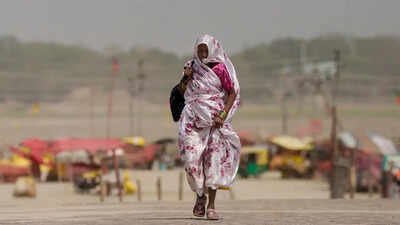
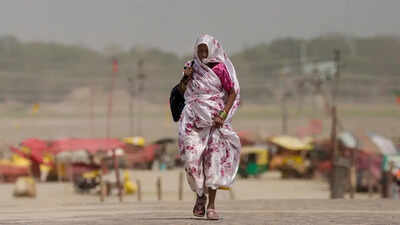
NEW DELHI: Several parts of India remained in the grip of an intense heatwave on Wednesday with temperatures soaring far above seasonal averages and the India Meteorological Department (IMD) warning that severe heat conditions are likely to continue across North-West and Central India over the next few days.The weather department issued orange alerts for Delhi, Punjab, Haryana and Chandigarh, warning of heatwave to severe heatwave conditions, while red alerts were sounded for warm night conditions in parts of Uttar Pradesh, Madhya Pradesh and Vidarbha.
Delhi hovers at 44 to 45 degrees Celsius
In Delhi, temperatures hovered between 44 and 45 degrees Celsius, with isolated pockets expected to witness severe heatwave-like conditions during the day. The IMD said the national capital could see temperatures touching around 46 degrees Celsius under the orange alert category, which signals residents to “be prepared” for extreme weather conditions.The capital recorded its first official heatwave day of the month on Tuesday as dry winds and blistering sunshine pushed temperatures beyond 45 degrees Celsius.The intense heat also worsened pollution levels, with Delhi’s Air Quality Index (AQI) slipping into the ‘poor’ category at 336 on Tuesday, prompting the Commission for Air Quality Management (CAQM) to activate Stage 1 of the Graded Response Action Plan (GRAP) across Delhi-NCR.By Wednesday morning, the AQI had improved slightly to 177, remaining in the ‘moderate’ category, according to data from the Central Pollution Control Board (CPCB).The IMD said minimum temperatures in Delhi also remained above normal, worsening discomfort levels during the night.Safdarjung recorded a minimum temperature of 28.3 degrees Celsius, 1.8 notches above normal. Palam recorded 28.5 degrees Celsius, while Lodhi Road, Ridge and Ayanagar also remained above seasonal averages.
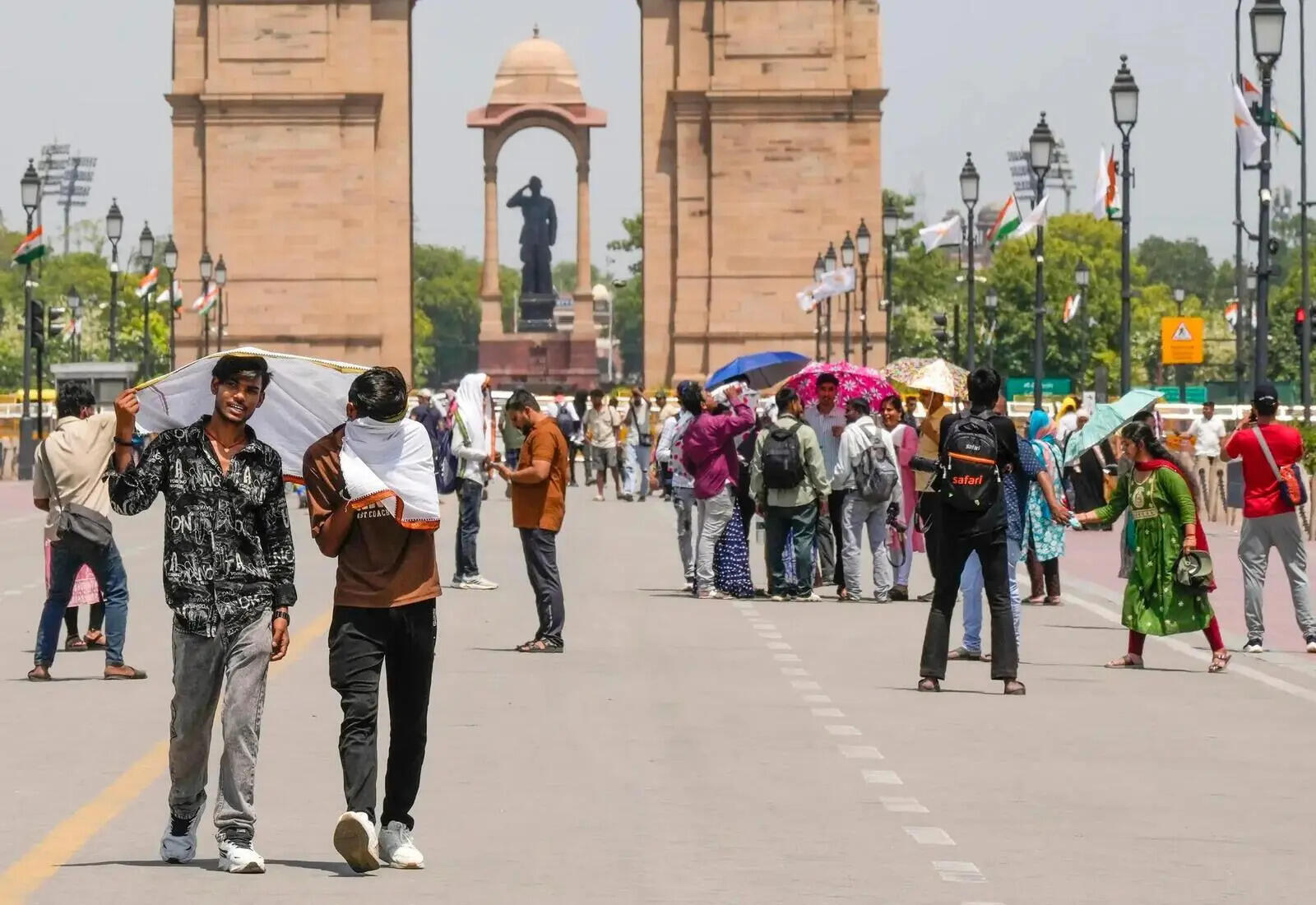
Hot day in Delhi (PTI)
UP ’s Banda emerges among hottest
The heatwave has been especially brutal in Uttar Pradesh’s Banda district, where temperatures crossed 48 degrees Celsius. Meteorologists said the Bundelkhand district has repeatedly emerged among the hottest locations in Asia this month.Banda recorded a scorching 48.2 degrees Celsius on Tuesday, turning roads soft, heating metal surfaces dangerously and creating furnace-like afternoon conditions. Prayagraj also reeled under an intensified heatwave, with the mercury soaring to a blistering 45.8°C, making it the fourth-hottest city in Uttar Pradesh after Banda, Jhansi, and Agra Taj.The IMD had also issued a red warning for several districts in Uttar Pradesh, including Agra, Firozabad, Etawah, Jalaun, Jhansi, Hamirpur, Mahoba, Banda, Fatehpur, Auraiya, Chitrakoot, Kaushambi and Prayagraj.
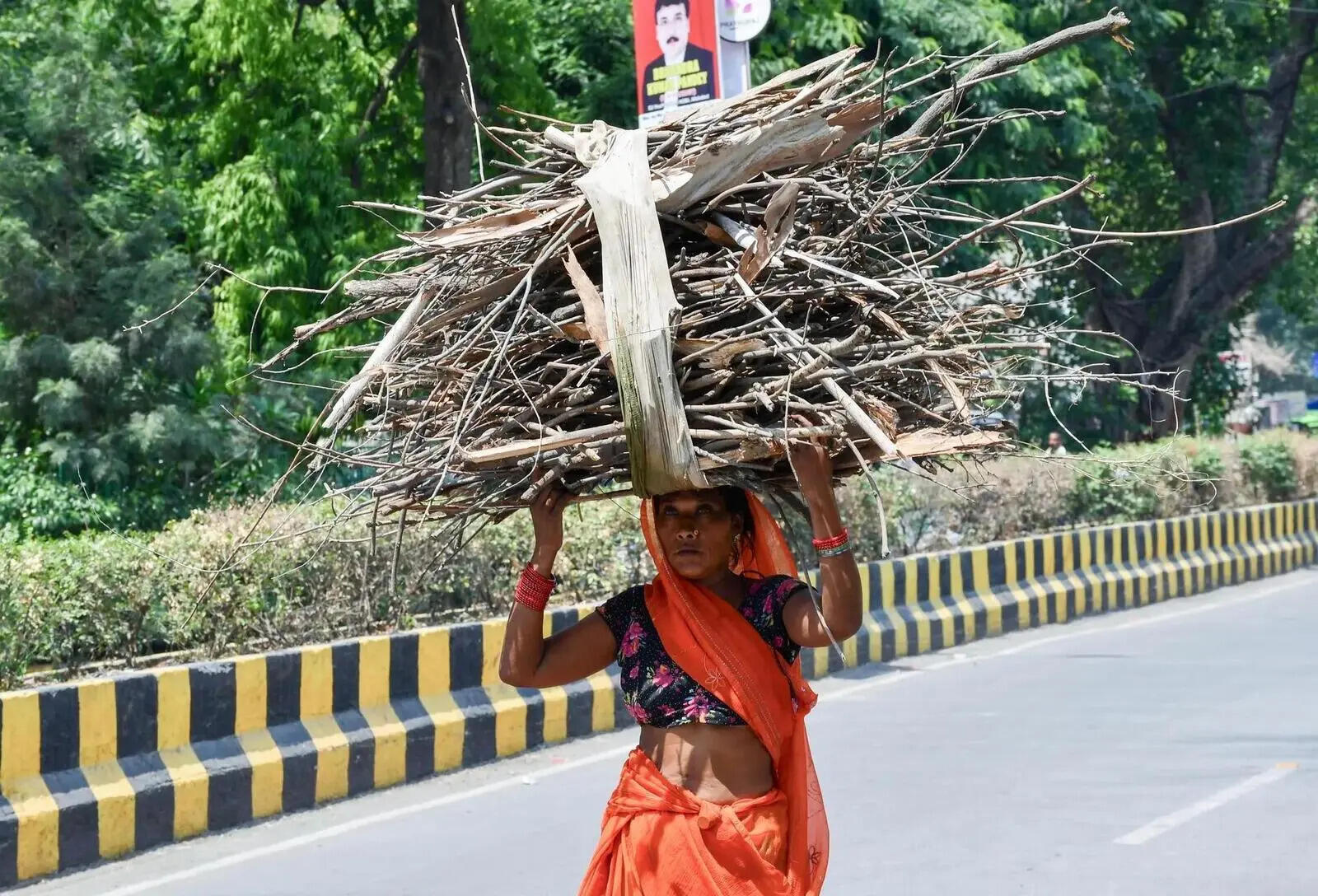
Prayagraj (ANI)
“Heatwave to severe heatwave conditions are very likely to prevail over several districts of Uttar Pradesh during the next 2 days. Residents are advised to take necessary precautions and avoid prolonged exposure to extreme heat,” the IMD said.Explaining why Banda has been witnessing such extreme temperatures, IMD senior scientist Mohammad Danish earlier told TOI, “Southern UP missed the cooling impact of western disturbances earlier this month. Banda entered heatwave conditions with already elevated temperatures.”“Hard and stony terrain absorbs heat rapidly under direct sunlight and releases it slowly, making Banda highly vulnerable to extreme temperatures,” he added.Meteorologists also blamed strong dry westerly winds from the Thar desert, clear skies and intense solar radiation for the worsening heat across the region.
Heat damages tourism gardens in J&K
The unusual heat has also begun affecting tourism and horticulture sectors in other parts of the country. At Jakhani Park in Udhampur, Jammu and Kashmir, hybrid seasonal flowers have reportedly dried up weeks before their normal blooming cycle due to the sudden rise in temperatures.Located along the Jammu-Srinagar National Highway, the park is a major stopover for tourists travelling towards Patnitop and Srinagar.Speaking to ANI, Assistant Floriculture Officer Pawan Kumar said, “Due to the recent temperature rise, the seasonal blooms that we plant are getting affected.”“The general longevity of these flowers would be till the end of May, but due to the heat, they are drying up prematurely,” he added.Officials said watering schedules had been shifted to evening hours to reduce evaporation and cool the soil, while preparations were underway to introduce heat-resistant seasonal plants in the coming weeks.
Why India’s heatwave is becoming more intense
Meteorologists said part of the current heatwave is linked to normal seasonal patterns. April and May are traditionally among the hottest months in India due to strong solar radiation, dry continental winds and low-pressure systems developing over Rajasthan and neighbouring Pakistan.However, scientists say the intensity and spread of the current heatwave are also being amplified by global climate factors, especially the possible development of El Niño conditions in the Pacific Ocean.El Niño is a climate phenomenon caused by warming sea surface temperatures in the central and eastern Pacific Ocean.It disrupts atmospheric circulation patterns globally and is often linked with weak monsoons, drought-like conditions and extreme pre-monsoon heat in India.The World Meteorological Organisation has projected a 62 to 80 per cent probability of El Niño conditions developing between May and August this year.The IMD has also flagged the likely development of El Niño conditions in 2026.
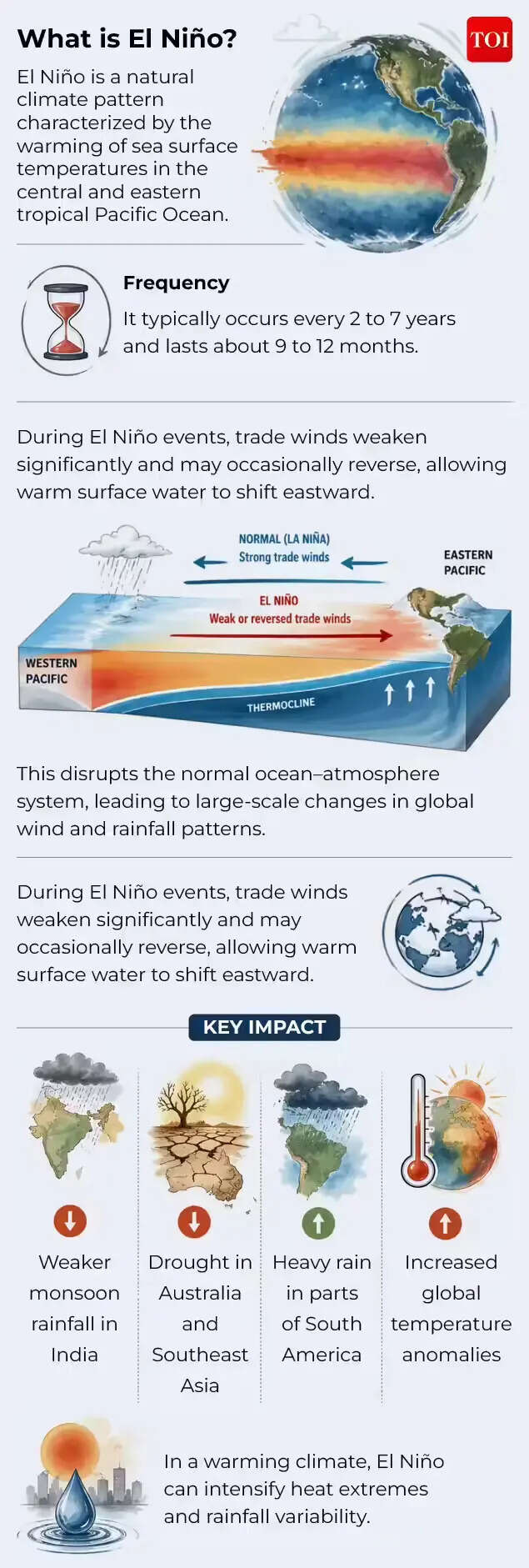
Some scientists are even warning about the possibility of a “super El Niño”, an unusually strong version of the climate event marked by sea surface temperatures rising by more than 2 degrees Celsius.Dr Paul Roundy, professor of atmospheric and environmental sciences at the State University of New York at Albany, recently wrote on X that there is “real potential for the strongest El Niño event in 140 years.”Similarly, Dr Andy Hazelton of the University of Miami said, “All models and observations are pointing in the same direction: a very strong El Niño with significant impacts on global climate this year.”Historically, El Niño years such as 1987, 2002, 2009 and 2015 were associated with below-normal monsoons and severe heatwave conditions in India.Climate experts warn that India is witnessing a steady rise in the frequency, duration and intensity of heatwaves, with several of the hottest years on record occurring within the last decade.Despite the growing threat, heatwaves are not officially classified as a notified disaster under India’s central disaster management framework. This limits compensation mechanisms and long-term adaptation funding.The impact is particularly severe on India’s informal workforce, including construction workers, street vendors, delivery workers, farm labourers and daily commuters who spend long hours outdoors with limited protection from extreme temperatures.

IMD issues heat safety advisory
Amid worsening heat conditions, the IMD urged people to follow heat safety measures and minimise exposure during peak afternoon hours.“Heatwave preparedness is essential during extreme temperatures!” the IMD said in a public advisory. “Take preventive measures by staying hydrated, keeping cool, avoiding stale food, protecting vulnerable groups, and caring for animals,” they added.The weather office advised people to drink water regularly, avoid direct sunlight during the afternoon, wear loose cotton clothing and consume water-rich fruits.“Children, elderly people and outdoor workers require extra care during intense heat conditions,” the IMD added.