




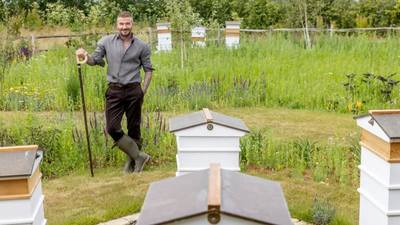
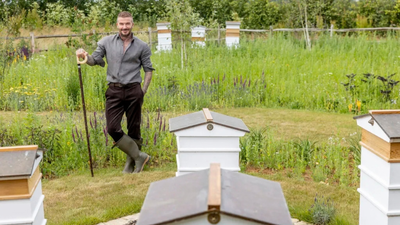
David Beckham, the football icon who took up beekeeping during the Covid-19 lockdowns, now produces his own honey at his Cotswolds home, according to The Standard. His hobby comes as experts discuss the potential effects of managed honeybee colonies on wild pollinators. Wildlife filmmaker and National Geographic Explorer Bertie Gregory has suggested that people who want to help bees should consider planting wildflowers instead of keeping honeybee colonies. He explained that cities can have too many beehives, potentially increasing competition for food. His comments highlight concerns about how managed hives may affect wild bees in areas with limited floral resources.
David Beckham’s interest in beekeeping began during lockdown
According to The Standard, David Beckham began keeping bees during the Covid-19 lockdowns and developed the hobby at his Cotswolds property, where he now produces honey.Other celebrities, including Stacey Solomon, Rod Stewart and Ed Sheeran, have also been associated with beekeeping. The growing interest has brought greater public attention to honeybees and the process of producing honey.Honeybees are just one type of bee. Wild bees, including bumblebees and solitary bees, help plants reproduce by carrying pollen between flowers. They have different nesting habits and food requirements.
Bertie Gregory raises concerns about managed beehives
Bertie Gregory, who hosts and narrates Secrets of the Bees, has questioned whether keeping honeybees is always the best way to support wild pollinators.In an interview with The Standard, Gregory encouraged people to plant wildflowers rather than automatically purchasing honeybee colonies. He explained that cities can have too many beehives, putting pressure on food sources that wild bees depend on.Gregory compared buying domesticated honeybees to purchasing chickens to save wild birds. His comments focus on the broader beekeeping trend, rather than establishing that David Beckham’s hives have harmed wild bees.
Honeybees and wild bees compete for food
Honeybees collect nectar and pollen to feed their colonies, while wild bees rely on many of the same resources. When large numbers of honeybees forage in a small area, they may compete with other pollinators for food.The level of competition depends on hive numbers, flower availability and the species living nearby. Areas with abundant flowers may support both managed honeybees and wild bees, while limited food supplies can increase competition.A 2016 study published in Basic and Applied Ecology examined competition between managed honeybees and wild bumblebees. Researchers compared sites with and without added honeybee hives and found that the effects varied according to the surrounding landscape. In landscapes with fewer flower-rich habitats, honeybees could reduce bumblebee densities in some areas.
Research highlights the role of hive density
A 2021 study published in Oecologia examined honeybee and wild bee visits to flowers in Munich, Germany. Researchers found that higher honeybee densities were associated with a shift in flower visits from wild bees to honeybees. The study also reported evidence of competition at several types of flowers.Another study published in Scientific Reports in 2018 examined honeybees and wild bees in a protected Mediterranean scrubland in southern France. Researchers reported that high-density beekeeping was linked to reduced wild bee occurrence and lower nectar foraging success. The effects extended several hundred metres around apiaries.These findings show that large concentrations of managed colonies can affect wild bees in certain environments. The results depend on local conditions and should not be applied to every beekeeping operation.
Why planting wildflowers can help bees
Gregory recommended planting wildflowers to provide food for a wider range of pollinators. Wildflowers produce nectar and pollen, while planting different species that bloom at different times can help provide food throughout the season.Flower planting is one part of pollinator conservation. Bees also need suitable nesting sites, and threats such as pesticides, habitat loss and disease can affect wild populations.Creating flower-rich habitats and protecting nesting areas can help support wild bees and other insects.
What David Beckham’s hobby tells us about bee conservation
David Beckham’s beekeeping hobby has brought attention to the relationship between honey production and pollinator conservation. Honeybees play an important role in agriculture, while wild bees support natural ecosystems and plant reproduction.Gregory’s comments highlight the importance of considering wild pollinators when people decide to keep honeybees. Research from different locations shows that managed colonies can affect wild bees in some circumstances, while other studies have found no direct effect on wild bee diversity.The evidence suggests that local conditions matter when assessing the impact of beekeeping. Planting wildflowers, protecting nesting habitats and supporting native pollinators are practical ways to help a wider range of bee species.