








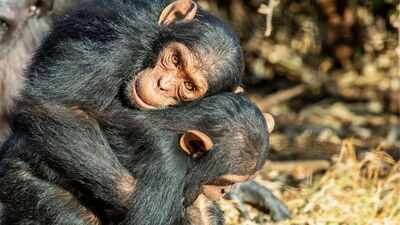
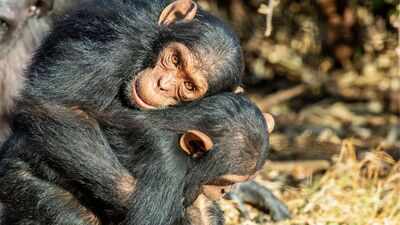
Our closest animal relatives, bonobos and chimpanzees, share a quick hug or a pat on the back before having their meal, to keep the tensions from rising and maintain peace among them, as their hunger could create conflict within the group. For years, scientists believed these two species were different, with peaceful bonobos using socio-sexual gestures for harmony and aggressive chimpanzees relying on brutal force.However, new research published by the Royal Society reveals a much more subtle story. By studying these apes in African sanctuaries, researchers found that both species use various forms of body contact to navigate social stress and ensure everyone gets a fair share of food. This shared, friendly touch suggests that the ability to manage conflict through physical comfort is an ancient trait possibly inherited by humans from a common ancestor.
Why do bonobos and chimpanzees engage in socio-sexual activity before a meal
In the wild, mealtime can be a moment of drama and anger among animals. To see how apes handle this, researchers used an experiment called the ‘peanut swing’. This involves swinging a container full of peanuts towards a group, creating a limited and highly desirable prize that could easily lead to a fight.What the scientists noticed was remarkable. Before the food even arrived, the apes began to engage in ‘support behaviours’. These are short, friendly physical contacts like embracing, holding hands, or even quick sexual touches. The results showed that individuals who spent more time touching their group mates, and had more physical partners, were actually allowed more time in the feeding later. Essentially, by being friendly first, they earned the right to eat together without being chased away.

Image Credit: Greg Hume
Does physical intimacy play a key role in keeping the peace among apes
While we often think of sex purely for making babies, bonobos and chimpanzees use it as a social bonding agent. For a long time, bonobos were the only ones famous for this ‘make love, not war’ approach. However, research shows that chimpanzees also use sexual contact to manage social tension.During the pre-feeding period, both species used physical intimacy to calm the group. Bonobos were much more likely to use sexual gestures to make up after a fight, whereas chimpanzees often used other types of comfort, like grooming or kissing. In bonobos, sexual contact is often used as a quick, short-term way to relieve stress, whereas chimpanzees might have different ways to resolve their disputes. Regardless of these differences, the core finding shows that sex is a vital tool for social harmony in both species.
Why do chimpanzees put their fingers in each other’s mouths
Chimpanzees put their fingers in each other’s mouths frequently as a form of reassurance. Researchers call these ‘vulnerable’ behaviours. By placing a finger in a friend’s mouth or giving them a ‘body kiss’, an ape is putting themselves at risk of a nasty bite.Scientists believe this is a powerful signal of trust. By putting yourself in a vulnerable position, you are showing your partner that you trust them completely and that you have no intention of starting a fight. Interestingly, these risky gestures were most common in the most tolerant and peaceful chimpanzee groups. It seems that when a group already gets along well, they are more willing to perform these ‘bond-testing’ rituals to keep their friendships strong.
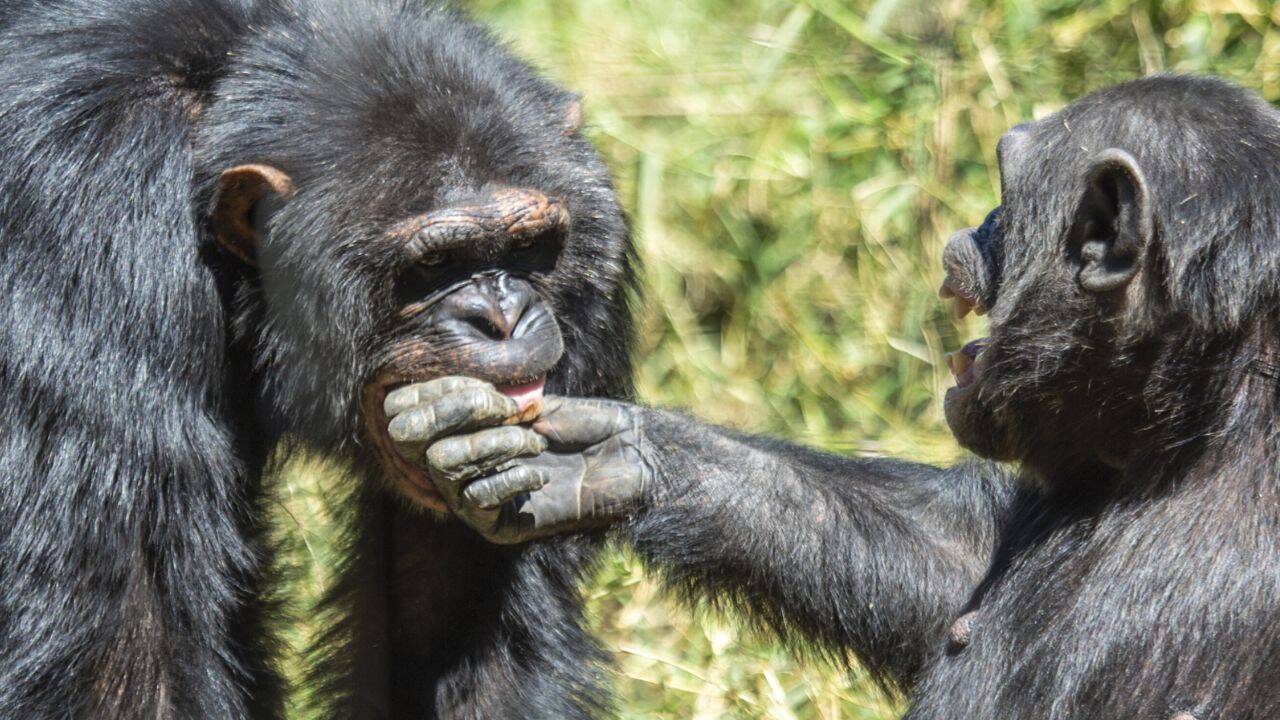
Image Credit: Jake Brooker / Chimfunshi Wildlife Orphanage Trust
How do social bonds differ between bonobos and chimpanzees
While both species value touch, they tend to focus their attention on different types of partners. In the bonobo world, females are often the leaders and form the strongest alliances. Because of this, it was the female–female pairs that engaged in the most supporting behaviour before feeding. This bond helps the females stick together to ensure they get priority access to the best food.On the other hand, chimpanzee societies are traditionally male-led. Researchers found that male–male pairs were the ones most likely to be hugging and touching before the meal. These male bonds are crucial to maintain their status in the group.In both species, however, these patterns were only clear in the ‘tolerant’ groups. In groups with stricter leaders, these friendly rituals seemed to be suppressed.
What does this behaviour tell us about human evolution
Because we share about 99% of our DNA with bonobos and chimpanzees, their behaviour provides a ‘window’ to our own ancestors. The fact that both of our closest relatives use physical touch and sexual contact to manage their relationships, suggests that this ritual was present in our last common ancestor over six million years ago.This research reminds us that social harmony is not just about having rules, it is about connection. Whether it is a reassuring hand on a shoulder or a playful embrace, these friendly gestures have been helping primates live together peacefully for millions of years. It is an ancient, evolutionary strategy for keeping the world a little more tolerant.