






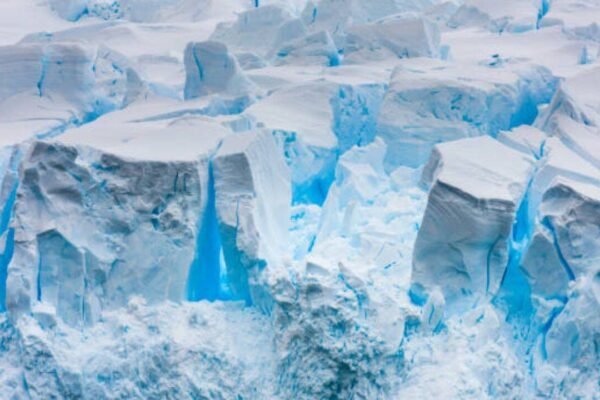
Antarctica averages minus 55°C at Vostok Station, yet a Lake Ontario-sized body of water remains liquid beneath four kilometres of ice for fifteen million years |

Antarctica is the coldest continent on Earth, featuring a deadly combination of extreme temperatures, high elevation and ice-covered terrain. The Russian Vostok Station here averages minus 55°C and on July 21, 1983, it recorded the lowest reliably measured air temperature on Earth, −89.2°C.Yet sealed beneath the white ice sheets of the region is a hidden…


Read More

Meet Hong Wang and Yu Deng: The first Chinese recipients of the prestigious Fields Medal after breakthroughs that reshaped modern mathematics |

Image(s): International Mathematical Union Two Chinese mathematicians have made history by becoming the first Chinese recipients of the Fields Medal, widely regarded as the highest honour in mathematics. Hong Wang and Yu Deng were recognised for solving long-standing mathematical problems that had challenged researchers for more than a century, marking a milestone not only for…

Read More

Scientists are turning seawater into a ‘blood test’ that could reveal coral reef damage before it becomes visible |

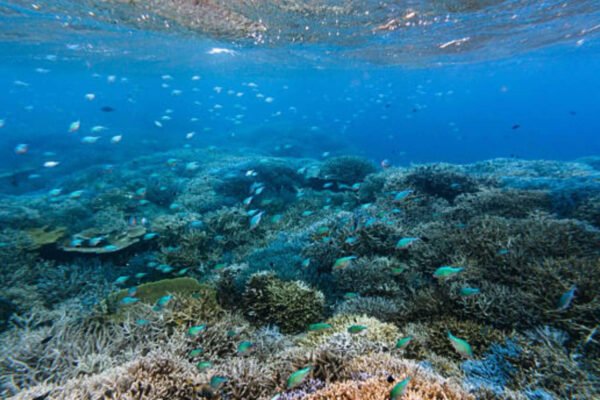
Before major surgeries and operations, doctors often detect diseases in humans using minimally invasive methods like a blood or urine test, before symptoms become severe. Now, researchers at the Woods Hole Oceanographic Institution (WHOI) are applying a similar concept to coral reefs. They have shown that the water surrounding reefs contains chemical and microbial signals…

Read More

Quote of the day by Benjamin Franklin: “Many people die at twenty-five and aren’t buried until…” – why a life without curiosity is only half-lived |

Benjamin Franklin (Image: Wikipedia) Life gets measured in years, but it is really defined by what actually happens inside them. A line widely credited to Benjamin Franklin puts that gap sharply. “Many people die at twenty-five and aren’t buried until they are seventy-five,” it goes. It is obviously not describing literal death. It is describing…

Read More

Scientists are planting 30 million oysters in the Chesapeake Bay to restore water quality and marine life in one of America’s largest restoration projects |

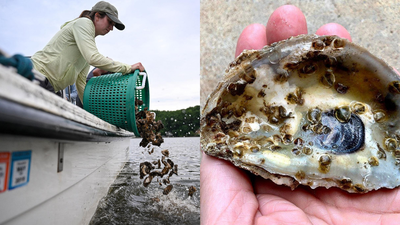
Millions of tiny oysters are being returned to the Chesapeake Bay in an ambitious conservation effort that scientists hope will transform one of the United States’ most important estuaries. The Chesapeake Bay Foundation (CBF), in partnership with the Severn River Association, recently planted three million juvenile oysters in a protected sanctuary reef in Maryland’s Severn…

Read More

Anglers had been reporting black skin patches among catfish in Vermont lake. Now scientists have found it’s a contagious cancer affecting 30% of their population |

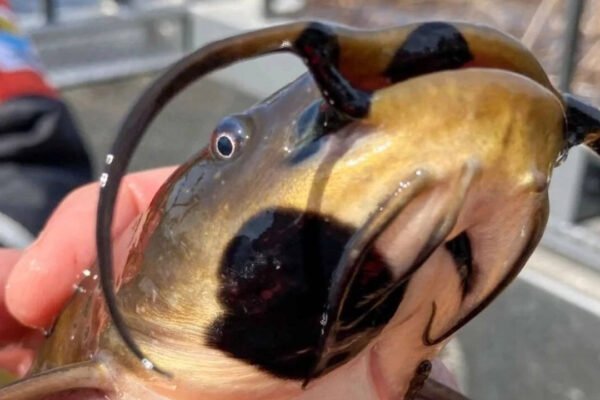
Tasmanian devils, dogs and shellfish are some of the only animals that are known to carry naturally occurring cancers that can pass between individuals. But scientists in Vermont have discovered a new animal species that can do the same, catfish. When they researched the mysterious black skin lesions afflicting catfish in Lake Memphremagog and other…

Read More

German scientists discovered naturally occurring microbes that removed 95% of dissolved uranium from contaminated water |

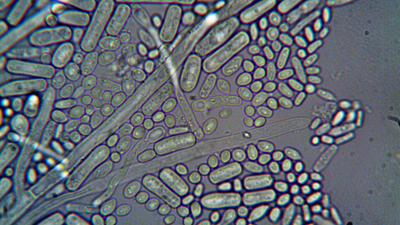
A team of scientists has uncovered a naturally occurring microbial process that could change how uranium-contaminated water is cleaned up. Studying bacteria living in the flooded Königstein uranium mine in Germany, the researchers discovered that certain microorganisms can transform highly soluble uranium into a rare, stable mineral that remains locked in place instead of spreading…

Read More

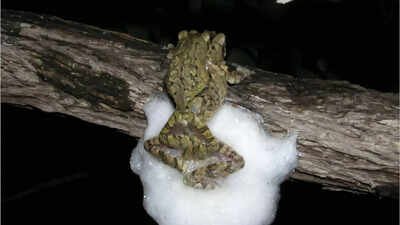
Female African treefrogs mate with several males simultaneously; together they whip up a larger foam nest that protects hundreds of eggs from drying out

A female typically mates with five males simultaneously, although groups of 10 to 15 are not unusual Female African treefrogs mate with several males at the same time, working together to whip up a larger foam nest that protects hundreds of eggs from drying out.This group nest-building behaviour provides a fresh explanation for why females…

Read More

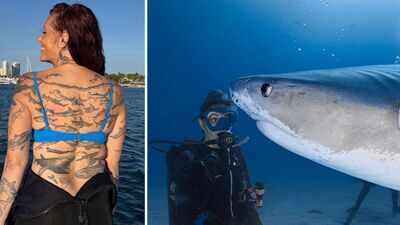
Meet Emily Morrison: The marine biologist who sets a world record for ‘106 shark tattoos to raise awareness for shark conservation |

Image Credit: guinnessworldrecords.com Shark is a unique animal that has survived five mass extinctions and swam in our oceans before trees existed. For many of us, the thought of a shark brings up the images of big, sharp teeth with terror. However, for one American marine biologist named ‘Emily Morrison,’ these marine predators are not…

Read More