








Headlines

Scientists discover humans and mice may use the same hidden brain system to recognise smells |

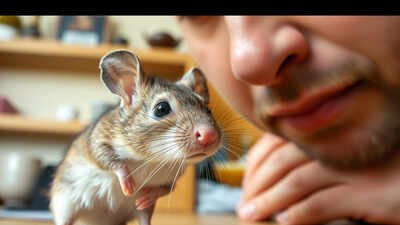
Representative Image of a mouse and a human side by side, both engaged in sniffing (AI-generated image) A mouse hunting for food might sniff several times a second. A person checking whether a cantaloupe is ripe usually leans in for a single, unhurried breath. On the surface, these look like completely different behaviours. Two complementary…

Read More

Scientists in China create a self-healing dress from living fungus that repairs its own tears and biodegrades naturally |

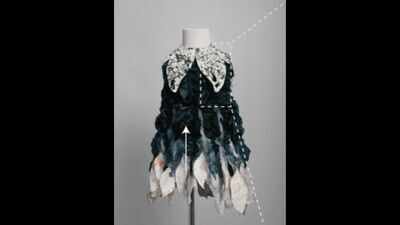
PC: Study: A programmable fungal platform for engineered living textiles Researchers in China have created a textile made from living fungal mycelium that can heal its own cuts, grow new surface layers on command, and biodegrade completely within weeks. The material, built from Cordyceps militaris fungus, keeps its cells alive throughout the manufacturing process, unlike…

Read More

Meet Millie Pradawong, the 14-year-old Virginia student using machine learning and CRISPR to make microalgae produce more biofuel

Millie Pradawong developed an AI and CRISPR tool to improve microalgae biofuel production. A fourteen-year-old teen in United States has developed a computational tool with the help of machine learning and CRISPR gene editing to improve biofuel production. Millie Pradawong is one of the ten finalists in the 3M Young Scientist Challenge this year.Her project…

Read More

A giant snake vanished from parts of the US decades ago. Scientists are now releasing 42 eastern indigo snakes to bring it back |

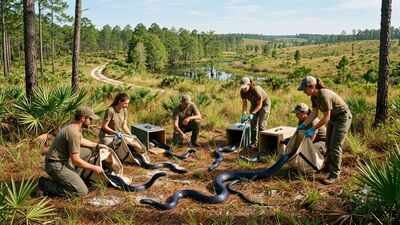
In Spring 2026, conservationists released 42 eastern indigo snakes into their historical habitats in Florida and Alabama. After a year of specialized care, these reptiles have adapted well, with monitoring indicating successful survival and breeding in the wild. This significant reintroduction effort seeks to restore self-sustaining populations of this unique snake species to their native…

Read More

In 1974, a German fisherman released thousands of baby catfish into a Spanish river; 50 years later they are threatening native wildlife as an ‘ecological time bomb’

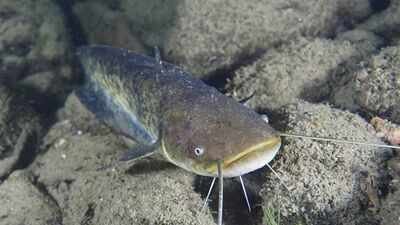
German biologist and recreational fisherman Roland Lorkowsky released thousands of juvenile Wels catfish into Spain’s Ebro River in 1974. His goal was simple and positive: to create a world-class sport fishery by introducing one of Europe’s biggest freshwater fish. But today, the Wels catfish has become one of the dominant predators in many Spanish waterways….

Read More

Scientists discover the hidden process in the Arctic that could reshape Earth’s future climate by changing cloud cover |

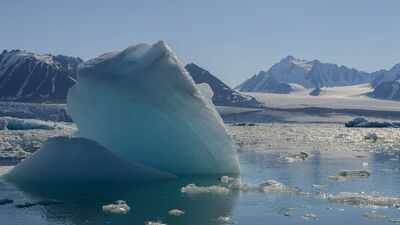
Image Credit: Hannes Grobe The Arctic region is warming three times faster than the global average since the past 40 years, which makes it one of the most sensitive areas on the planet. Recent scientific findings published in Nature Geoscience have uncovered a previously unknown natural process that massively increases the number of cloud-forming particles…

Read More

Colorado scientists convert carbon dioxide into durable plastic: Solving two biggest environmental problems of planet Earth |

Image Credit: (Representational Image: iStock) Carbon dioxide is a naturally occurring gas, abundant in quantity but its chemical stability makes it difficult to convert into useful materials. Since the 1960s, scientists have been attempting to transform carbon into polymers, which require specific catalysts to overcome the energy barriers. Some success was achieved in creating various…

Read More

James Webb’s ‘little red dots’ may be 100,000-sun monster stars; their collapse could have seeded the universe’s first giant black holes

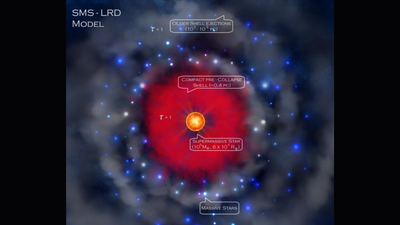
‘Little red dots’ may be pulsating monster stars that created early-universe black holes, study finds Mysterious, compact objects discovered in the early universe may actually be enormous “monster stars” with masses up to 100,000 times greater than the Sun.According to a new study by the Center for Astrophysics | Harvard & Smithsonian, these giant stars…

Read More

80-million-year-old snake skull discovery in Brazil proves that ancient snakes conquered the three worlds at once |

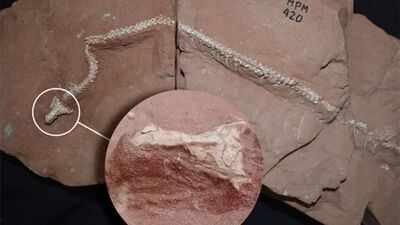
The skull and brain case of a newfound ancient snake species were still intact. Image Credit: Agustin Martinelli/ScienceNews Snakes represent one of the most successful groups of vertebrates on Earth, with over 4,200 living species accounting for one-third of all scaled reptiles. Despite a long history going back to at least the Middle Jurassic, the…

Read More