






Headlines

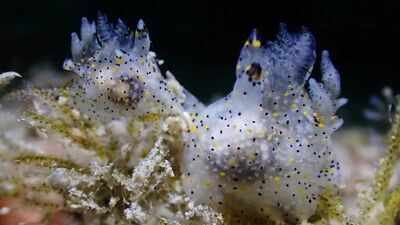
Meet Ho-Yeung Chan, the student who accidentally discovered a new sea slug smaller than a grain of rice |

Thecacera sesama. Image Credit: Ho-Yeung Chan An accidental encounter by a student during a recreational dive has led to the formal description of a ‘tiny new sea slug’ from the waters of north-eastern Taiwan. ‘Ho-Yeung Chan’ first noticed the animal while diving and later helped establish that it belonged to a species previously unknown to…

Read More

A retired Kodak finance worker picked moss from a New York log and found an animal no one had seen before; a year later, scientists confirmed it as a new tardigrade species

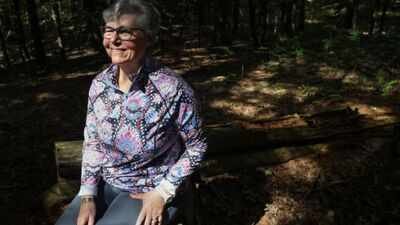
Judy Dobles collected moss near Cumming Nature Center that led to the discovery of a new tardigrade species. (Photo: Finger Lakes Public Radio) Judy Dobles, a retired worker from Kodak’s finance department, was walking a trail at the Rochester Museum & Science Center’s Cumming Nature Center in Naples, New York, when she made a discovery…

Read More

Quote of the day by Richard Feynman: “I don’t feel frightened by not knowing things…” |

Quote of the day by Richard Feynman (Image: Wikipedia) Not knowing the answer to a question can often feel like a weakness. In school, at work and even in everyday conversations, people may feel pressure to appear knowledgeable and confident, even when they are uncertain. American physicist Richard Feynman viewed uncertainty very differently. Known for…

Read More

In 2007, ESA exposed 3,000 tardigrades to space vacuum and solar UV radiation in low Earth orbit; 68% revived when the microscopic animals were rehydrated |

In September 2007, the European Space Agency launched roughly 3,000 tardigrades into low Earth orbit aboard the Biopan-6 platform on the FOTON-M3 mission. Known as water bears, these microscopic animals were dried into a dormant state before being exposed directly to the vacuum of space, alongside doses of solar and cosmic radiation, for ten days…

Read More

In 1999, scientists dropped 45 tons of wollastonite over a 29-acre New Hampshire watershed to replace calcium lost to acid rain; by 2013, it was exporting 30 times more inorganic nitrogen than nearby watersheds

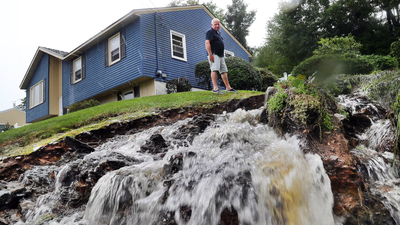
In 1999, scientists dropped 45 tons of wollastonite over a 29-acre New Hampshire watershed A large-scale effort to restore an American forest damaged by acid rain had an unexpected environmental effect when added nutrients caused a huge increase in nitrogen flowing into nearby streams. In October and November 1999, researchers spread about 45 short tons…

Read More

Meet Kaia Minn, the 13-year-old Massachusetts inventor who turned discarded orange peels into biodegradable seed pods for reforestation |

Kaia Minn at the National Academy of Inventors conference. Image Credit: kaiaminn.com A discarded citrus peel is not the sort of thing most people would associate with restoring forests. But for 13-year-old Massachusetts inventor ‘Kaia Minn,’ it became the starting point for a simple idea with potentially far-reaching environmental uses. Minn has developed a ‘biodegradable…

Read More

In 1945, an Arizona professor started hunting glowing scorpions at night; decades later his laboratory had become a major centre for venom research |

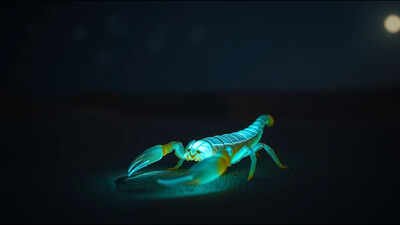
​Representative Image of fluorescent scorpions glowing across a desert landscape after dark (AI-generated image) In 1945, an Arizona State University professor began wandering the desert at night, hunting scorpions that glowed under his black light, and few people around him understood why. That professor, Herbert L Stahnke, was already the nation’s leading authority on scorpions…

Read More

Scientists covered an Amazon rainforest plot with 6,000 panels to block half its rain; large trees died and biomass fell by a third |

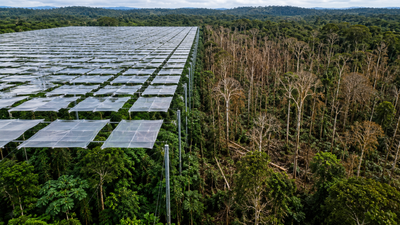
Deep in the Caxiuanã National Forest in northern Brazil, a patch of rainforest the size of a football pitch tells the story of what a drier Amazon might look like. Since 2002, scientists have suspended nearly 6,000 transparent plastic panels above one hectare of pristine forest, diverting roughly half the rainfall away from the soil…

Read More

In 2001, scientists began adding 5 to 6 nanograms per litre of synthetic estrogen to an Ontario lake; after 2 seasons its minnow population collapsed

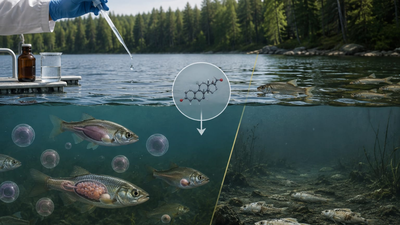
Representative Image (AI-generated) A tiny concentration of a synthetic hormone was enough to trigger a dramatic ecological change in a remote Ontario lake. In 2001, scientists began adding the synthetic estrogen 17α-ethynylestradiol (EE2) to Lake 260 in northwestern Ontario, maintaining concentrations of about 5 to 6 nanograms per litre. The experiment continued for seven years,…

Read More

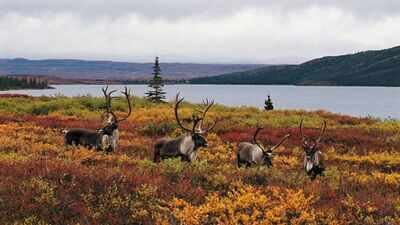
2,800+ wolves killed, nearly $10 million spent and 15 caribou herds still at risk: Why scientists say British Columbia is targeting the wrong problem

Since 2015, British Columbia has killed 200-300 wolves annually to help endangered caribou populations recover. Recently, the provincial government has proposed extending its decade-long wolf cull program by five more years in areas that are home to 15 declining woodland caribou herds. But according to scientists, the deforestation, not the wolves, is the main driver…

Read More