









Headlines

‘Hello from ISS’: Indian-origin Nasa astronaut Anil Menon shares day 1 message from space after reaching the space station |

Less than a day after arriving aboard the International Space Station (ISS), Nasa astronaut Anil Menon offered a glimpse into his first hours in orbit, sharing a message that was as much about the people who helped him get there as it was about the view from space.Posting on X (formerly twitter) from the orbiting…

Read More

American scientists created a flexible solar ‘skin’ that stretches like fabric and follows the Sun to capture more energy |

Traditional solar panels have transformed renewable energy, but they come with one major limitation, they are rigid, heavy and designed to sit on flat surfaces such as rooftops or solar farms. That makes them difficult to install on curved buildings, lightweight structures or unconventional designs. Researchers in the United States are now working on a…

Read More

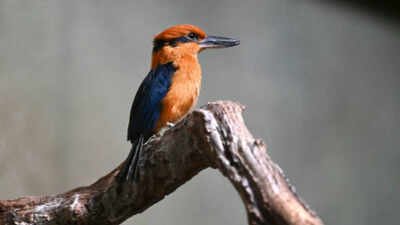
In the 1980s, Guam’s kingfisher vanished from the wild after invasive snakes devastated the island’s birds: The last 29 were rescued and four new chicks are now helping rebuild the species |

The Guam Kingfisher is known as the “sihek” in Chamorro, the native language of the Marianas Archipelago and is the rarest species at the Smithsonian Conservation Biology Institute in Front Royal, Virginia. The bird is classified by the IUCN as extinct in the wild, meaning a single one is not present outside the conservation centre….

Read More

An ancient sea once divided North America from north to south; 70-million-year-old creatures from its waters still shimmer like gemstones

Fossils from this period are displayed at the Smithsonian’s National Museum of Natural History. South Dakota is one of the most landlocked states in the United States. It is more than 1,000 miles away from both the Pacific and Atlantic oceans. It is hard to imagine that this dry landscape was once covered by water.But…

Read More

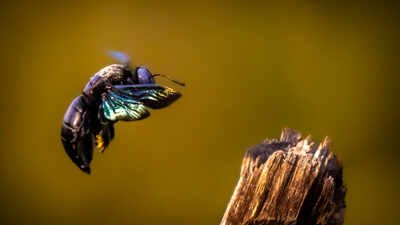
Scientists exposed bumblebees to low doses of a modern pesticide; the bees survived, but genes linked to producing the next generation began changing

Scientists exposed bumblebees to low doses of a modern pesticide Scientists exposed bumblebees to low doses of a modern pesticide Scientists exposed bumblebees to low doses of a modern pesticide Scientists exposed bumblebees to low doses of a modern pesticide Scientists exposed bumblebees to low doses of a modern pesticide Bumblebees are among the world’s…

Read More

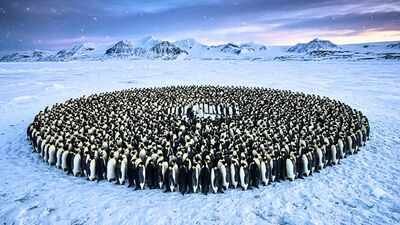
Emperor penguins survive Antarctica’s brutal winters by huddling together, but a maths study reveals the hidden system behind their remarkable teamwork |

Every winter in Antarctica, emperor penguins gather in large groups called huddles to survive the cold. Temperatures can fall to -40 degrees Celsius, and strong winds make the weather even harsher. Without huddling together, these penguins would not be able to survive.But a penguin huddle is much more than a group of birds standing close…

Read More

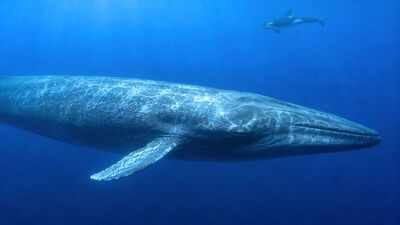
Scientists have finally explained why killer whales struggle to hear blue whales, and the answer may have helped the giants survive for millions of years |

Whales are well known for their songs. But scientists have discovered that, for some whales, those songs may also help them stay alive. A researcher from the University of Washington has found that some baleen whales, including blue, fin and minke whales, have evolved to sing at such low frequencies that killer whales, their only…

Read More

40-gram, palm-sized AI micro-drone kills a flying insect autonomously in mid-air for the first time. Now it could eradicate mosquitoes and save thousands of lives |

A palm-sized AI drone weighing just 40 grams has achieved an engineering first by autonomously hunting and killing a flying insect in mid-air, paving the way for a new approach to mosquito control. Developed by US startup Tornyol, the tiny drone successfully detected, tracked and intercepted a flying moth during a controlled indoor demonstration without…

Read More

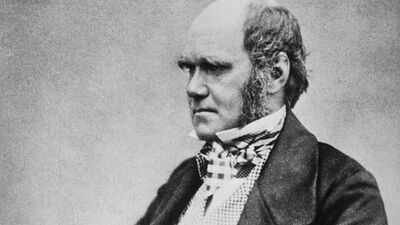
Quote of the day by Charles Darwin: “An American monkey, after getting drunk on brandy, would never touch…” – a witty observation on why humans often repeat the mistakes they already know can harm them |

Charles Darwin (Image source: Wikipedia) A bad experience is supposed to teach a lesson, yet people return to habits they already know are harmful more often than logic would suggest. Charles Darwin noticed the same contradiction and put it more bluntly than most. “An American monkey, after getting drunk on brandy, would never touch it…

Read More

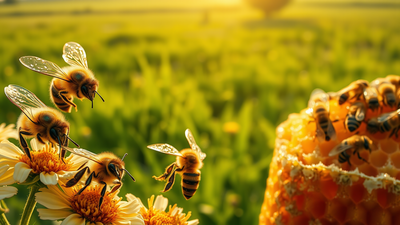
Scientists tagged thousands of bees and found that just a few do most of the work in every hive |

Bees have a reputation for being tireless workers, but it turns out that reputation only really applies to some of them. Researchers at the University of Illinois glued tiny numbered tags onto thousands of individual honeybees and tracked their comings and goings for almost two months across several separate colonies. What they found flips the…

Read More