




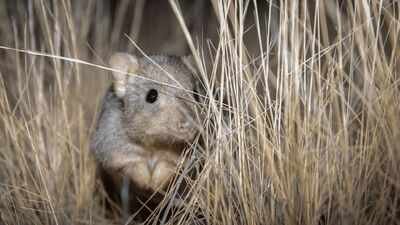
Australia brought digging mammals back to an 8,000-hectare sanctuary; 8 years later, scientists found they had reshaped underground insect communities |

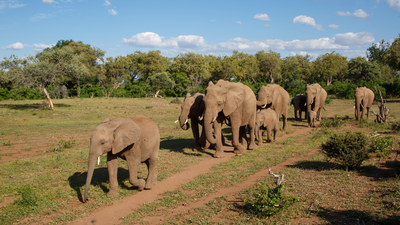
Image Credit: Brad Leue/AWC Australia’s effort to bring digging mammals back to an 8,000-hectare wildlife sanctuary has produced changes below the surface. Researchers studying Scotia Sanctuary in south-eastern Australia found that 8 years after reintroduced mammals were given access to areas, the communities of insects emerging from the soil had changed. The mammals, including greater…

Read More

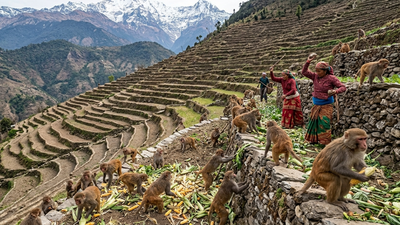
Nepal’s farmers built terraces into steep Himalayan slopes; now growing macaque populations are making it harder to keep their harvests |

Nepal’s mid-hills are places where farming has long meant working with the landscape rather than against it. Terraces cut into steep slopes turn difficult ground into fields for maize, millet, rice and other crops, with generations of farmers maintaining the walls and soil that make cultivation possible. But the balance between people, farmland and wildlife…

Read More

Scientists found an unexpected second product while making cleaner hydrogen; the leftover material was high-quality graphite |

Liquid hydrogen Tank at NASA Kennedy Space Center. Image Credit: US Department of Energy Scientists working on a cleaner way to produce hydrogen have discovered an unexpected second product which is high-quality graphite. The finding emerged from research into methane pyrolysis, a process that splits methane into hydrogen and solid carbon instead of producing CO2…

Read More

In 2014, Mexico began a massive 1 million-hectare restoration drive; 4 years later plant survival had risen from just 33% to 64% |

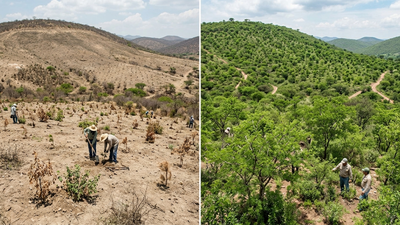
Restoring damaged land can look straightforward on paper: plant trees, repair soils and wait for vegetation to return. On the ground, the work is less predictable. Young plants have to survive drought, poor soils, fire, grazing and the other pressures that caused landscapes to deteriorate in the first place.Mexico’s National Forestry Commission, known as CONAFOR,…

Read More

Princeton put AI in charge of a fusion-plasma control loop running every 20 milliseconds; in one test it predicted a damaging instability 200 ms early and stopped it before it began

Nuclear fusion illustration Photo: Canva Inside a steel vault at the Princeton Plasma Physics Laboratory, a superheated whirl of charged particles spins in near vacuum, held in place by invisible magnetic fields. This is a fusion plasma, the same kind of matter that powers the Sun, and it is notoriously difficult to control.In a recent…

Read More

China’s ‘Snake Doctor’ continues conservation work for a rare viper, despite 9 snake bites, divorce threat from wife and even after losing a finger |

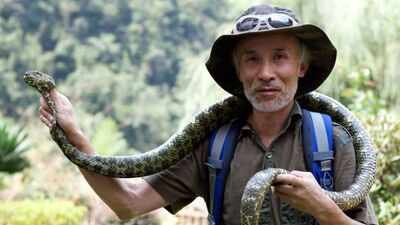
Chen Yuanhui. Image Credit: South China Morning Post Chen Yuanhui has spent more than four decades studying one of China’s rarest venomous snakes, even though his work has cost him part of a finger and repeatedly put his life in danger. The 77-year-old, widely known as the ‘Snake Doctor,’ discovered the ‘Mangshan pit viper’ and…

Read More

Two Canadian students created toothpaste that changes colour in the mouth; their school project is designed to show children when they are brushing properly |

Image Credit: AI Generated Two Canadian students have developed a colour-changing toothpaste designed to make toothbrushing easier for children to understand. Ella Zhang and Gillian Leung, students at Havergal College in Canada, created ‘ToothTint’ as a school project that uses a natural pigment to change colour in response to conditions inside the mouth. The idea…

Read More

Meet Dr Alberto Cruz: The palaeontologist who found a new Ice Age toad hiding in a 1950s La Brea fossil collection |

PC: California’s La Brea Tar Pits & Museum A small Ice Age toad hidden in the collections of California’s La Brea Tar Pits has emerged as a new species to science, giving researchers another way to read the environmental history of ancient Los Angeles. ‘Spea labreae’, the extinct spadefoot toad, was identified when Dr Alberto…

Read More

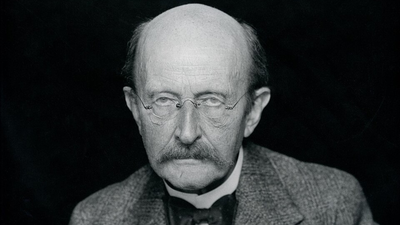
Quote of the Day by Max Planck: “The search for the absolute is the noblest task of science” |

Max Planck, the German physicist whose work helped lay the foundation for quantum theory, believed that science was ultimately a search for deeper and more fundamental truths. His reflections on scientific discovery reveal how strongly he valued the pursuit of universal principles rather than simply solving individual problems. In his Scientific Autobiography, Planck wrote about…

Read More