







Headlines

Volunteers spent 16 years restoring a damaged Arizona desert; 133 native plant species now thrive where invasive grass once ruled |

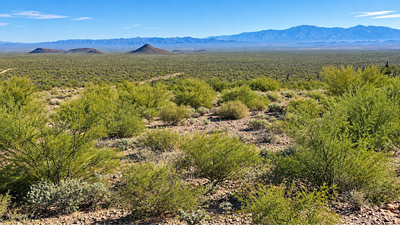
An 18-acre stretch of Arizona desert that was once heavily disturbed and overrun by invasive buffelgrass has been transformed through 16 years of sustained restoration work by volunteers and conservation partners. The Waterman Restoration Project, located on Bureau of Land Management land within Ironwood Forest National Monument near Marana, began in 2010 after earlier attempts…

Read More

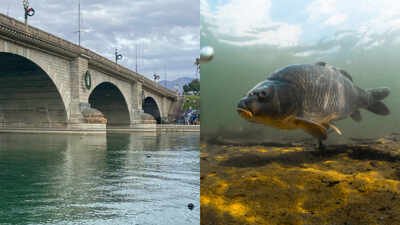
In 1992, a partnership began rebuilding Lake Havasu’s declining fish habitat; 90 acres of artificial habitat helped improve about 875 acres of coves, with habitat now created across 124 coves

During its first decade, the partnership installed approximately 90 acres of artificial habitat, improving about 875 acres of cove complexes. Lake Havasu is famous for striped bass, redear sunfish, world-class fishing tournaments and unforgettable days on the water. But beneath that success is a decades-long conservation effort that many visitors never see. For more than…

Read More

Scientists found a surprising use for apple waste. It removed up to 100% of toxic lead from water in lab tests |

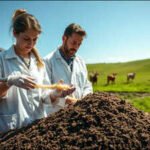
Lead contamination in water is being studied through different approaches, including the use of waste materials that can help remove metal ions from water. Apple pomace, the residue left after juice production, was among the waste materials researchers examined for its ability to remove lead ions from water in laboratory experiments.Researchers compared untreated raw apple…

Read More

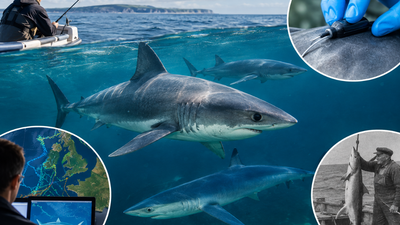
Scientists will deploy 70 electronic tags on 3 vulnerable shark species around Britain, pairing new tracking data with anglers’ catch records dating back to 1953

Representative Image (AI-generated) Britain’s coastal waters are home to more shark species than many people might expect, but scientists still know surprisingly little about how several of these animals move, feed and reproduce. In a report by The Guardian, researchers outlined plans for a new three-year project that will combine modern electronic tracking with decades…

Read More

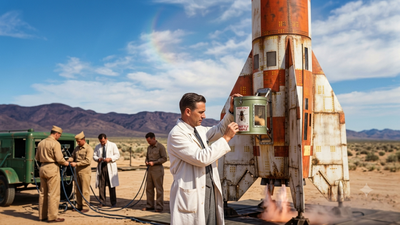
In 1947, fruit flies were sent into space using captured German rocket. Decades later, NASA studied how space affects immunity |

A tiny insect became one of the earliest living passengers sent towards space, long before astronauts were routinely orbiting Earth. In 1947, fruit flies were loaded onto a captured German V-2 rocket in New Mexico as scientists began testing what happened to life above the atmosphere. The experiment was primitive by modern standards, but it…

Read More

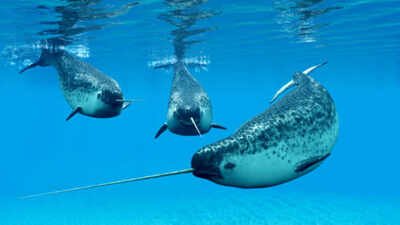
A narwhal can grow a single 10-feet tooth through its upper lip; scientists used 3D X-rays and 3 particle accelerators to discover how nature’s only straight tusk stays straight

An international team of biologists, chemists and physicists has used sophisticated 3D X-ray technology to investigate the tooth at an unprecedented level. A unicorn may be a mythical creature, but nature made something very similar under the Arctic ice. Wondering what? Well, the narwhal has a strange tusk that can reach nearly 10 feet long…

Read More

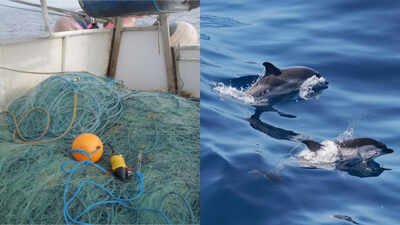
Underwater sensors caught a rare event off Cornwall: one porpoise became trapped in a net while two animals exchanged possible distress calls

Bycatch, the accidental capture of animals in fishing gear is considered the world’s greatest direct human-caused threat to dolphins and porpoises. Off the coast of Cornwall, a set of underwater sensors was listening to the ocean when it detected something researchers rarely get to see. According to an online report by Phys Org, two harbor…

Read More

Quote of the day by Isaac Newton: “Truth is ever to be found in simplicity, and not in the multiplicity and confusion of things” |

Isaac Newton, one of history’s most influential scientists, spent much of his life trying to understand the laws governing the natural world. His work transformed physics, mathematics and astronomy, but his approach to discovery was rooted in careful observation, experimentation and the search for underlying principles. One of his enduring observations was that truth is…

Read More

A Scottish river project set out to revive oysters that once covered an area the size of Edinburgh; now, 60,000 have been returned |

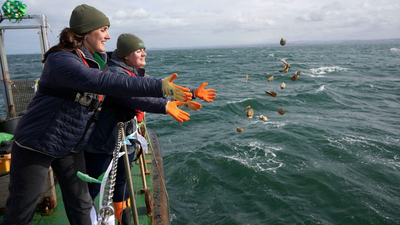
A Scottish restoration project has returned 60,000 native oysters to the Firth of Forth, reviving a species that once formed vast oyster beds across an area roughly comparable to the size of Edinburgh. The Restoration Forth partnership originally aimed to return 30,000 European flat oysters to the estuary, but the target was later doubled after…

Read More

Human hair, receipts, fishing nets, and eggshells were among 17 waste materials tested to create stronger, lower-carbon cement building products |

Cement is one of the most widely used materials in construction, but its production comes with a high environmental cost. Circular Design Cement, a 2026 James Dyson Award project, is exploring a new approach to construction materials. The project uses everyday waste and industrial byproducts as recycled aggregates in cement-based materials designed for architectural applications….

Read More