








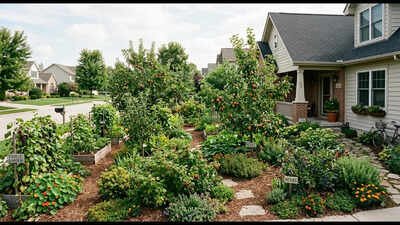
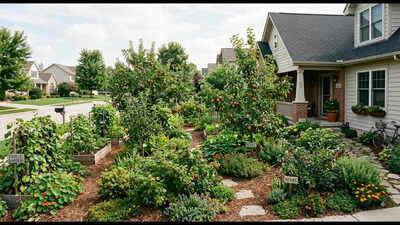
For Michael Sherman, the front yard of his Chino, California, home is not simply landscaping. It is a “food forest” filled with plants that produce food for his family and, at times, for his neighbours. But after years of maintaining the garden, Sherman found himself facing complaints and fines over the same landscape he said had previously been approved.Sherman had replaced his front lawn with edible plants including passionfruit, radishes, calendulas, sunflowers, aloe vera, Swiss chard and banana trees. He began the garden about seven years earlier, saying rising food prices and concerns about what is sprayed on produce motivated him to grow more of his own food.The dispute has since moved beyond a disagreement over what a front yard should look like. It has become a question of how much control neighbourhood rules and local codes should have over a homeowner’s attempt to grow food on their own property.
How Sherman turned his conventional lawn into a productive garden
Sherman’s garden began in 2019, when he removed the grass from his front yard and started replacing it with edible plants. Over the following years, the space developed into a dense mixture of fruit trees, vegetables, flowers and other vegetation.Speaking to CBS News Los Angeles, Sherman explained why he began growing his own food: “It’s getting more expensive, you don’t know what’s sprayed on it.”His garden now produces a range of food, while he also shares some of the harvest with neighbours. For Sherman, the plants are not simply decorative; they form part of a system in which fallen leaves and other organic material remain on the property and break down naturally.“Everything that grows, like the leaves and the trees, I let it fall, I leave them there, they decompose and the soil has improved significantly,” said Sherman.
The garden became controversial even though some neighbours supported it
Not everyone in the neighbourhood sees Sherman’s garden in the same way. Some neighbours support what he is doing, including people living nearby who say Sherman regularly offers them food. Others, however, have complained that the vegetation is excessive and poorly maintained.Neighbour Monica Siepert told CBS News she was concerned about rodents and said the vegetation was not always trimmed or maintained. Sherman, meanwhile, argues that the disagreement partly comes down to different ideas about what a well-kept property should look like. “Everyone’s view of what looks nice is different,” he concluded. “Beauty is in the eye of the beholder.”
The dispute escalated when the city issued $750 in fines
The disagreement eventually moved from the neighbourhood to city code enforcement. Chino officials said they had received multiple complaints about the property since Sherman replaced the lawn. The city issued him $750 in fines for several alleged code violations. Officials asked Sherman to address three issues, remove overgrown vegetation, maintain a line of sight on the property and prevent crops from growing within 15 feet of neighbouring yards.Sherman appealed the decision and was scheduled to meet with city officials to challenge the enforcement action. The dispute is particularly striking because Sherman says the garden’s design had previously received approval from his homeowners association in writing, before a subsequent board took a different position. That change left him facing enforcement over a landscape that he says had already been accepted.
A food forest is very different from a conventional suburban lawn
Sherman’s property illustrates a wider tension between traditional suburban landscaping and food-producing gardens. A conventional front yard typically prioritises grass, ornamental plants and a relatively uniform appearance. A food forest works differently, combining multiple layers of vegetation, including trees, shrubs, vines, flowers and ground-level crops, so that the space can produce food while supporting a more complex ecosystem.Sherman’s garden includes plants with different functions, and he deliberately allows organic matter to remain on the ground rather than removing it immediately. He believes that this process has improved the soil.But that approach can also create a landscape that looks considerably less manicured than the lawns and ornamental gardens traditionally expected in residential neighbourhoods.
The case raises questions about who gets to decide what a front yard should look like
At the heart of the dispute is a relatively simple question, how much freedom should homeowners have to determine what grows on their property?For neighbours concerned about pests, visibility or appearance, landscaping rules can serve a practical purpose. For homeowners such as Sherman, however, strict requirements can interfere with efforts to grow food, reduce dependence on commercially produced produce and manage their property according to ecological principles.The disagreement also demonstrates how approval by one authority or board does not necessarily prevent later disputes when regulations, enforcement priorities or governing bodies change.Sherman’s situation therefore goes beyond one unusual garden in Chino. It reflects a broader conflict between private gardening choices, neighbourhood aesthetics and local regulation.
Sherman says his garden has a purpose beyond how it looks
Despite the controversy, Sherman has continued defending the garden as something functional rather than ornamental. He has described the plants, soil and fallen vegetation as parts of a system in which “everything” on the property has a purpose.The city, meanwhile, has focused on whether the property complies with its landscaping and crop-production requirements rather than whether food forests are environmentally beneficial.As the dispute continues, the central question is no longer simply whether Sherman’s front yard looks different from those around it. It is whether a homeowner can maintain a deliberately productive landscape when neighbours, local regulations and changing authorities have different ideas about what that property should look like.