






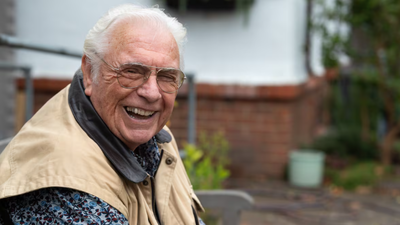
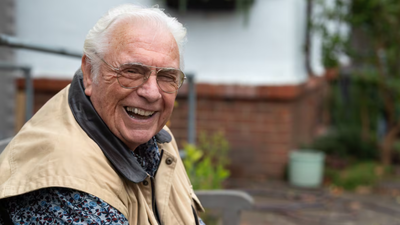
For 81 years, Rod Anderson had one question that he could never quit find an answer to: who was his father? Born in Farnham, England, in 1945, Anderson grew up with his British mother, Yvonne, without knowing much about the man whose DNA he shared. He spent nearly 50 years trying to identify him, even taking a DNA test to investigate someone he suspected could be his biological father. The results, however, ruled that person out.Little did he know that thousands of miles away, a Canadian family was trying to solve the same mystery. An 18-year search, a handful of old family documents and an unexpected DNA match would eventually bring the two sides together, revealing that Anderson’s father had been a Canadian soldier stationed in Britain during the Second World War.
A family rumour that refused to disappear
The story began with Charles Blakney, a Canadian soldier from New Brunswick. Before leaving for England, Blakney was married and had a baby daughter back home. In 1942, he boarded the HMT Andes to serve overseas, eventually working as a motor and driver mechanic with the New Brunswick Rangers.But there was a family rumour that followed him home. Blakney had apparently fathered a child with a woman in England.His granddaughter, Bethany Allen, had heard different versions of the story growing up. Some members of the family knew about it, while others had never heard a word. Determined to establish whether there was any truth to it, Allen requested her grandfather’s divorce records from the archives in 2008. The documents confirmed that a child had indeed been born in England during the war.There was just one problem. The records established that the baby existed, but they did not reveal his identity or what had happened to him. Allen’s mother, who was Blakney’s daughter, had always wanted to find her missing sibling. Before she died, she asked Allen to keep searching and find out whether he had grown up happy and healthy.For almost two decades, the search continued without a name or face to attach to the mystery. Then, in spring 2026, Allen took an Ancestry DNA test. The results pointed to an unexpected match: Rodney Anderson, living in Surrey, England. He was her half-uncle.Allen managed to locate Anderson’s daughter, Dawn Roberts, the same day. Roberts called her father with the news that a woman in Canada was looking for him. Anderson initially thought it was a prank. Instead, he had finally found the answer he had spent decades looking for.
When war brought people together
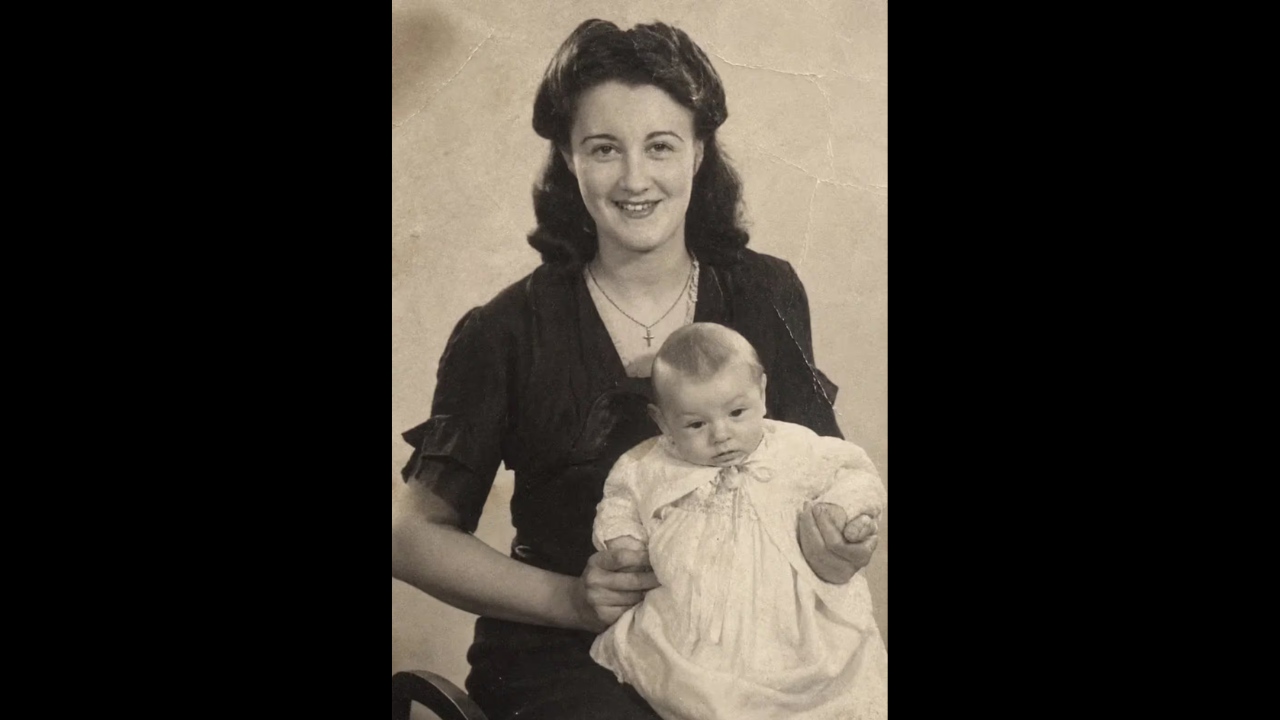
Rod Anderson with his mother Yvonne AndersonImage Courtesy: Dawn Anderson/CBC
Anderson’s story belongs to a much larger chapter of the Second World War, one shaped by the movement of soldiers across borders and the relationships they formed along the way.Although Britain and Canada shared close historical and political ties, Canada entered the Second World War independently, declaring war on Germany on September 10, 1939, a week after Britain. As part of the Allied war effort, hundreds of thousands of Canadian servicemen were stationed in Britain, which became an important base for training, military preparations and the campaigns to liberate occupied Europe.For young men living far from home, everyday life was not limited to military duties. They interacted with local communities, attended social gatherings and formed relationships with British women. Some of these relationships resulted in marriages and families that would eventually cross the Atlantic.The scale of this movement was considerable. Between 1942 and 1948, around 48,000 war brides, accompanied by approximately 22,000 children, travelled to Canada, most of them from Britain. Halifax’s Pier 21 became an important arrival point for these women and their families.But the story of wartime relationships was not limited to marriages. Canadian military records documented tens of thousands of overseas marriages and the children born within them. Yet these figures did not account for unclaimed war births. The official movement of wives and children to Canada was organised around recognised marriages, leaving other family situations outside the same system.
The family secrets left behind by war
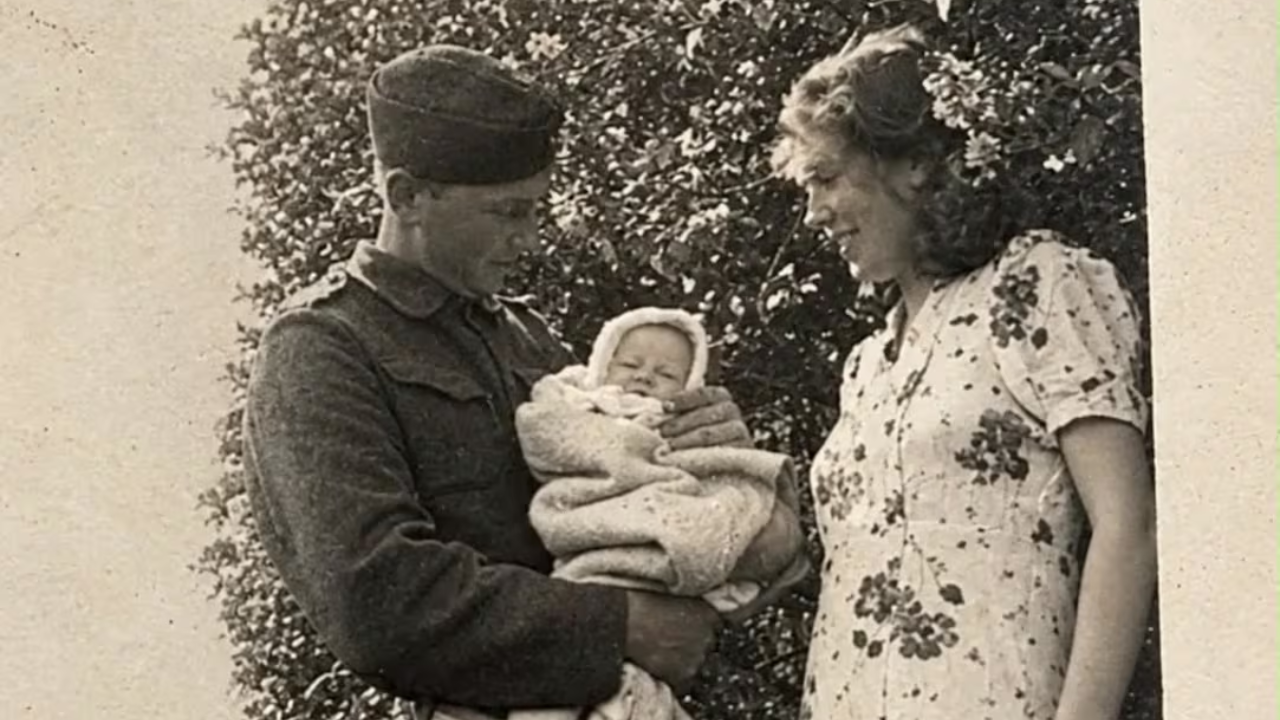
Charles Blakney in uniform with his Canadian wife and baby Image Courtesy: Linda Rowe/CBC
Having a child outside marriage in 1940s Britain could carry considerable social stigma. Women often faced disproportionate blame and judgement, while the fathers could return to their home countries and leave the mothers to navigate the consequences.Historian Jeff Noakes of the Canadian War Museum told CBC News that there was considerable shame attached to these pregnancies, and that the blame fell disproportionately on women. Some children were placed for adoption, while others grew up with their parentage concealed or never fully explained.It is important, however, not to assume that every family had the same experience. We do not know precisely why Anderson’s mother never discussed his father, or what Blakney knew about his son. What we do know is that the social climate made such family histories particularly difficult to talk about.The issue was not confined to Britain either. Canadian soldiers also formed relationships with women in countries such as the Netherlands, which Canadian forces helped liberate in 1945. Their presence sometimes caused friction with local communities. Dutch newspapers even published criticism of the soldiers’ influence on local morality, prompting Canadian military commander Lieutenant-General Guy Simonds to defend his troops publicly.
A resemblance across generations
Today, Anderson has a 77-year-old half-sister, Barb Lowe, living in St. Thomas, Ontario. The two speak every week and say they felt an immediate connection when they first spoke. Lowe has noticed similarities between Anderson and their father, who died in 1987. At one point, she even pointed out that they had the same ears.There was another unexpected resemblance. Anderson lost an arm and an eye in a railway accident as a child. Despite being told in a government assessment that he would be unable to work as a mechanic, he eventually trained in the trade and opened his own business. It turned out that his biological father had also been a motor mechanic.For Anderson, learning about his father has meant discovering something about himself, too. He now has relatives in Canada, a family history he can finally trace and connections that will extend to his children and grandchildren.There may still be another mystery to solve. The divorce documents that helped Allen identify Anderson also referred to another baby Blakney had fathered in Britain during the war. The family is now looking into whether that child, too, might be somewhere waiting to be found.More than 8 decades after the end of the war, its consequences are still unfolding in unexpected ways. For some families, the conflict meant separation, migration and years of unanswered questions. For Anderson, a DNA match has finally given a name to the man he spent most of his life searching for, and brought him a family he never knew he had.