







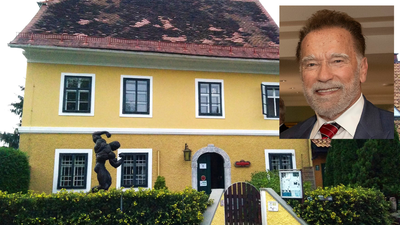
Arnold Schwarzenegger grew up in a modest house in Thal, near Graz in Austria. Decades later, the building became a museum dedicated to his journey from a young bodybuilding enthusiast to a Hollywood action star and California governor. Austrian investor Christian Baha acquired the former family residence at auction in 2009 for a reported €460,000, equivalent to about US$656,000 at the time. Some contemporary reports put the purchase price closer to €500,000. The building opened as a museum in 2011 and now displays personal belongings and memorabilia from different stages of Schwarzenegger’s life. Visitors can explore his childhood living conditions and discover objects linked to his bodybuilding achievements, Hollywood career and time as California governor. The museum offers fans a glimpse into the humble beginnings of one of Hollywood’s most recognisable stars.
Arnold Schwarzenegger’s family once lived in this former police residence
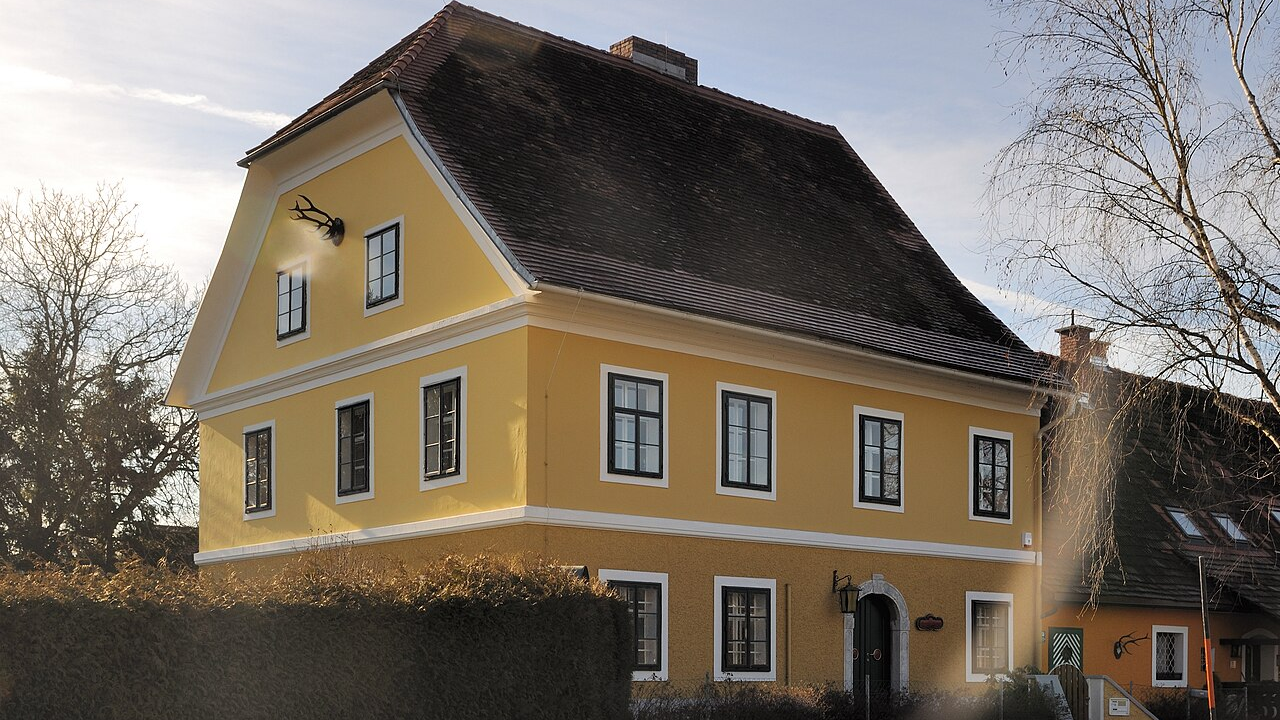
The building stands at Linakstrasse 9 in Thal, in Austria’s Styria region. Built in 1806, it originally served as a forester’s house associated with the Counts of Herberstein. It later became the official residence of the local gendarmerie commander. Schwarzenegger’s father, Gustav Schwarzenegger, worked as a police officer and lived there with his family. They occupied the upper floor while another family lived downstairs. The house was not owned by the Schwarzeneggers. It was official accommodation linked to his father’s position. The residence offered a glimpse of a very different life from the one Arnold would eventually lead. The museum preserves elements of that setting to help visitors understand his early years.
What life was like for Arnold Schwarzenegger in Thal
Schwarzenegger was born on July 30, 1947, in Graz and spent his childhood and teenage years in Thal. His mother, Aurelia, managed the household while his father served in the local police. According to the museum’s historical account, the family initially lived without running water and electricity. They had to carry water and firewood into the house each day. The kitchen and other parts of the residence reflected the modest conditions of the period. Schwarzenegger’s interest in sport developed during his youth. He began bodybuilding as a teenager and soon set his sights on international competition. On August 8, 1966, at the age of 19, he left the family home to pursue opportunities in Munich. That decision marked the beginning of a career that would take him far beyond his Austrian hometown.
How an investor helped turn the house into a museum
The property was privately owned before it was acquired in 2009. Austrian investor Christian Baha, the founder of Superfund, helped secure the building for its new purpose. Contemporary Austrian reporting put the purchase price at approximately €460,000, while a later report from Austrian broadcaster ORF cited a figure of around €500,000. Peter Urdl, Schwarzenegger’s childhood friend and a former mayor of Thal, played a central role in the museum initiative. The idea had been discussed for years before the project moved forward. Schwarzenegger supported the plan by providing personal belongings for display. The house was dedicated to its new purpose on his 64th birthday, July 30, 2011. It officially opened on October 7 that year with the unveiling of a large bronze statue outside the building.
What visitors can see inside the museum
The Arnold Schwarzenegger Museum traces his life through childhood objects and memorabilia from his public career. Visitors can see his childhood bed and a recreation of the family kitchen. These exhibits help convey the basic conditions in which he grew up. The bodybuilding section documents his rise in competitive sport. Schwarzenegger won the Mr Olympia title seven times and became one of the most influential figures in modern bodybuilding. The film displays feature objects associated with his Hollywood career, including memorabilia connected with The Terminator. Other exhibits cover his political career as governor of California from 2003 to 2011. The collection has expanded since the museum opened, with additional material related to his military service and film roles. Outside, a large bronze statue commemorates his achievements and welcomes visitors to the site.
From bodybuilding champion to Hollywood star
Schwarzenegger first became internationally known through bodybuilding. His success in competitions helped him establish a reputation before he moved into acting. His seven Mr Olympia victories remain central to his sporting legacy. His breakthrough in cinema came with Conan the Barbarian in 1982. Two years later, The Terminator established him as a major action star. He went on to appear in films including Predator, Total Recall and Terminator 2: Judgment Day. His career later expanded into politics. Schwarzenegger served as California’s 38th governor from 2003 to 2011. He also became known for environmental advocacy and initiatives related to fitness and public health. The museum brings these achievements together under one roof. It shows how his career developed from his early ambitions in Austria into success across sport, cinema and public office.
The museum’s place in Thal today
The Arnold Schwarzenegger Museum remains a visitor attraction in Thal. Its location allows fans to explore the place where he spent his formative years rather than simply viewing objects in a conventional exhibition space. The museum offers information about his childhood and later achievements, with exhibits covering bodybuilding, acting and politics. Visitors can also explore the village and surrounding area that shaped his early life. The official museum provides audio guides in German, English and Hungarian, allowing visitors to learn more about the collection as they move through the building. For Thal, the residence connects local history with an internationally recognised public figure. For fans, it offers a chance to see the humble beginnings behind a career that crossed several worlds. The former police residence now preserves Schwarzenegger’s life story for future generations.