







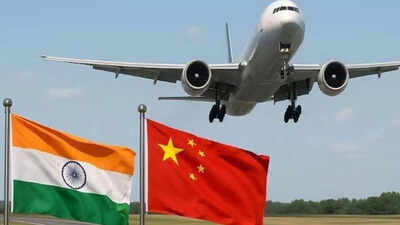
Beijing-Delhi flights resume as China, India expand air links amid warming ties
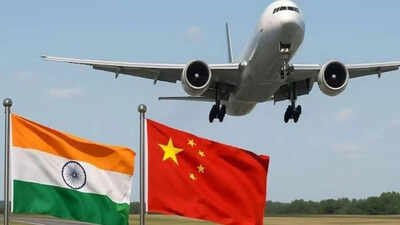
Direct air connectivity between India and China is set to improve further as Air China resumes its Beijing-Delhi service from Tuesday, marking the second route to India to be restored by Chinese carriers this month. The service will operate three times a week — on Tuesdays, Fridays, and Sundays — using an Airbus A330 aircraft. Economy class fares are expected to start from 3,570 yuan (approximately USD 523), with departure scheduled at 3:15 pm from Beijing and arrival in Delhi at 8:20 pm local time.
Second route resumption this month
The move follows the recent resumption of flights by China Eastern Airlines, which restarted its direct service between Kunming and Kolkata on April 18. The Kunming-Kolkata route operates six weekly round-trip flights using Boeing 737 aircraft. China Eastern Airlines had previously resumed the Shanghai-Delhi route in November 2025.Indian airline IndiGo has also been expanding its presence in China. On March 30, IndiGo commenced its inaugural daily non-stop service between Kolkata and Shanghai, using its A320neo aircraft. Previously, IndiGo resumed flights on the Kolkata-Guangzhou route and launched the Delhi-Guangzhou route on November 10, 2025. According to operational data for April, IndiGo has maintained a passenger load factor between 68 percent and 85 percent on multiple China-India routes, with popular routes such as Delhi-Guangzhou and Kolkata-Guangzhou showing particularly strong performance.
Warming relations
The expansion in air connectivity comes amid signs of warming relations between India and China. Last month, India approved relaxing restrictions on Chinese investments in selected sectors, including electronics, capital goods, and solar cells, marking a reset of economic ties after six years of friction.Earlier in March, the Union Cabinet approved changes in FDI policy guidelines on investments from countries sharing a land border with India, including China, providing a definitive timeline for approvals in critical sectors.
Experts’ view
Qian Feng, director of the Research Department at Tsinghua University’s National Strategy Institute, told the Global Times that more airlines from both sides increasing their services has positive significance for further consolidating the momentum of bilateral ties.“This trend not only facilitates personnel exchanges between the two countries but also represents more practical measures to reduce supply chain costs and support travel for technology companies and the manufacturing sector,” Qian said.