






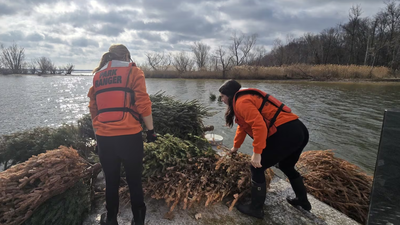
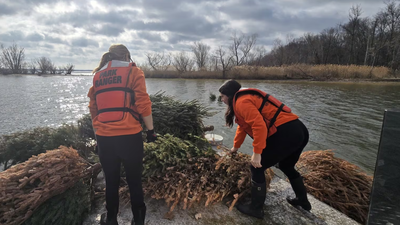
Thousands of Christmas trees are discarded every year once the festive season ends, but in southern Illinois, hundreds of them have found a second purpose beneath the water. A conservation project at Rend Lake has given 875 used trees a new lease of life, turning them into underwater shelters designed to support fish populations and improve aquatic habitats. The initiative, reported by KFVS12 and Illinois Department of Natural Resources, brought together fisheries biologists from the Illinois Department of Natural Resources (IDNR), staff from the US Army Corps of Engineers and volunteers from the Sesser-Valier Outdoorsmen Club. The trees were donated by local businesses after Christmas and transported to designated locations near the South Sandusky Boat Ramp, where they were prepared before being submerged. The programme is part of an ongoing effort to improve fish habitats at Rend Lake, a popular fishing destination in southern Illinois.
How discarded Christmas trees become underwater shelters
Before the trees could be placed in the lake, volunteers and conservation workers had to bundle them together and secure them with weights so they would remain underwater. The teams selected locations already known to attract fish, helping concentrate underwater structures in areas where they could support aquatic life and improve fishing opportunities.Unlike artificial fishing structures, which are often made from plastic or concrete, natural Christmas trees provide a complex network of branches that smaller fish can use to hide from predators. The branches also create surfaces where algae and microorganisms can develop. These organisms support smaller aquatic creatures, including insects and other invertebrates, which eventually become food for fish. In this way, the submerged trees contribute to the wider aquatic food chain. According to the Illinois Department of Natural Resources, this type of habitat improvement is particularly useful in man-made lakes, where naturally occurring submerged trees and woody structures may be limited.
Why young fish benefit from the project
Underwater shelters play an important role in helping young fish survive. Smaller fish can use the dense branches to escape predators while finding food and growing in a relatively protected environment. Larger fish also benefit from the structures, using the branches as hiding places while hunting. For anglers, these areas can become useful fishing spots because fish are more likely to gather around the submerged trees.The benefits are not expected to appear overnight. As the trees settle underwater and aquatic organisms establish themselves, they gradually become part of the lake’s habitat. The natural material eventually decomposes, which means the structures need to be replenished over time. Illinois has encouraged similar Christmas tree recycling programmes at lakes across the state, with fisheries teams collecting natural trees after the holidays and placing them in approved locations.
A community effort involving local businesses
The Rend Lake project depended on cooperation between several groups. Local businesses provided the unwanted Christmas trees, IDNR fisheries biologists contributed their expertise, and US Army Corps of Engineers staff coordinated the work at the lake.Volunteers from the Sesser-Valier Outdoorsmen Club helped with the physical task of bundling, weighing down and moving the trees into the water. The initiative also builds on a seasonal collection programme run by the US Army Corps of Engineers, which invites residents to donate their natural Christmas trees after the holidays. Artificial and flocked trees are not accepted, and decorations, lights, stands and tinsel must be removed before donation.
Giving Rend Lake’s fish population a helping hand
Rend Lake, which was completed in 1971, covers approximately 18,900 acres and is among Illinois’ major recreational fishing destinations. It supports a variety of fish species, including largemouth bass, crappie, white bass and catfish. The lake already has an extensive network of fish attractors and managed underwater habitats. The addition of 875 Christmas trees is another step towards improving those resources and supporting the lake’s recreational fishing opportunities.Rather than ending up in a landfill or being discarded after a few weeks of seasonal use, the donated trees will serve a new purpose beneath the water. For local businesses and conservation volunteers, the project offers a practical way to turn holiday waste into something that can benefit aquatic life for years, even if the natural structures eventually need replacing.