








In parts of Tanzania, small farms are increasingly coming into contact with African elephants, leading to a hard conflict between wildlife conservation and rural livelihoods. A 2026 study, published in the ‘International Journal of Biodiversity and Conservation’ found that most of the reported crop raids in the Simiyu Region were on small farms, particularly at night and when crops were mature. Two other studies, including research around protected areas in northern Tanzania, show that elephant movement routes and local experiences of conservation also shape the problem. Together, the findings show when raids are most likely to happen and why their effects differ between communities.
Small farms face the highest risk of elephant crop raids in Tanzania
The 2026 study titled ‘Spatial-temporal patterns of crop raiding by African elephants (Loxodonta africana) in Simiyu Region, Northern Tanzania,’ looked at reports from 349 households in the southwestern Serengeti ecosystem. The researchers found that 68.2% of crop-raiding incidents took place on farms smaller than 5–10 acres. For most households, such raids happen between one and three times a year.Farm size alone, therefore, does not appear to keep elephants away. Smallholdings can become points of contact between farmland and elephant habitat, especially when cultivated areas lie along routes the animals use.Maize was the crop most often raided in the Simiyu study, making up 45.6% of reported incidents. The researchers suggested that its protein, energy and moisture content may make maize more appealing to elephants than naturally available vegetation.
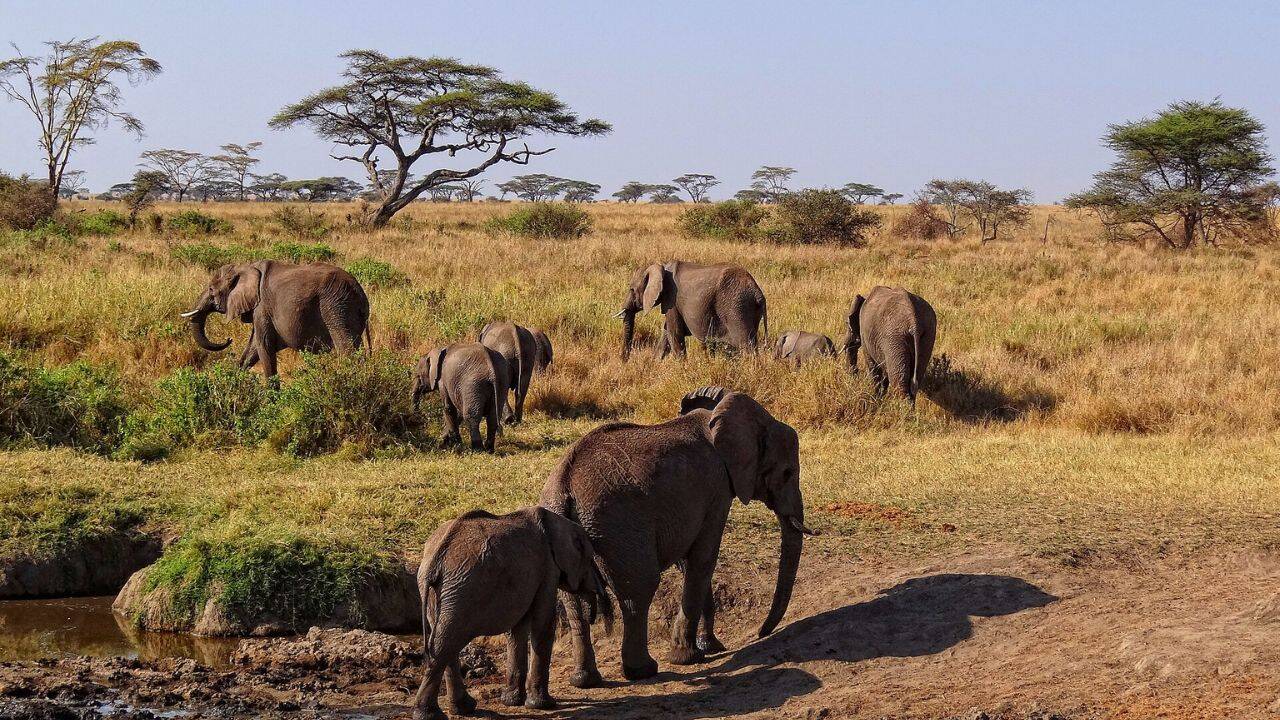
A herd of elephants in Serengeti National Park, Tanzania. Image Credit: Wikimedia Commons
Why do most elephant raids happen after dark
One of the clearest findings concerned the time of day. The 2026 study found that 53.8% of crop-raiding incidents took place between 7pm and 4am. Raids were particularly common when elephants moved in larger groups and when crops had reached maturity.An earlier study helps explain why looking for elephants during daylight may give an incomplete picture. Published in the National Library of Medicine (NLM), the research examined crop-raiding elephants in northern Tanzania and recorded 406 wildlife crop-raiding events. About 92% of those events happened at night, and elephants were responsible for 65% of the recorded raids.As a result, the absence of elephants from farmland during the day does not necessarily mean the fields fall outside their usual movements. The earlier research found that elephant presence could be detected along predicted routes even when daytime observations did not show the animals in agricultural areas.
Elephant movement can connect farms to wider habitats
The NLM study examined how elephants travelled between daytime refuges and agricultural areas. The researchers tested several possible routes, including footpaths, dry riverbeds and routes created by scattered small farms.The closest match with areas where crop raiding was observed came from what the researchers called ‘stepping stone’ corridors. These consisted of small farms scattered between refuge areas and larger blocks of farmland. Such farms can effectively improve habitat connectivity, giving elephants a way to move through agricultural landscapes instead of remaining separated from them.The study also recorded a different breakdown of crop damage. Maize made up 55% of damaged crops, followed by lablab beans at 22%, beans at 9% and green gram at 7%. Wildlife damaged around 300 hectares during the study period. The damage affected 27% of monitored farms and 3% of all small farms in the study area.
Local village communities do not experience the problem in the same way
A 2025 study published in Discover Global Society found that people’s perceptions of elephant raids varied considerably between communities. The researchers surveyed 240 households across 8 villages near Lake Manyara National Park and Swagaswaga Game Reserve.Near Lake Manyara National Park, 74.2% of respondents said they believed elephant crop raiding had increased over the previous 5 years. Around Swagaswaga Game Reserve, 40% held the same view. In the game reserve area, 35.8% believed the frequency had stayed stable, while 24.2% were uncertain.Farming was also found to be a significant predictor of how people viewed the frequency of raids. Resident status, age and gender, however, did not significantly influence those perceptions.For farming households, the issue goes beyond wildlife behaviour. Losing crops can directly affect food and income, which can in turn shape how communities view elephants and conservation programmes.
Conservation support depends on people’s circumstances and location
The 2025 study found that support for elephant conservation was significantly influenced by the type of protected area, village location, education and age. People living near Swagaswaga Game Reserve were substantially less likely to support elephant conservation than people living near Lake Manyara National Park.There were also marked differences from one village to another. Residents of Singida Ndogo were more than five times as likely to support conservation as those in the reference village. Respondents from Naiti, meanwhile, were about 90% less likely to support it. Education was another factor: people with only primary-level education showed lower support. Younger respondents aged 18–30 were also less supportive than older people.The findings suggest that tackling crop raids is unlikely to come down to one measure. The 2026 Simiyu study recommended several approaches, including growing crops that are less attractive to elephants, constructing trenches, installing electric fences, improving land-use planning and strengthening anti-poaching patrols.Across the three studies, a consistent picture emerges. Small farms can form part of elephant movement routes, mature crops can make farmland more attractive, and much of the raiding happens after dark. At the same time, attitudes towards elephant conservation are not the same everywhere. They vary with people’s circumstances and where they live. Understanding those differences is important if Tanzania is to reduce crop losses while continuing to protect its elephants.