









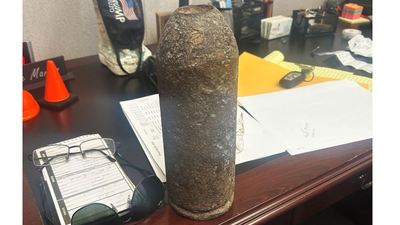
A Texas man kept a Civil War-era artillery shell on his desk for years, believing it was nothing more than a harmless dummy round. The object had become a conversation piece in his home, with visitors regularly picking it up and examining it. That changed after a man with military experience saw the relic and warned that it could still be live. The owner then contacted the Atascosa County Sheriff’s Office, which brought in an explosive ordnance disposal team from Joint Base San Antonio-Lackland. Experts examined the roughly 20-pound object and identified it as a live Parrott round. It was later transported to an explosives range at Camp Bullis, where specialists safely destroyed it.
How a Texas man turned a Civil War relic into a paperweight
The man, identified as Steve Martin, had acquired the object from his son, who had found it while fishing. Martin believed it was a dummy projectile and eventually began using it as a paperweight at his home in Atascosa County. For years, the unusual object attracted the attention of visitors, who would pick it up and look at it. Martin said he and others assumed it was some type of inert military display item. That belief remained unchanged until a truck driver with a military background visited and examined the object. The visitor became concerned that its appearance was consistent with a genuine artillery projectile and warned Martin that it might still contain an explosive charge.
Experts identified it as a live Parrott round
After receiving the warning, Martin contacted the Atascosa County Sheriff’s Office and reported that he might have a live Civil War-era explosive. Deputies arranged for an explosive ordnance disposal team from Joint Base San Antonio-Lackland to examine the object. Specialists confirmed that it was a live Parrott round, meaning the projectile was still capable of functioning as an explosive weapon despite being more than 160 years old. The discovery prompted authorities to treat the object as hazardous rather than as an ordinary historical artefact. Officials said no one was injured during the response and no charges were pending. The round was subsequently taken to Camp Bullis, a military training area and firing range north of San Antonio, for safe disposal.
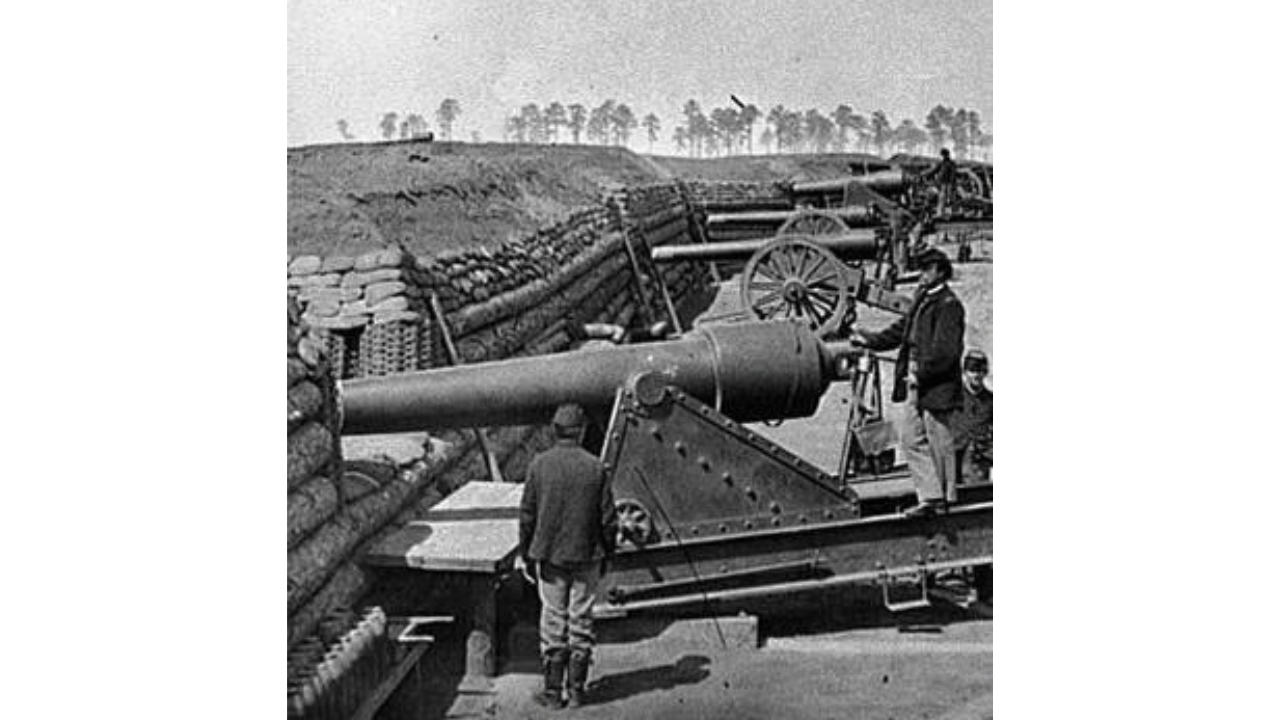
A Parrott rifle, the Civil War-era cannon designed by Robert Parker Parrott.
The shell was designed for a powerful Civil War cannon
The projectile was made for the Parrott rifle, a muzzle-loading rifled cannon developed by Robert Parker Parrott, a West Point graduate and inventor who became superintendent of the West Point Foundry. Parrott developed his rifled cannon system in the years immediately before the Civil War, with the first US rifled cannon of the design perfected in 1861. The weapon was recognisable by the wrought-iron reinforcing band around the rear of the gun, where pressures were greatest when it was fired. Parrott rifles were produced in several sizes and were used extensively by Union forces. The National Park Service records their use against Confederate-held Fort Pulaski in 1862 and Fort Sumter from 1863 to 1864.
Parrott rifles changed Civil War artillery
The Parrott system was significant because rifling gave artillery projectiles greater stability and accuracy than many earlier smoothbore weapons. Parrott also developed elongated projectiles designed specifically for his rifled guns. The combination allowed Union artillerymen to engage targets at greater distances and attack fortifications that had previously been difficult to damage. At Fort Pulaski, for example, Union forces used rifled artillery during the 1862 bombardment, helping demonstrate the vulnerability of traditional masonry fortifications to the newer technology. The National Park Service also records Parrott rifles among the artillery used during major Civil War operations, including the fighting around Antietam and the bombardment of Fort Sumter. The weapons became an important part of the Union’s artillery arsenal during the conflict.
The 160-year-old explosive was finally destroyed
After specialists confirmed the Texas relic was live, they transported it to an explosives range at Camp Bullis rather than attempting to preserve it as a historical object. The round was safely detonated there, bringing an unexpected end to an object that had survived from the Civil War into the modern era. Martin reportedly regretted that the relic could not be kept, but the incident changed how he viewed unusual military artefacts. The discovery also illustrates why apparently old battlefield ammunition can remain a serious hazard long after the conflict in which it was manufactured. Similar Civil War-era shells have been found in Maryland and at Gettysburg National Military Park, where bomb technicians have also safely destroyed unexploded ammunition. For Martin, what had seemed like an ordinary paperweight turned out to be a live piece of Civil War ordnance sitting in his home for years.