








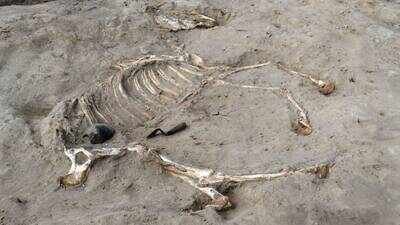
Archaeologists in Egypt have uncovered the carefully buried remains of a horse dating back around 3,000 years inside an ancient military fortress in the western Nile Delta, a rare discovery that is offering new clues about the role and cultural importance of horses in ancient Egyptian warfare.The horse was discovered at the archaeological site of Abqaa’, in Egypt’s Lake District. The fortress dates to the New Kingdom period, around 1550 to 1070 B.C., and was built to protect Egypt’s western frontier from hostile Libyan groups.According to Egypt’s Ministry of Tourism and Antiquities, the horse was a young, medium-sized male. Archaeologists also discovered pieces of its harness near the remains, suggesting that it may have been used to pull a chariot or participated in other military activities.
Horse burial may have been ceremonial
The circumstances of the discovery indicate that the horse was deliberately buried rather than simply abandoned at the site. Egyptian authorities said the burial was likely ceremonial, suggesting the animal may have held considerable value.Experts unaffiliated with the excavation told Live Science that the discovery is particularly significant because complete horse remains from Pharaonic Egypt are uncommon.Lonneke Delpeut, a researcher at the University of Vienna who has studied ancient Egyptian horses, described the find to Live Science as an “amazing find.” She noted that archaeologists know of ancient Egyptian horse stables, including those at Pi-Ramesses, but actual horse remains are much harder to find.Delpeut cautioned against definitively labeling the animal a “war horse,” explaining that there is no clear definition of the term in the context of ancient Egypt. However, she said the evidence indicates that it was certainly a chariot horse.Horses transformed transportation and warfare in ancient Egypt, making an animal associated with a military fortress potentially particularly valuable.
Fortress was built to guard Egypt’s western frontier
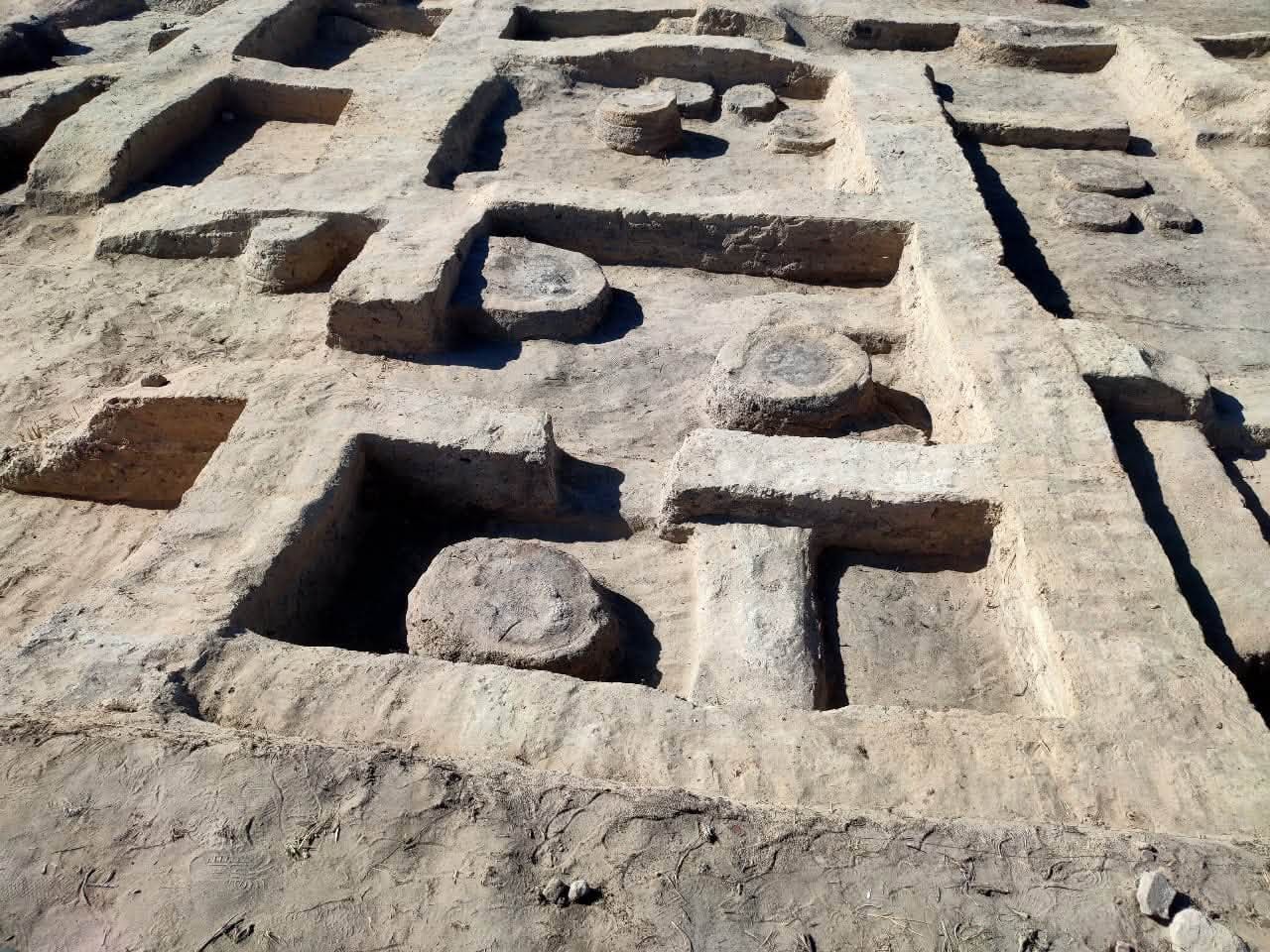
Egypt’s ancient Abqaa’ fortress offers new clues about military life and border defenses during the New Kingdom period. (Photo: Egyptian Ministry of Tourism and Antiquities)
The discovery provides insight into the strategic importance of Abqaa’. The fortress was established during the New Kingdom, when Egypt maintained a series of defensive installations along its western frontier.The region faced threats from various Libyan groups, including the Meshwesh, with whom ancient Egypt frequently came into conflict.Archaeologists found a tablet depicting a Libyan prisoner. According to the Egyptian ministry, the man’s clothing identifies him as a member of the Meshwesh tribe.The prisoner is shown with his hands tied behind his back and his body bent forward, a posture that represented submission.
Ramesses II and Merneptah inscriptions discovered
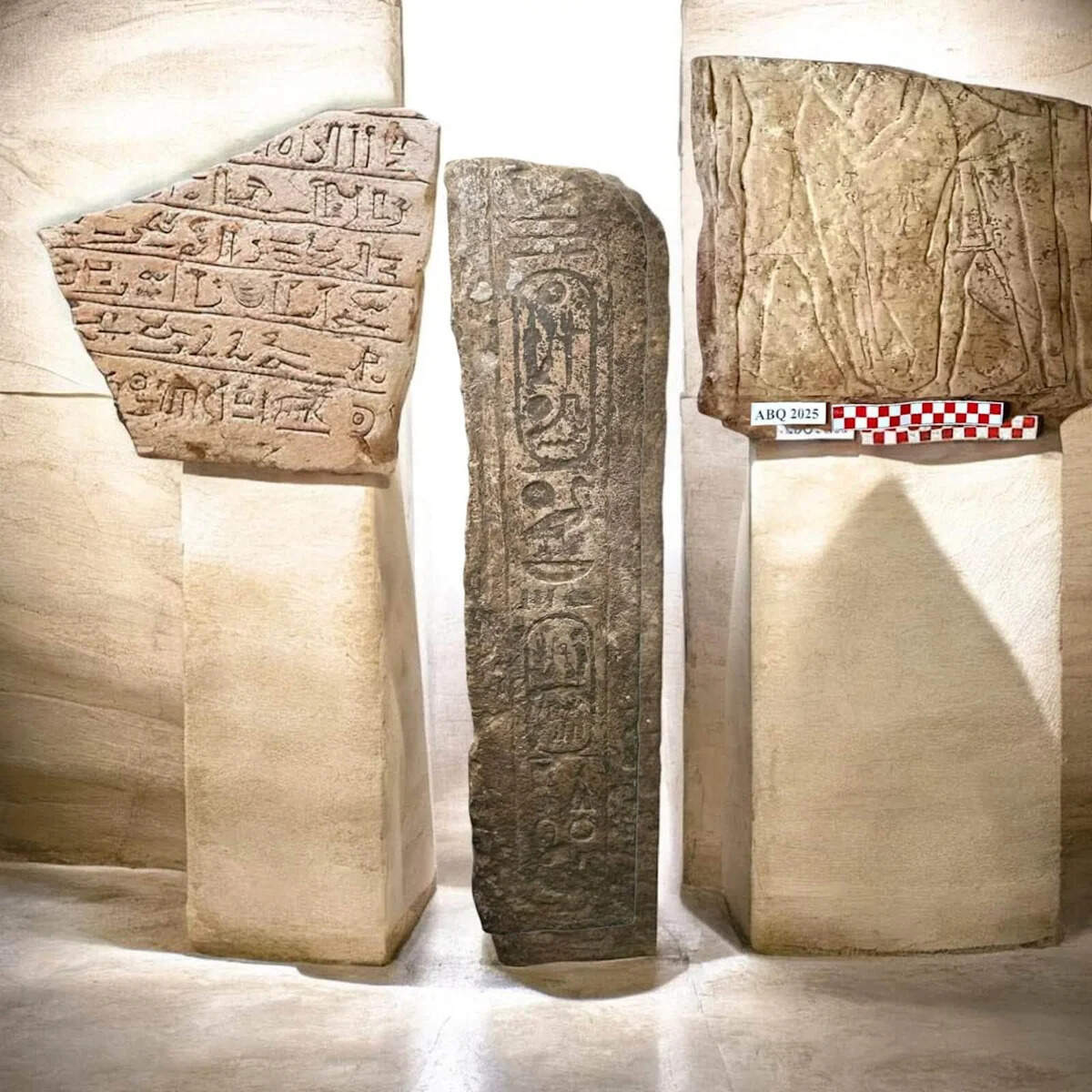
Excavations also uncovered tablets linked to Ramesses II, Merneptah and a Libyan prisoner. (Photo: Egyptian Ministry of Tourism and Antiquities)
The excavation also uncovered inscriptions associated with two major New Kingdom pharaohs.One hieroglyphic tablet bears the name of Ramesses II, who ruled Egypt from approximately 1279 to 1213 B.C.A second tablet mentions Merneptah, who ruled from approximately 1213 to 1203 B.C. The inscription compares Merneptah’s strength to that of Seth, the ancient Egyptian god associated with the desert and storms.Together, the discoveries provide evidence of the fortress’s role during a period when Egypt was defending its borders while projecting military power beyond them.
Experts say horse could reveal more about ancient warfare
Carolyn Willekes, an expert on ancient horses at Mount Royal University in Canada, told Live Science that well-preserved horse remains can provide valuable information about the life of an individual animal.The apparent intentional burial is particularly intriguing because it could reveal more about how ancient Egyptians viewed and valued horses.The nearby harness fittings could also help researchers understand the animal’s use, while scientific analysis of the skeleton may potentially provide additional information about its age, health and working life.The excavation was carried out by an archaeological team from Egypt’s Ministry of Tourism and Antiquities.For researchers, the discovery is significant not only because of the horse’s age but because it combines rare skeletal remains, military equipment and a carefully arranged burial inside a fortress built on one of ancient Egypt’s contested frontiers.