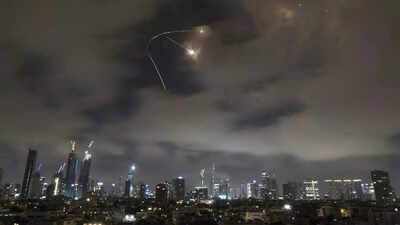







US President Donald Trump has told his aides that he is willing to end war without re-opening the Strait of Hormuz, which Iran has refused to unblock despite repeated warnings from the US president. This is another soft stance taken on Tehran as the latter has refused to budge after US-Israel initiated war.In recent days, Trump and his aides concluded that an operation to reopen the strategic chokepoint would likely extend the conflict beyond his preferred four-to-six-week timeline, according to a Wall Street Journal report. The report added that Trump opted to focus on achieving key objectives, that is, weakening Iran’s naval capabilities and missile reserves before scaling back active hostilities, while increasing diplomatic pressure on Tehran to restore normal trade flows. If those efforts fall short, United States officials would look to allies in Europe and the Gulf to take the lead in reopening the strait, according to the report.White House press secretary Karoline Leavitt also said that the Arab countries can be asked to share the burden of the military operation in Iran.“I think it’s something the president would be quite interested in. I won’t get ahead of him on that but certainly it’s an idea, something that I think you’ll hear more from him on,” she said.Trump granted Iran a 10-day cooling-off period last week, describing the decision as a response to what he called a “gift” from Tehran, allowing eight oil tankers to pass through the Strait of Hormuz and pausing planned strikes on key energy infrastructure.He also framed the move as a sign of progress in ongoing diplomatic efforts, adding that Iran had sought more time through backchannel communications.“They said to me very nicely, through my people, ‘Could we have more time?’ Because we’re talking about tomorrow night, which is pretty quick, and if they don’t do what they have to do, I will knock out their power plants,” Trump told Fox News.Beginning February 28, the United States and Israel carried out coordinated strikes on Iran, which responded with counterattacks, widening the conflict across the Gulf region. The Strait of Hormuz, a critical artery for global energy flows, has since come under heightened focus. The narrow waterway linking the Persian Gulf to the Indian Ocean is now effectively shut, sharply reducing daily maritime traffic and disrupting the movement of container ships, dry bulk carriers, and oil tankers.