








Headlines

82-year-old Tony Fahey built a ‘walking on water’ machine for a 24-hour world record attempt to raise money for charity | World News

At 82, Tony Fahey is attempting something that sounds almost impossible, travelling across water using a machine designed to mimic the motion of walking. The British man has built a human-powered watercraft called the “aqua elliptica” for a 24-hour charity challenge, with the goal of raising money for Make-A-Wish UK. According to Make-A-Wish UK, Fahey…


Read More

Collectors of border states to decide citizenship applications under CAA | India News

As per the MHA notification, the collector may satisfy himself of the suitability of the applicant to be registered or naturalised and grant him citizenship. NEW DELHI: The ministry of home affairs has notified the collectors across border states/Union territories like Gujarat, Rajasthan, Punjab, West Bengal, Assam (except tribal area) Tripura (except tribal area), J&K…

Read More

Disability rights groups raise concern over Census enumeration framework | India News

The disability questionnaire in Census 2027 should individually capture all 21 disabilities recognised under the RPwD Act, 2016. NEW DELHI: Disability rights organisations and activists have raised concern over the categorisation for enumeration of persons with disabilities under Census 2027, highlighting that the nine-category framework “fails to adequately capture this legal and social reality” of…

Read More

Meet Audrey Zheng, the 17-year-old Pennsylvania student who developed a pancreatic cancer test; it correctly identified 87% of patients and 87.5% without the disease

Audrey Zheng (North Allegheny Senior High School, Pittsburgh, PA) A 17-year-old student from Pennsylvania has developed an innovative bioengineering method to detect early-stage pancreatic cancer from blood samples, tackling one of the biggest challenges in cancer diagnosis. Audrey Zheng, a senior at North Allegheny Senior High School in Wexford, developed a technique that uses tiny…

Read More

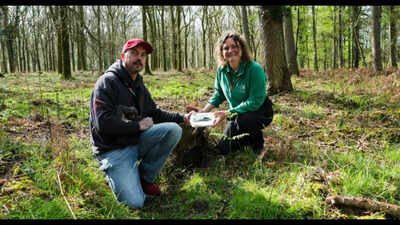
In 1961, British scientists stopped farming a 4-hectare barley field and left it alone; 60 years later, it had turned itself into a complex native woodland

The four-hectare barley field was abandoned in 1961 after researchers harvested its final crop, allowing nature to take over without further human intervention. In 1961, researchers at Monks Wood in Cambridgeshire harvested a final crop of barley from a four-hectare agricultural plot known as Stocking Close, ploughed the soil and walked away. They did not…

Read More

PM Modi’s Gen Z, Gen Alpha outreach: Ministers told to visit universities, govt schools | India News

PM Modi asked ministers to improve their social media presence. NEW DELHI: PM Narendra Modi Wednesday asked ministers to spend a day at universities interacting with students and also visit govt schools in their constituencies to assess the facilities being provided to children, including mid-day meals. The twin directives are aimed at strengthening engagement with…

Read More

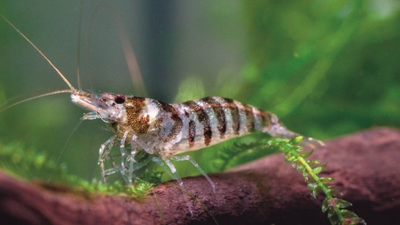
In 1968, Montana began stocking tiny shrimp to feed kokanee salmon; after they reached Flathead Lake, the salmon collapsed and hundreds of bald eagles and bears lost a reliable food source

An ecosystem collapse in Montana remains a lasting lesson in how well-intentioned wildlife management can have devastating consequences. When state wildlife officials introduced a non-native, tiny crustacean into nearby lakes in 1968, the goal seemed simple. They believed stocking the opossum shrimp, Mysis diluviana, would provide an extra food source and help increase populations of…

Read More

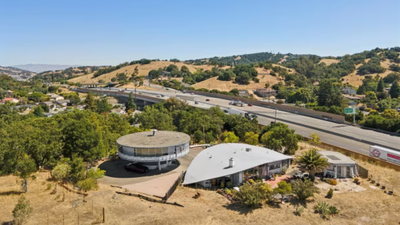
In 1963, a California builder made a house that rotates 320 degrees using two washing-machine motors; 63 years later, it is on the market for the first time

A California Home that Rotates 320 Degrees Takes a Spin on the Market In 1963, a California builder constructed a circular home that can turn 320 degrees using two washing machine motors. Sixty-three years later, the unusual property overlooking Highway 101 in Novato is on the market for the first time, reports the Wall Street…

Read More

In the 1980s, Burmese pythons invaded Florida’s Everglades, and decades later raccoons fell 99.3%, opossums 98.9% and bobcats 87.5% | World News

For years, the Everglades was known for its tangled wetlands, alligators and an abundance of smaller mammals moving through the vegetation. Then an animal from south-east Asia began spreading through the marshes. Burmese pythons, most likely introduced through the pet trade, have established a breeding population in southern Florida and now occupy large parts of…

Read More