







Headlines

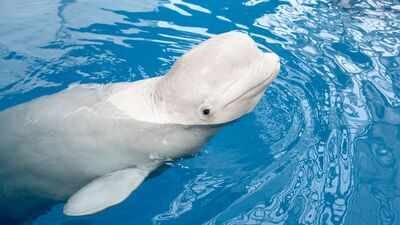
In 2001, scientists tested 4 beluga whales at a New York aquarium; 98 sessions later, it was found the Arctic whales may recognise themselves

In the quiet pools of the New York Aquarium, a groundbreaking experiment was unfolding. It was 2001, and a team of scientists was about to test a question that had long fascinated researchers: could beluga whales, the white Arctic cetaceans known for their expressive faces and complex social lives, recognise themselves in a mirror?Over the…
Read More

In 2025, coral cover in the Great Barrier Reef’s northern region fell to 30% after its largest annual decline on record; a year later, surveys of 192 reefs found it had risen to 35.1% despite another bleaching event

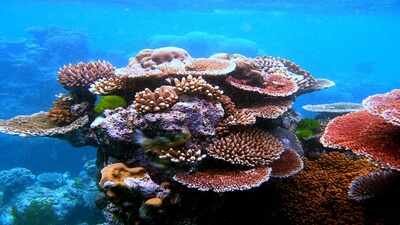
A variety of corals form an outcrop on Flynn Reef, part of the Great Barrier Reef near Cairns, Queensland, Australia. Credits – WIkimedia Commons The last two years have been a tale of two extremes for the Great Barrier Reef.” In 2025, the northern region of the reef experienced its biggest annual decline in coral…

Read More

Morocco is testing a ‘sponge’ pavement to replace black asphalt on roads in Marrakech and Agadir, can run up to 16°F cooler by itself

Morocco is testing a ‘sponge’ pavement that drains water and cools itself through evaporation. For decades, black asphalt has rolled on the roads but parts of Marrakech and Agadir are reportedly becoming testing grounds for this new surface that is deemed to be environmentally better.The idea will not only make roads feel less hot during…

Read More

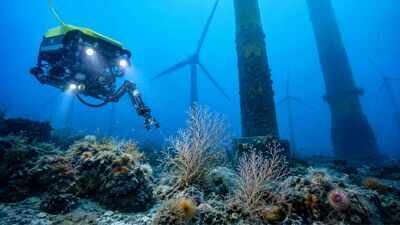
A robot explored the waters beneath 5 Scottish wind turbines and found 121 types of marine life, including possible young deep-water corals

A robotic submersible descended beneath 5 giant floating wind turbines off Scotland, moving around steel structures, cables and anchors that sit as much as 80 metres below the surface. Its high-definition camera recorded a surprisingly busy underwater community at the Hywind Scotland Pilot Park, about 25 kilometres east of Peterhead. Across 41 structures and associated…

Read More

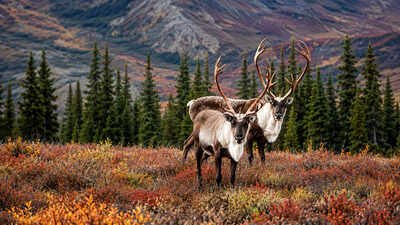
Alaska’s tundra looks like frozen ground, but beneath it lies ancient carbon a climate warning worth $43 trillion

Inside Alaska’s tundra (Image: Alaska Organisation) From above, Alaska’s tundra can look like an ordinary expanse of soil, moss and low vegetation. Beneath that surface, however, lies permafrost, ground that has remained frozen for long periods and contains vast quantities of ancient organic material. As temperatures rise, that frozen material can thaw and begin decomposing,…

Read More

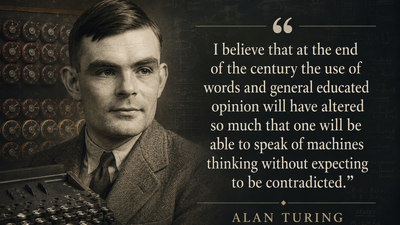
I believe that at the end of the century the use of words and general educated opinion will have altered so..

Alan Turing (Image: AI Generated) Many years before the existence of artificial intelligence was discussed among people, Turing questioned the possibility of machines having the ability to think in the future. In an age where computing devices were huge, experimental gadgets mostly used for computations, he envisioned a world in which people would talk of…

Read More

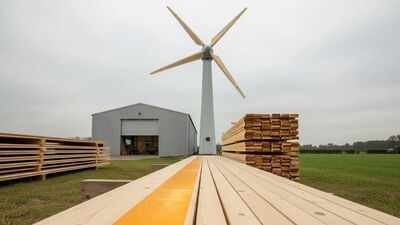
German startup Voodin replaced fibreglass with laminated veneer lumber in 19.3-metre turbine blades; its new EU-backed factory targets fully recyclable blades at commercial scale

When you look at wind turbines the blades look larger than life. Like permanent, monumental objects that will turn forever above the same field, long after you are gone and someone else is looking up at them similarly. In reality, most wind turbine blades last only 20 to 25 years and when they stop spinning,…

Read More

Scientists are recreating spider silk proteins to develop materials for drug delivery and tissue repair

A spider web can look like a single delicate sheet of thread, but its construction is far more complicated. Different strands are made for different jobs, with some providing the strength needed to hold the web together and others stretching to trap prey. Orb-weaver spiders are particularly good examples of this division of labour. Their…

Read More

How the first clockmaker knew the correct time and how time was measured before mechanical clocks

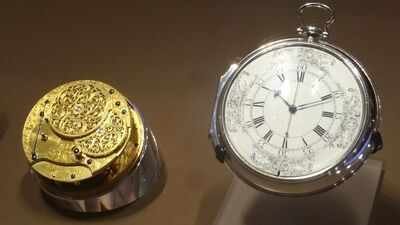
Harrison’s H4 chronometre. Image Credit: Jordiferrer/Wikipedia The first clockmaker did not have to guess what time it was. Long before gears, wheels and moving hands appeared, people had already learned to track the passage of a day by watching the Sun, Moon and stars. Sundials, water clocks and other simple devices gave earlier societies ways…

Read More