








Headlines

Scientists are using thousands of hours of rainforest sound recordings to teach AI to recognise birds that were previously difficult to identify |

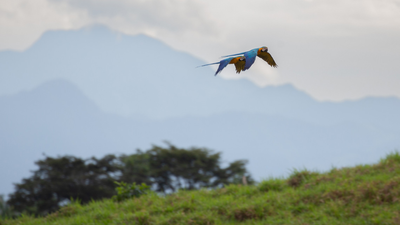
PC: Dhruv Varun Cohen ’26/Cornell University Thousands of hours of rainforest recordings are helping scientists teach artificial intelligence to recognise Amazonian birds that can be difficult to identify by sound alone. In Colombia, Cornell researchers have been collecting acoustic data from cattle ranches, rubber agroforestry plots and forest to build a clearer picture of which…

Read More

Meet Jaeho Lee, the 18-year-old Texas student who spent years delivering solar-powered vaccine refrigerators to places without reliable electricity |

Image: Society for Science/Chris Ayers Photography At just 18, Jaeho Lee has already taken on a mathematical problem that reaches far beyond the classroom. A student at Spring Branch Academic Institute in Houston, Texas, Lee was named one of the 40 finalists in the 2026 Regeneron Science Talent Search, after studying the structure of affine…

Read More

Scientists found a new species hiding in a museum drawer for more than a century; the Ecuadorian frog had been mistaken for another species |

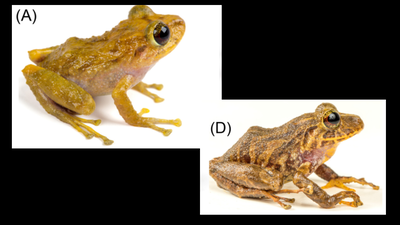
PC: Long overdue: a new, widespread, species of Pristimantis (Anura, Strabomantidae) from the Chocó region and the synonymy of Pristimantis subsigillatus​ For more than a century, a frog living across the forests of western Ecuador and southern Colombia carried the wrong scientific name. It was not hidden in some unexplored corner of the rainforest, either….

Read More

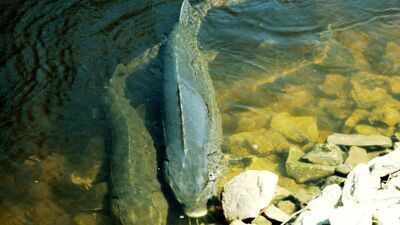
For decades, scientists estimated lake sturgeon lived for 150 years. New evidence suggests some Great Lakes fish may reach more than 400 years |

For centuries, lake sturgeon have moved quietly through the rivers and lakes of the Great Lakes region, growing slowly and aging in a way that has been difficult to measure. Their lives can stretch far beyond those of most freshwater fish, but just how far has remained uncertain. New research now suggests that some may…

Read More

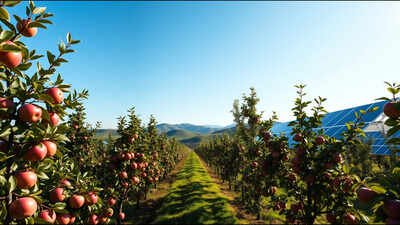
In 2022, French researchers used moving solar panels to shade apple trees, cutting sunburn damage from 13% to 2% |

​Representative Image of an apple orchard with solar panels providing shade while generating electricity (AI-generated image) In 2022, researchers running a field experiment in southern France found that moving solar panels installed above an apple orchard sharply reduced sunburn damage on the fruit. The system, known as a dynamic agrivoltaic setup, tilts photovoltaic panels through…

Read More

Scientists discover nearly 400 fossils in France revealing life near the South Pole 470 million years ago |

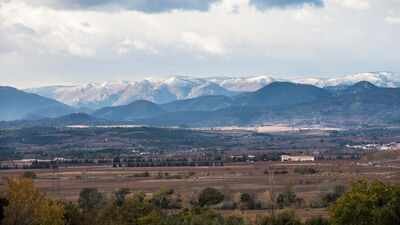
Snow-covered mountain ranges of the Montagne Noire. Image Credit: Von Christian Ferrer/Wikipedia Nearly 400 fossils discovered in southern France are giving scientists a detailed view of marine life that lived close to the South Pole about 470 million years ago. The fossils belong to the newly described Cabrières Biota, an Early Ordovician fossil site in…

Read More

Florida Atlantic University received $600,379 grant to develop 3D-printed adsorbents that remove phosphorus and combat harmful algal blooms |

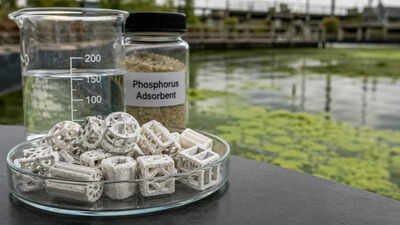
Harmful algal blooms can turn freshwater ecosystems into dangerous environments, but researchers at Florida Atlantic University are developing a novel way to tackle one of the nutrients that helps drive them, excess phosphorus. Rather than removing algae after a bloom has already formed, the team is developing 3D-printed adsorbent structures designed to capture phosphate directly…

Read More

Tasmania spent 28 years removing invasive carp from two lakes; after 49,301 fish were taken out, the state declared carp functionally eradicated and trout began bouncing back

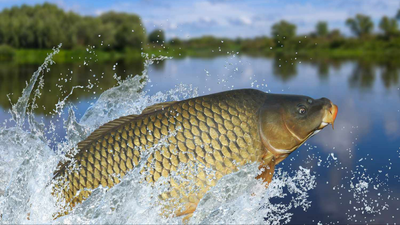
Invasive Species: Why Are Asian Carp a Problem? An intensive 28-year eradication campaign has eliminated common carp from two major Tasmanian lakes, achieving what fisheries experts around the world once considered almost impossible in a large, open freshwater system. The Tasmanian Inland Fisheries Service (IFS) has officially declared European carp (Cyprinus carpio) functionally eradicated from…

Read More

In 1978, just 10 to 15 cane toads were moved to Ishigaki Island. Decades later, their population increased to 20,000 with surprising evolutionary change |

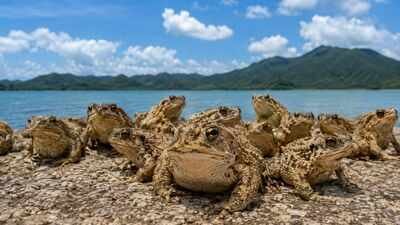
On Ishigaki Island, cane toads have been living in conditions quite different from those faced by the populations from which they came. The island is warm, wet and separated from mainland habitats, and the animals introduced there in the late 1970s have now had several decades to establish themselves. When scientists compared these Japanese toads…

Read More