








In 1909, an explorer found strange markings in the rock and unearthed the Burgess Shale, a 500-million-year-old secret |

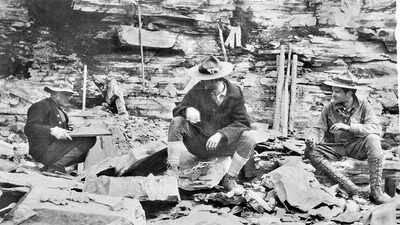
In 1909, Charles Doolittle Walcott (first from left) discovered the Burgess Shale formation in British Columbia, revealing exceptionally preserved soft-bodied ancient life. Image Credits: via Wikimedia Commons Imagine the last day of your mountain trip, the sun setting, the packs packed, your thoughts turning to your journey home. It was at such a time that…
Read More

In 2010, a bulldozer driver found a tusk in the Colorado mud and unearthed the high-altitude secrets of the Snowmastodon site |

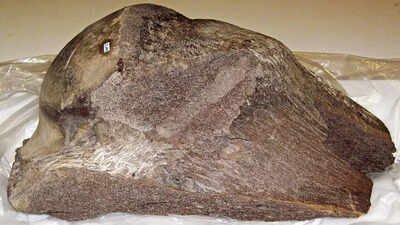
A routine construction project in Snowmass Village, Colorado, uncovered a remarkable Ice Age fossil site. The discovery of a juvenile Columbian mammoth tusk marked the beginning of the Snowmastodon story. Image Credits: via Wikimedia Commons It began like any other day of moving earth around in Snowmass Village, Colorado. The weather was a typical October…

Read More

In 2021, researchers scanning a New Mexico lakebed found 23,000-year-old human footprints that rewrote the oldest chapter of American history |

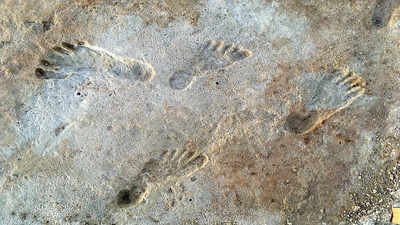
Footprints frozen in time: Human tracks preserved in ancient mud at White Sands National Park, New Mexic. Image Credits: Wikimedia Commons There is a part of the desert in New Mexico that, at first glance, looks like nothing. White dunes, dry air, the kind of landscape that makes a man squint. Buried beneath the sands…

Read More

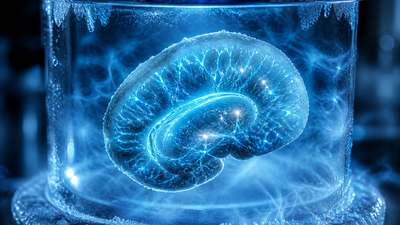
Brain revived: Scientists froze brain tissue to −196°C and it started working again |

German researchers at Friedrich-Alexander-Universitat Erlangen-Nurnberg and University Hospital Erlangen have shown that adult mouse hippocampal tissue can be cryopreserved using vitrification, cooled to liquid nitrogen temperature, and later rewarmed with key functions intact. In the study, the tissue regained electrical activity and synaptic communication after thawing. The work marks an important step in cryobiology, but…

Read More

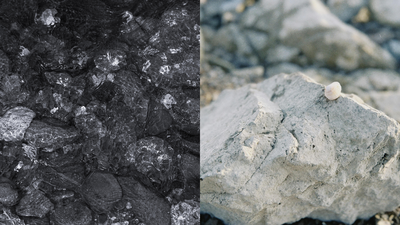
Earth’s origin mystery cracked? Meteorites may hold the secret to life’s ingredients |

Scientists involved in planetary formation studies, meteorites, and early solar system investigations have been wondering about the origins of the ingredients that made up the planet Earth. Studies on carbonaceous chondrites, isotopic compositions, and planetary accretion have shown that the elements needed for life on Earth, such as carbon, water, and volatiles, could have come…

Read More

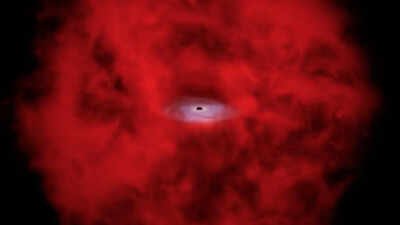
NASA’s James Webb Space Telescope detects ‘little red dots’: New X-ray data hints at hidden supermassive black holes |

Something odd is hiding in the early universe, and astronomers are only just beginning to notice it. Using the James Webb Space Telescope, researchers have spotted faint, distant objects known as “little red dots” that do not quite behave like normal galaxies. At first, they seemed unremarkable. Easy to overlook in deep space images. But…

Read More

Who is Charles Lieber? Convicted Harvard scientist now leading China’s research to link the brain with computers |

Charles Lieber is one of the best-known names in nanoscience, but his career took a dramatic turn after a federal conviction in the United States. Once a leading Harvard chemistry professor, Lieber was convicted in 2021 of making false statements to federal authorities and tax-related offences tied to payments from China. Today, he is back…

Read More

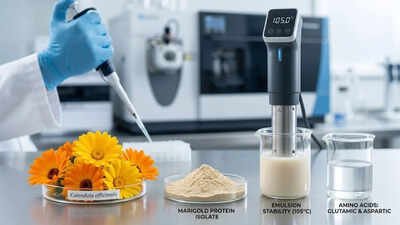
Scientists discover this common garden flower could be a powerful protein source |

Scientists are now focusing on agricultural byproducts to address the global need for sustainable nutrition. An innovative study featured in ACS Publications reveals that pot marigold (Calendula officinalis) can serve as a robust and thermally stable protein source. Although people usually grow these plants for decoration and medicinal use, researchers found that marigold petals contain…

Read More