








MIT built a 300-gram robot that flies through the sky, dives underwater and takes off again, just like a diving bird |

Image Credit: Raphael Zufferey Nature has given us amphibians in various forms, from frogs to other multi-environment creatures, yet few things transcend the different domains of Earth as remarkably as the diving birds that inspired the MIT and EPFL researchers. For so long, scientists have long dreamt of a machine that can fly through the…


Read More

Pluto’s moon Charon may have once spun once every 14 hours, and its ancient mountains still record how it slowed down |

For decades, Charon was often viewed as the quieter half of the Pluto system, a frozen world marked by craters, fractures and vast plains. Yet the surface photographed by NASA’s New Horizons spacecraft has continued to reveal hints that its history was far more dynamic than once thought.A new study published in Nature Communications, titled…

Read More

‘Hello from ISS’: Indian-origin Nasa astronaut Anil Menon shares day 1 message from space after reaching the space station |

Less than a day after arriving aboard the International Space Station (ISS), Nasa astronaut Anil Menon offered a glimpse into his first hours in orbit, sharing a message that was as much about the people who helped him get there as it was about the view from space.Posting on X (formerly twitter) from the orbiting…

Read More

American scientists created a flexible solar ‘skin’ that stretches like fabric and follows the Sun to capture more energy |

Traditional solar panels have transformed renewable energy, but they come with one major limitation, they are rigid, heavy and designed to sit on flat surfaces such as rooftops or solar farms. That makes them difficult to install on curved buildings, lightweight structures or unconventional designs. Researchers in the United States are now working on a…

Read More

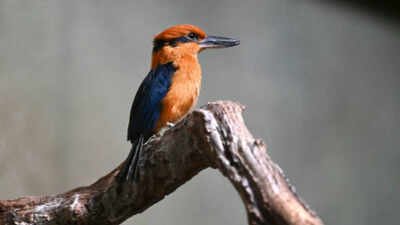
In the 1980s, Guam’s kingfisher vanished from the wild after invasive snakes devastated the island’s birds: The last 29 were rescued and four new chicks are now helping rebuild the species |

The Guam Kingfisher is known as the “sihek” in Chamorro, the native language of the Marianas Archipelago and is the rarest species at the Smithsonian Conservation Biology Institute in Front Royal, Virginia. The bird is classified by the IUCN as extinct in the wild, meaning a single one is not present outside the conservation centre….

Read More

An ancient sea once divided North America from north to south; 70-million-year-old creatures from its waters still shimmer like gemstones

Fossils from this period are displayed at the Smithsonian’s National Museum of Natural History. South Dakota is one of the most landlocked states in the United States. It is more than 1,000 miles away from both the Pacific and Atlantic oceans. It is hard to imagine that this dry landscape was once covered by water.But…

Read More

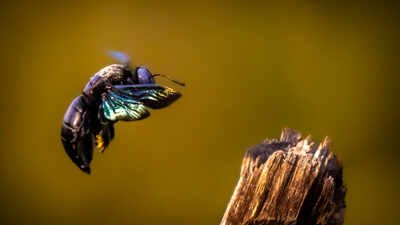
Scientists exposed bumblebees to low doses of a modern pesticide; the bees survived, but genes linked to producing the next generation began changing

Scientists exposed bumblebees to low doses of a modern pesticide Scientists exposed bumblebees to low doses of a modern pesticide Scientists exposed bumblebees to low doses of a modern pesticide Scientists exposed bumblebees to low doses of a modern pesticide Scientists exposed bumblebees to low doses of a modern pesticide Bumblebees are among the world’s…

Read More

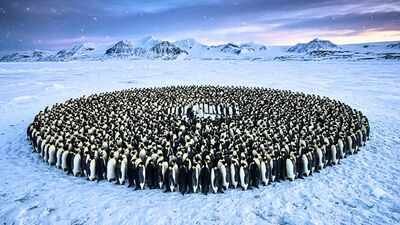
Emperor penguins survive Antarctica’s brutal winters by huddling together, but a maths study reveals the hidden system behind their remarkable teamwork |

Every winter in Antarctica, emperor penguins gather in large groups called huddles to survive the cold. Temperatures can fall to -40 degrees Celsius, and strong winds make the weather even harsher. Without huddling together, these penguins would not be able to survive.But a penguin huddle is much more than a group of birds standing close…

Read More

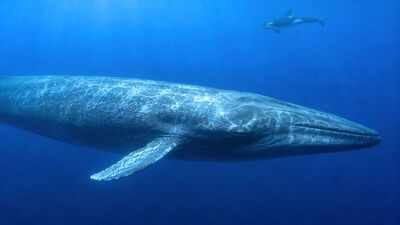
Scientists have finally explained why killer whales struggle to hear blue whales, and the answer may have helped the giants survive for millions of years |

Whales are well known for their songs. But scientists have discovered that, for some whales, those songs may also help them stay alive. A researcher from the University of Washington has found that some baleen whales, including blue, fin and minke whales, have evolved to sing at such low frequencies that killer whales, their only…

Read More