






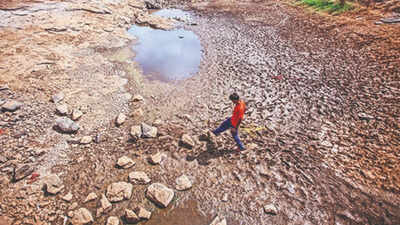
NEW DELHI: A new IMD study finds that northwest India has turned drier, with its dry climate zone expanding from about a quarter to one-third of the total geographical area, whereas the south peninsula became wetter due to a rise in overall quantitative rainfall over the past seven decades.The findings, published in the IMD’s peer-reviewed journal Mausam, note that the dry zone that once ended in western UP is now extending into the east of the state, with the scientists warning the change could affect paddy cultivation in the north.
‘Hot, dry zone pushed east into UP over past 70 years’
In northwest India, the hot semi-arid zone grew from about a quarter of the region’s area in 1951-1980 to a third in 1991-2020, while the temperate zone shrank from about a quarter to less than a fifth, meaning that an area equal to roughly 7% of the region moved into the drier zone as temperatures rose and rainfall declined, said the study.It said peninsular India, on the other hand, reported shrinking of its hot semi-arid zone from about 30% of the region to 16%, and most of that land moved into the tropical savannah zone, which now covers three-quarters of the peninsula, a change the authors attribute to rising rainfall over southern India.
Share your thoughts in the comments
Be respectful · TOI community guidelines
“Within these broader shifts, Marathwada and west Vidarbha in Maharashtra moved into the hot semi-arid zone, and the tropical monsoon zone extended along the Konkan coast, coastal Karnataka and Kerala,” said the study, conducted by scientists from IMD and Indian Institute of Tropical Meteorology.“When we compared India’s climate map decade by decade from 1951 to 2020, the clearest change was in the north, where the hot, dry zone has pushed east into Uttar Pradesh, and because this is one of the country’s most important farming regions, the timing of sowing and harvesting there needs to be watched closely,” said Ananya Karmakar, the study’s lead author.Since the scientists highlight potential implications for agriculture and the need to track long-term climate shifts, the study could be handy for farm sector policymakers.