








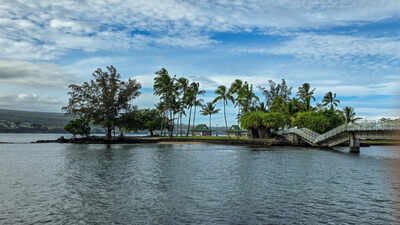
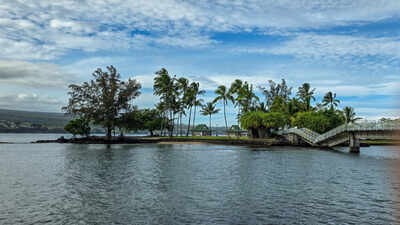
For years, the short walk to Coconut Island in Hilo was part of the rhythm of visiting the waterfront. Then the bridge became a warning sign: fencing, closure notices and an increasingly uncertain future for one of the area’s most familiar public spaces. Now, after a section of the bridge collapsed under an 8,000-pound county excavator, restoring that connection could cost Hawaii County as much as $22 million, states an online report by the Beat of Hawaii.The incident has brought renewed attention to a structure that engineers had already identified as badly deteriorated years before the collapse, raising questions about maintenance, equipment use and how a relatively modest repair estimate became a multimillion-dollar replacement proposal.
A warning that came years earlier
According to the Beat of Hawaii, a January 2022 inspection found extensive deterioration in the bridge’s concrete and exposed, corroding steel. Engineers classified the pedestrian crossing as being in serious condition and estimated repairs at about $1.35 million, including design and permitting.Despite its condition, the bridge remained open to pedestrians with restrictions on large gatherings and maintenance vehicles. The county proposed about $2.5 million for bridge repairs that year and announced handrail work in March.What remains unclear is whether the recommended structural repairs were completed before the eventual collapse. There is also no clear evidence that the engineering assessment specifically approved the use of an excavator weighing roughly 8,000 pounds on the aging structure.
The collapse changed everything
As per the online report, when the bridge gave way in November 2025, the excavator was being used as part of county operations. County officials had already been discussing a design contract for rehabilitation or replacement, but the collapse accelerated the need for a solution.The county has also pointed to the history of heavy equipment crossing the bridge. The structure had reportedly been reinforced in the early 2000s and carried no posted weight limit. Yet the earlier engineering assessment had documented significant deterioration, leaving questions about how equipment continued to use the crossing and whether everyone involved was aware of its condition, adds the online report.For residents, the consequences extend beyond engineering reports and construction budgets. Coconut Island, known traditionally as Mokuola or the healing island, holds deep cultural significance for Native Hawaiians. It was regarded as a place of healing and refuge, with longstanding traditions connecting the island to protection, family and wellbeing.
Why the price tag has soared
The financial jump has become one of the biggest points of concern. The earlier $1.35 million figure represented repairs to the existing structure, while the current proposal involves building a new permanent crossing.Hawaii County now estimates roughly $20 million for a permanent replacement and as much as another $2 million for temporary access. The larger proposal also includes seawalls, utilities and other improvements, making it difficult to isolate the precise cost of the bridge itself, claims the online report.Officials have indicated that federal funding could potentially cover much of the replacement expense, but a final award and detailed funding breakdown have not yet been established.
A possible return in 2027
There is finally a tentative timeline for reopening the island. Temporary bridge construction could begin as early as January 2027, with pedestrian access potentially returning by June or July, subject to permitting and construction.For Hilo residents and visitors, reopening would restore access to a small but meaningful part of the waterfront. Coconut Island sits near Banyan Drive and Queen Liliuokalani Gardens, both of which remain accessible. The bridge may have been only a short crossing, but its absence has exposed a much longer story about deferred maintenance, historic infrastructure and the price of waiting until a familiar public connection becomes impossible to ignore.Image Courtesy: Beat of Hawaii