







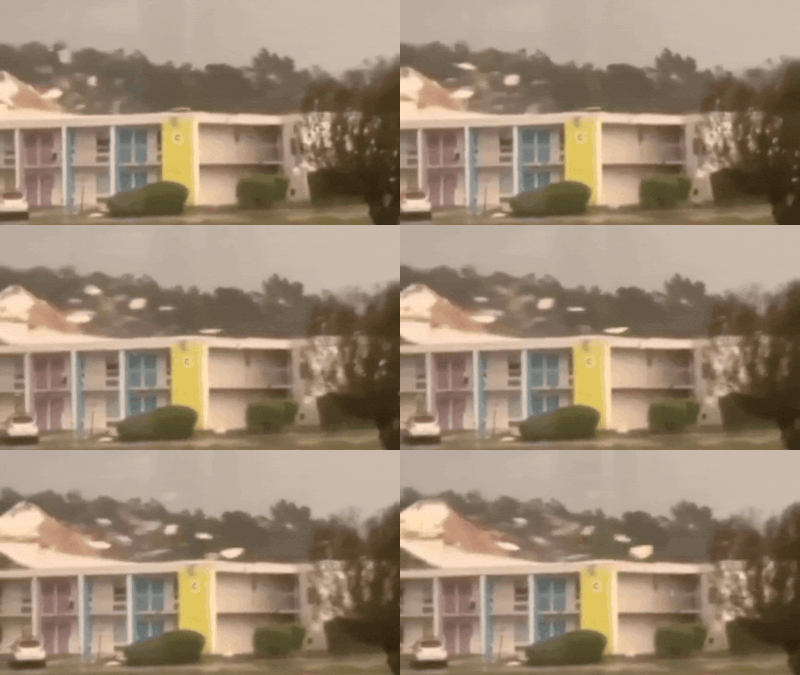
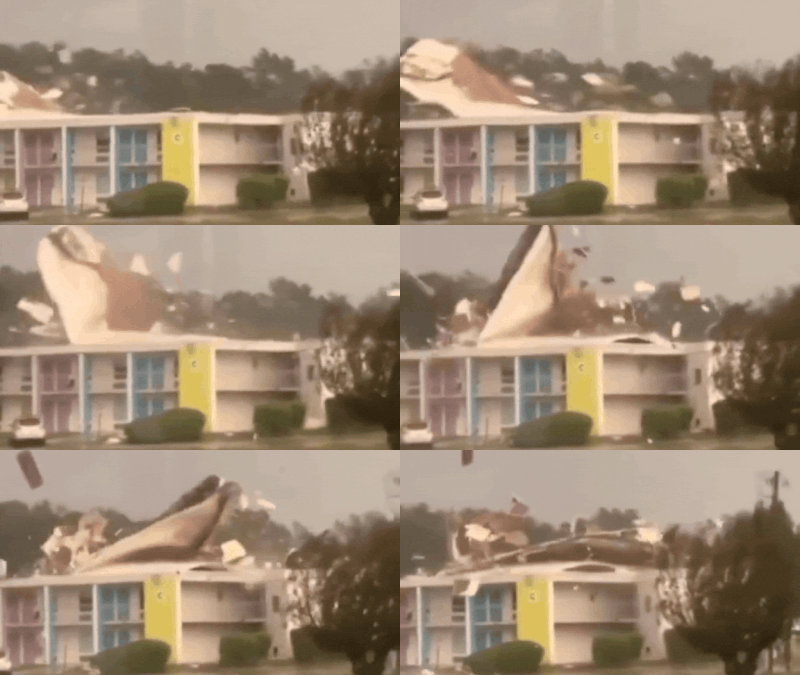
Four people have died and hundreds of thousands have been left without electricity after Hurricane Isaias battered parts of the southern United States with powerful winds and heavy rain. The storm damaged buildings, uprooted trees and raised fears of flash floods and tornadoes across the Southeast.Officials reported two deaths each in Florida and Alabama. An estimated 500,000 people across several states were without power by Saturday evening, according to outage tracker PowerOutage.Nearly 900,000 customers had lost electricity in the initial hours after the storm made landfall, according to BBC reports.Isaias struck Florida’s Gulf Coast late Friday with maximum sustained winds of 105 mph (168 km/h) before weakening into a post-tropical cyclone. Although the storm weakened overnight, officials warned that heavy rain and flooding remained a threat.Trees fall on homes, buildings damagedIn Florida’s Escambia County, a woman was killed when a tree fell on her home, while a man died from carbon monoxide poisoning after a generator was operated in his garage, Sheriff Chip Simmons said.Four members of the man’s family, aged between four and 72, were treated and were expected to survive, the Associated Press reported.In Alabama, one person died when a tree fell on a house in Birmingham, Fire Chief Cory Moon said. A second storm-related death was reported in Barbour County after a motor vehicle crash involving a fallen tree, according to Josh Johnson of the state’s emergency management agency.The storm also caused scattered damage along Florida’s Gulf Coast. Hurricane-force winds blew the roof off a hotel in Pensacola, while the city’s mayor said the airport “took some damage”. In Destin, a boathouse was flattened, and part of a high-rise building’s facade was torn away in Panama City Beach.Isaias also ripped rooftops and facades from hotels and condominiums along the Florida Panhandle. Authorities in Mobile, Alabama, reported numerous fallen trees and power lines.Emergency declarations, flood warningsAlabama, Florida and Georgia declared states of emergency ahead of the storm, while Florida and Alabama issued mandatory evacuation orders for thousands of residents.US President Donald Trump approved an emergency declaration for Georgia after earlier approving similar measures for Florida and Alabama, allowing federal assistance to be provided.The US Department of Energy also authorised emergency exchanges of crude oil from the nation’s Strategic Petroleum Reserve to address potential supply disruptions caused by the storm.The National Weather Service warned that parts of Georgia and the Carolinas could experience heavy rainfall capable of triggering flash floods.Isaias was expected to move into the Tennessee Valley before reaching the mid-Atlantic region on Sunday. Forecasters also warned that flooding could extend into the Appalachian region.Despite warnings of storm surges, several major coastal routes were open by daybreak on Saturday and had avoided the widespread damage to trees and power lines often seen after major hurricanes.Meanwhile, in the Pacific Ocean, Hurricane Simon strengthened into a Category 4 storm as it approached Mexico’s coast. It was expected to bring heavy rainfall from Sunday to parts of southwestern Mexico, raising the risk of life-threatening flooding and mudslides.Tropical Storm Rachel was also forecast to bring strong winds and heavy rain to northern Mexico and Southern California over the weekend.