









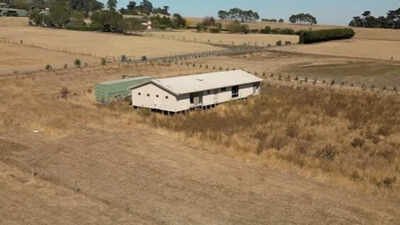
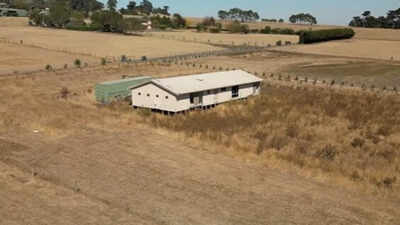
Melanie and David Moor spent more than $500,000 on what they expected to be their retirement home in Camperdown, south-west Victoria, only to discover that the house had been placed entirely on a neighbouring block. The couple had bought land in a new subdivision in 2021 and, after obtaining permits, installed a driveway and relocated a four-bedroom house onto the 2-hectare property they believed they owned. Instead, the house had been moved onto the adjacent block, which belonged to someone else. The mistake was discovered in August 2024, while the Moors were completing work on the house, after a council officer told David Moor to stop construction and seek legal advice. The couple then spent almost two years trying to resolve the dispute, including an unsuccessful proposal to swap the two properties. In April 2026, the house was finally moved about 100 metres onto the block the Moors actually owned.
The confusion began when the land was still an undivided paddock
The Moors first viewed the subdivision in August 2021, when the land was still part of a larger 8-hectare paddock that had not yet been divided into individual lots. They paid a $5,000 deposit and signed the contract of sale in April 2022. Melanie Moor told ABC that the couple believed they had identified the correct block after a real estate agent showed them the property, while numbers on nearby fence posts also contributed to their understanding of which lot they had purchased.The real estate agency later said an internal investigation found that its agent had not made false or misleading claims. A spokesperson said the agent had shown the couple the property well before the contract was signed and while it was still part of the larger paddock, adding that it was ultimately the buyers’ responsibility to confirm which block they owned. The confusion continued after the purchase. In 2023, before settlement, the Moors had a driveway constructed on the block they believed was theirs, with permission from the former owner of the neighbouring property. When the house was later relocated, the builder and other tradespeople used that driveway as a reference point for identifying the lot. ABC reported that the relocation company’s job document listed the road name but not a specific lot number.
Council inspections did not catch the mistake
The Moors obtained a building permit from Corangamite Shire Council in April 2024. However, documents supporting the permit included an aerial photograph showing that soil samples had been taken from the wrong block. Council records also showed that staff visited the site three times in one month to inspect stump holes dug for the house relocation.The mistake was finally identified in August 2024, while the Moors were putting the finishing touches on the house. A council officer contacted David Moor, instructed him to stop work and advised him to seek legal advice. Melanie said the couple initially thought the call was a scam before realising that their new home was sitting entirely on land they did not own. The actual owner of that block lived interstate and had purchased the property from their late uncle. According to the owner’s lawyers, the owner had been unaware that the Moors had moved a house onto the land until after the work had taken place.
A proposed land swap failed over differences between the blocks
Once the mistake was discovered, the Moors proposed swapping the block where their house had been placed with the neighbouring block they actually owned. The proposal was rejected by the other landowner’s lawyers, who said the properties were not equivalent. They pointed to differences in the views from each block, a registered easement on the Moors’ property and possible tax consequences from a land swap.The dispute eventually became a legal matter. In July 2025, the landowner’s lawyers gave the Moors 14 days to remove the house and restore the property to its original condition, warning that the house could otherwise be sold. At the time, the Moors said they could not afford to move it. The contractor who had originally relocated the house also advised that it might not survive another move. The situation was particularly difficult because Victoria’s property laws do not give courts the same range of options available in some other Australian jurisdictions for cases in which someone mistakenly builds on another person’s land. An ABC report examining the issue noted that such cases are sometimes referred to as the “mistaken improver” problem.
The house was moved 100 metres onto the correct block
After months of negotiations, the parties reached an agreement in February 2026 for the Moors to clear the disputed property by May 2. The couple eventually found another house mover who was willing to take on the job after their original contractor had warned against a second relocation. Just before Easter, the four-bedroom house was lifted and transported about 100 metres sideways onto the Moors’ actual property. The couple described seeing the house transferred onto their own land as a major relief after the prolonged dispute.The move has not yet made the house habitable. The building is temporarily sitting on empty oil drums while it waits to be restumped. Its septic system and electrical wiring had to be disconnected and removed during the relocation, and the Moors said they do not yet know how much structural damage the house may have suffered. Melanie said the house appeared unstable during the move and that the family was not yet comfortable entering it.The couple also have to restore the neighbouring property. They said they need to remove about 160 stumps left where the house had stood and take out trees they had planted before returning the block to its original condition. They estimate the relocation, restumping and reconnection of electricity and other services will cost about $100,000, on top of the more than $500,000 already spent on the home. For now, the Moors have bought a 20-foot caravan and plan to live there with their 20-year-old daughter while they work to make the house liveable. Melanie said the ordeal had taken a significant toll on the family’s mental health, but the couple remained determined to finish their retirement home.