







Long before quantum mechanics became a household term, Max Planck was already thinking carefully about what it actually means to do science. In this quote, the physicist who went on to find quantum theory frames the entire scientific enterprise as a conversation, one in which humans ask the questions and let the natural world resonate, if only we know how to listen. It’s a simple image, but it captures something essential about how discovery actually happens, not through guesswork or through assumptions confirming what one already believes, but through structured dialogue with reality itself.
Quote of the day by Max Planck
“An experiment is a question which science poses to Nature, and a measurement is the recording of Nature’s answer.”
What does the quote by Max Planck mean
Planck’s metaphor turns the scientific method into something almost relational. An experiment isn’t just a procedure carried out in a lab, it’s a deliberate question, carefully designed to isolate a single variable so that nature can respond clearly. A measurement, in turn, isn’t just a number on a dial, it’s nature’s honest answer to that question. The elegance of this framing is that it removes ego from the process. The scientist doesn’t dictate the outcome; they simply ask well and record faithfully. Bad science, by this logic, is a poorly phrased question or a mishandled answer, not a failure of nature to cooperate.
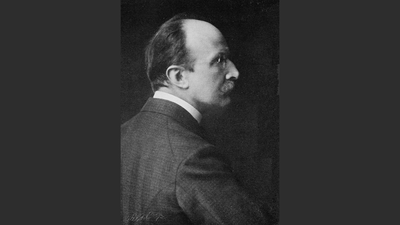
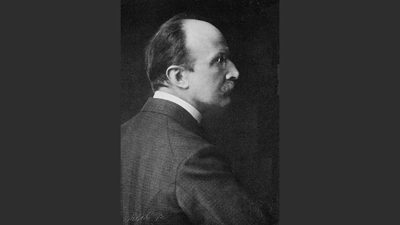
Who was Max Planck?
Max Planck wasn’t just another name in physics textbooks, he’s the reason quantum theory exists at all. Back in 1900, while wrestling with the strange puzzle of blackbody radiation, he stumbled onto something radical, energy doesn’t flow continuously the way everyone assumed, it comes in discrete little packets, or quanta. That single insight cracked open an entirely new way of understanding the physical world, and physics has never looked the same since. The discovery eventually landed him the Nobel Prize in Physics in 1918, and to this day, the Planck constant, one of the bedrock values in quantum mechanics, still carries his name.
The scientific method as a dialogue with nature
What makes Planck’s quote endure is that it distills the scientific method into something intuitive. Every experimental design is an attempt to phrase that question precisely enough that nature can’t misunderstand it. Vague questions produce vague answers, or worse, answers that seem to confirm whatever the questioner already believed. Planck’s framing pushes scientists toward humility and precision, reminding them that nature doesn’t lie, but it will only ever answer exactly what it’s asked.
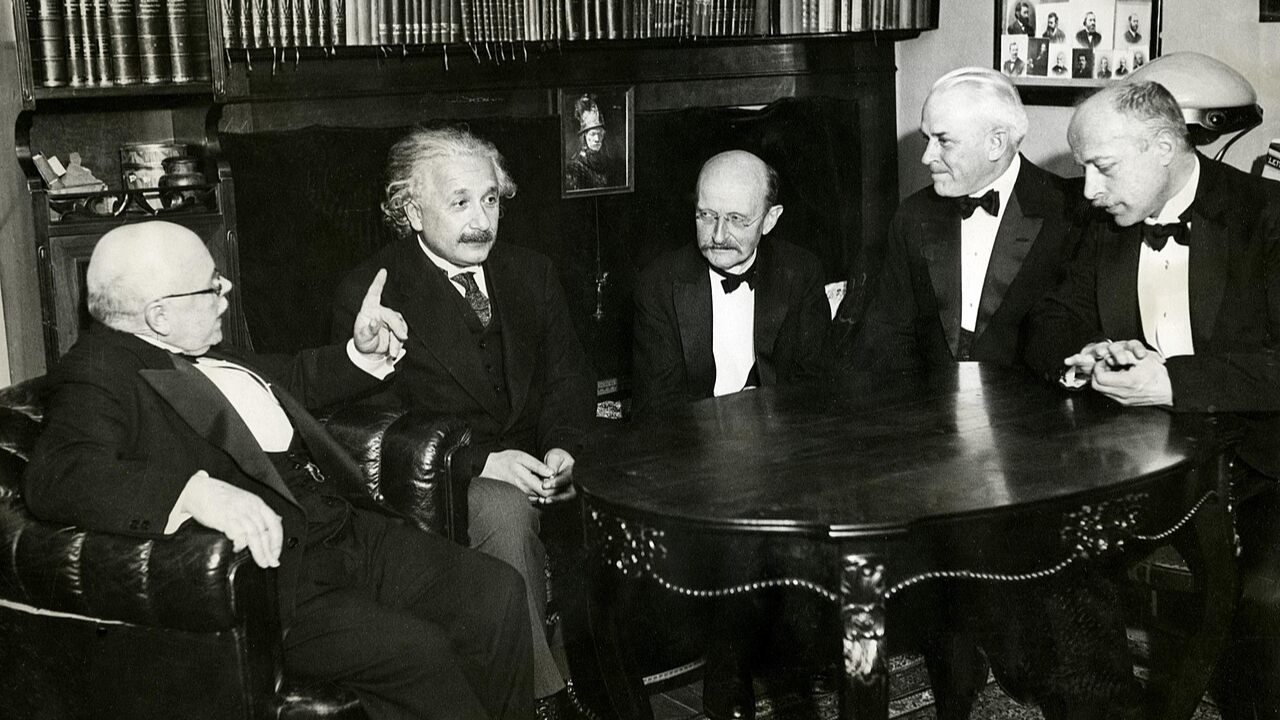
From left to right: Nernst, Einstein, Planck, Millikan, and Laue at a dinner given by Laue in Berlin on 11 November 1931 (Image: Nationaal Archief, Den Haag)
Measurement as the language of discovery
If experiments are the questions, measurements are the vocabulary through which nature speaks back. Planck’s own career depended on measurement in ways that shaped the future of physics. The puzzle of blackbody radiation, the phenomenon that eventually led him to quantum theory, only became solvable because careful measurements revealed a pattern that existing classical physics couldn’t explain. Without those precise readings, the question would have gone unanswered, and the anomaly that hinted at a deeper truth about energy would have remained invisible.
Planck’s own experiments and the birth of quantum theory
The quantum energy insight of Planck did not come out of pure theoretical speculation. It came about by listening to nature’s answer, despite that it was in contradiction to established scientific theories. Classical Physics said that the blackbody radiation would act in a manner which was not true according to measurements. Instead of rejecting it as an anomaly, Planck accepted it as an answer to a question, one which required a fresh explanation. This, perhaps, is the best proof of his own quote at work.
Why precision matters in science
Planck’s framing also serves as a quiet warning against sloppy science. If an experiment is a question, an imprecise experiment is a garbled one, and no amount of clever analysis can extract a clear answer from a poorly asked question. This is part of why reproducibility, controlled variables and careful instrumentation remain central to scientific practice today. Planck understood that nature’s answers are only as trustworthy as the questions used to elicit them, a principle that still underlies peer review and experimental design more than a century later.
Why the quote still matters today
In an age of big data, rapid publication and increasingly complex instrumentation, Planck’s century-old observation remains strikingly relevant. Modern science, from particle physics to climate modelling, still depends on the same basic relationship he described, ask nature a precise question, then record its answer honestly, even when that answer is inconvenient. As scientific debates grow more polarised and data more abundant, Planck’s quote is a useful reminder that the value of science lies not in confirming what we already believe, but in genuinely listening to what nature tells us. That discipline, more than any single theory, is his most lasting legacy.