









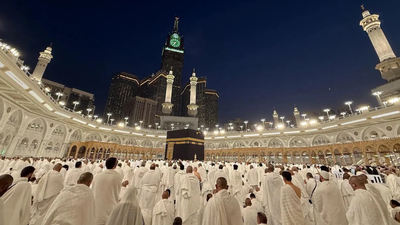
Saudi Arabia‘s air defences intercepted and destroyed a Houthi drone just south of Mecca on Tuesday before it could enter the holy city’s restricted airspace.Saudi military spokesperson Turki al-Malki described the security of the holy sites and pilgrims as a “red line” and warned of measures against the Houthis.However,Houthi spokesperson Hazem al-Assad rejected it, writing on X: “The claims about targeting Mecca are a worn-out lie that has been used before and no longer fools anyone.”
Why it matters: Mecca changes the political stakes
Mecca is the destination of the Haj and home to the Kaaba, towards which Muslims worldwide pray. Saudi Arabia’s responsibility for the holy sites is central to the monarchy’s standing across the Muslim world.A strike on or near Mecca could carry consequences that military and economic calculations cannot easily contain.For Riyadh, that creates a particularly difficult test. It must demonstrate that it can protect the sites while avoiding an escalation that could expose them to further danger.Even an accidental strike could generate public anger for retaliation.It could also widen the diplomatic stakes. Governments that have tried to maintain distance from the fighting could face calls to support the protection of the holy sites.But that would not automatically produce a military coalition. Condemning a threat to Mecca and committing forces to fight against Houthis are very different decisions.For India, the concern would extend beyond oil prices to pilgrims, Indian nationals in Saudi Arabia and relations with a major Gulf partner.
Zoom in: The ‘Gate of Tears’ closes in
Bab el-Mandeb, also known as the ‘Gate of Tears’, connects the Red Sea to the Gulf of Aden and the wider Indian Ocean. For ships using the Suez route between Europe and Asia, it is an essential passage.Houthi fighters have captured Mokha and Dhabab on Yemen’s coast and took Perim Island, which divides the strait into two shipping channels.Those gains strengthen their capacity to threaten vessels.
For Saudi Arabia, the geography is unforgiving:
- To the east, Iranian attacks have made the Strait of Hormuz hazardous.
- Across the kingdom, the East-West Pipeline provided a way to move crude towards the Red Sea.
- To the southwest, Houthi advances threaten the onward route towards Saudi Arabia’s Asian customers.
Red Sea exports can also travel north through the Suez Canal or Egyptian pipeline infrastructure. Bab el-Mandeb is therefore not the exit for every Saudi shipment. But disrupting the southern passage makes access to Asian markets harder.Now the pipeline itself has been hit. Bloomberg reported that British authorities feared it could remain largely shut for six weeks.
Between the lines: MBS’s past meets his future
The Houthis present a particularly uncomfortable challenge for the Crown Prince Mohammed bin Salman (MBS) because they connect his earliest major military gamble with his central economic ambition.MBS spearheaded Saudi Arabia’s intervention in Yemen in 2015. Years of fighting failed to dislodge the movement. Riyadh subsequently sought to reduce its involvement, with a 2022 truce bringing a period of relative calm.The renewed offensive threatens that effort to disengage.It also undermines the conditions needed for his economic transformation programme: predictable revenues, investor confidence, tourism and a reputation for stability.
What next: Allies, escalation or another bargain?
MBS asked Donald Trump for military help against Houthis but the US President did not agree for air strikes. He instead offered Riyadh support with intelligence sharing and targeting.Israel is already providing intelligence assistance to Saudi Arabia in its fight against Houthis, a Jerusalem Post report said on Tuesday.
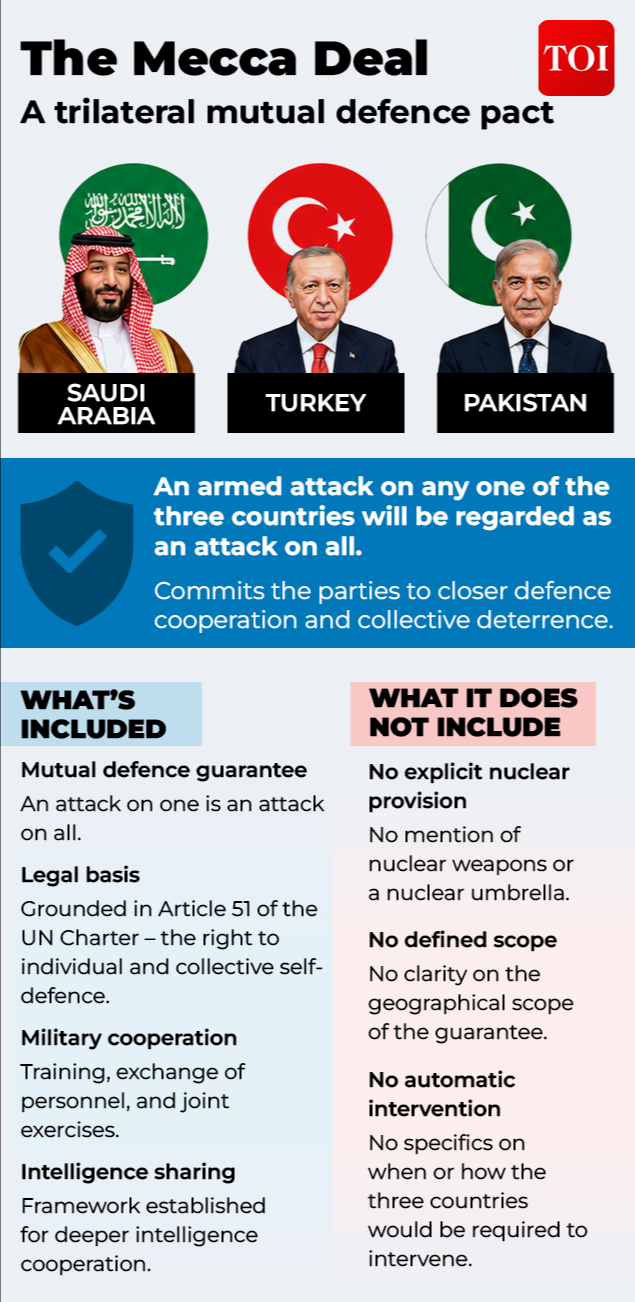
Islamic Nato: What Saudi-Pakistan-Turkiye pact means
MBS visited Egypt on Tuesday to meet President Abdel-Fattah El-Sisi. According to AP, the crown prince and Egyptian President Abdel-Fattah el-Sissi affirmed their commitment to maritime security. Neither government announced specific military steps, though.Egypt has its own reasons to want safer shipping: Red Sea disruption has reduced Suez Canal traffic and revenues. But shared economic interests do not guarantee Egyptian participation in another Yemen campaign.Analyst HA Hellyer told AP: “I don’t think MBS wants troops from Cairo, which he knows would be a very difficult ask.”
The bottom line
Will Saudi Arabia invoke the Mecca pact in case the holy place is attacked by the Houthis?Will Pakistan comes to the rescue of the Saudi Crown Prince?As of now, Pakistan has been ambivalent about its purported response.As of now, MBS is being tested on three fronts simultaneously: Oil, tourism and now the symbolic security of Mecca itself.For MBS, the challenge is to protect Mecca and keep oil without getting dragged into another long war.(With inputs from agencies)