









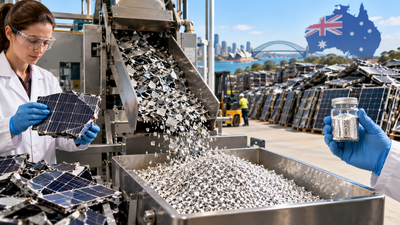
Australia could be sitting on a hidden stockpile of hundreds of tonnes of silver as millions of solar panels approach the end of their working lives. More than one million tonnes of waste solar panels are expected across the country by 2050, containing an estimated 300–500 tonnes of silver. Much of that valuable metal is currently left behind when panels are discarded. Now, researchers at the University of Newcastle have demonstrated a continuous flotation process that recovered almost 100 per cent of silver from end-of-life solar-cell material. The breakthrough could help make solar-panel recycling more commercially viable while keeping valuable resources out of landfill.
Australia expects 1 million tonnes of solar waste by 2050
The scale of Australia’s future solar-panel waste is central to the problem. According to the University of Newcastle, more than one million tonnes of waste panels are expected in Australia by 2050, with those panels estimated to contain 300–500 tonnes of silver.That creates a situation in which a large quantity of a valuable metal could end up being treated as waste. The university notes that glass and aluminium are already routinely recovered from discarded panels, but silver is often left within the solar-cell material. Associate Professor Mahshid Firouzi put the problem bluntly: “We’re effectively burying silver in landfill when we can recover it and return it to the economy.”
PC: University of Newcastle
Researchers use flotation to recover silver
Researchers at the University of Newcastle have been developing froth flotation as a way to separate silver from end-of-life solar cells. The technique is widely used in mineral processing and works by helping the silver attach to air bubbles, allowing it to be separated from the rest of the material. Unlike conventional approaches that rely heavily on acid, the Newcastle process uses water, air and small amounts of chemicals.The researchers moved beyond small laboratory-style batch testing and demonstrated continuous operation. According to the study published in a ChemRxiv preprint, titled ‘Continuous flotation unlocks full recovery of silver from end-of-life solar cells’, the researchers processed about 22 kilograms of solar-cell material, corresponding to roughly 468 kilograms of rooftop photovoltaic panels. During continuous operation lasting around 90 minutes, silver recovery remained close to 100 per cent, while the steady-state testing produced an average silver upgrade of approximately 83-fold.
Pilot recovers almost 100% of silver
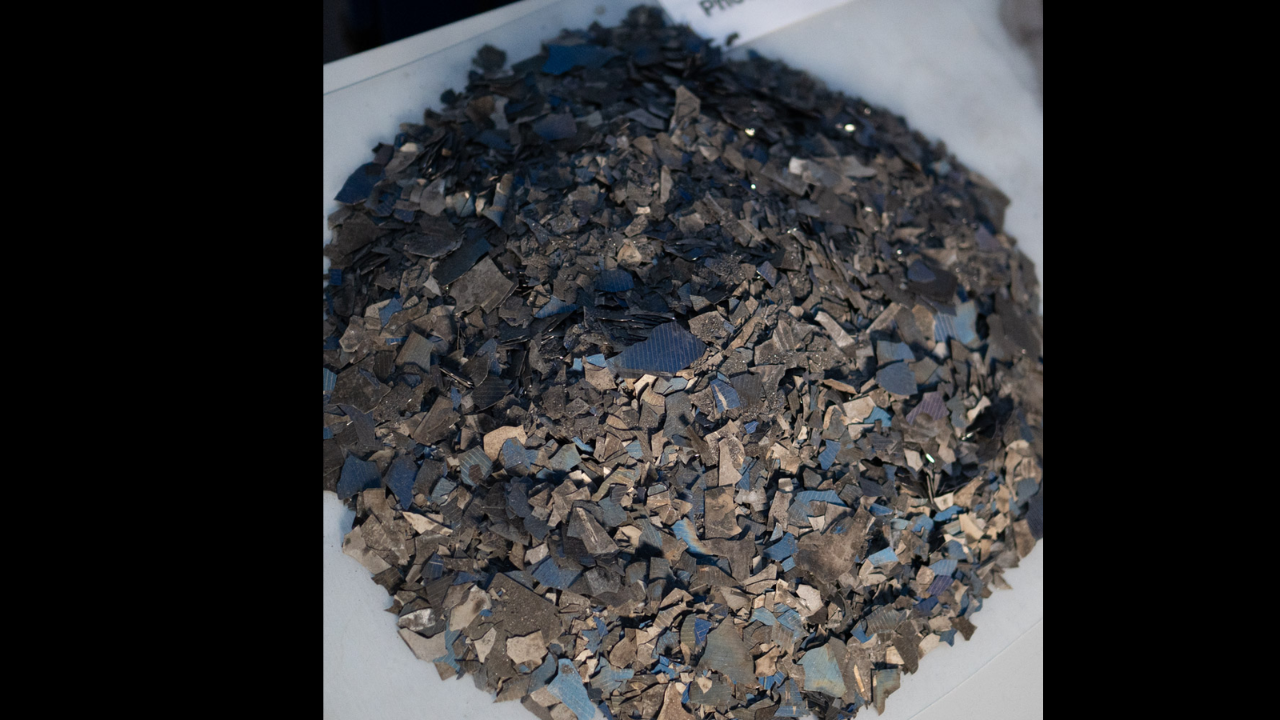
The University of Newcastle reported that the pilot recovered almost 100 per cent of the silver and concentrated it into a high-value product representing only 1.25 per cent of the original material. The resulting product contained more than 80 times the silver concentration of the starting solar-cell material.Researchers are also looking at whether the process can operate continuously and at a scale that could eventually support commercial recycling. Associate Professor Firouzi said the latest work showed that flotation could operate continuously at a much larger scale with nearly 100 per cent silver recovery, bringing the technology closer to commercial implementation.
Solar-panel recycling costs $10–$15 per panel
One of the biggest barriers to recycling solar panels is cost. The University of Newcastle estimates that recycling currently costs around $10 to $15 per panel, while sending a panel to landfill can cost only a few dollars. Recovering silver could provide an additional source of value that helps narrow that gap.The flotation process could be three to five times less expensive than conventional acid-leaching methods. According to the university, acid-based approaches can be costly to scale because they require large quantities of chemicals and create hazardous waste that must be managed. “Silver is the highest-value material in a solar cell,” Firouzi said, arguing that recovering it could make solar-panel recycling considerably more financially attractive.Even so, the continuous pilot-scale results point towards a potentially important role for resource recovery as Australia’s current generation of solar panels eventually reaches the end of its working life. The university says the team is also investigating whether the technology could be applied to other waste streams, including printed circuit boards and electronic waste.